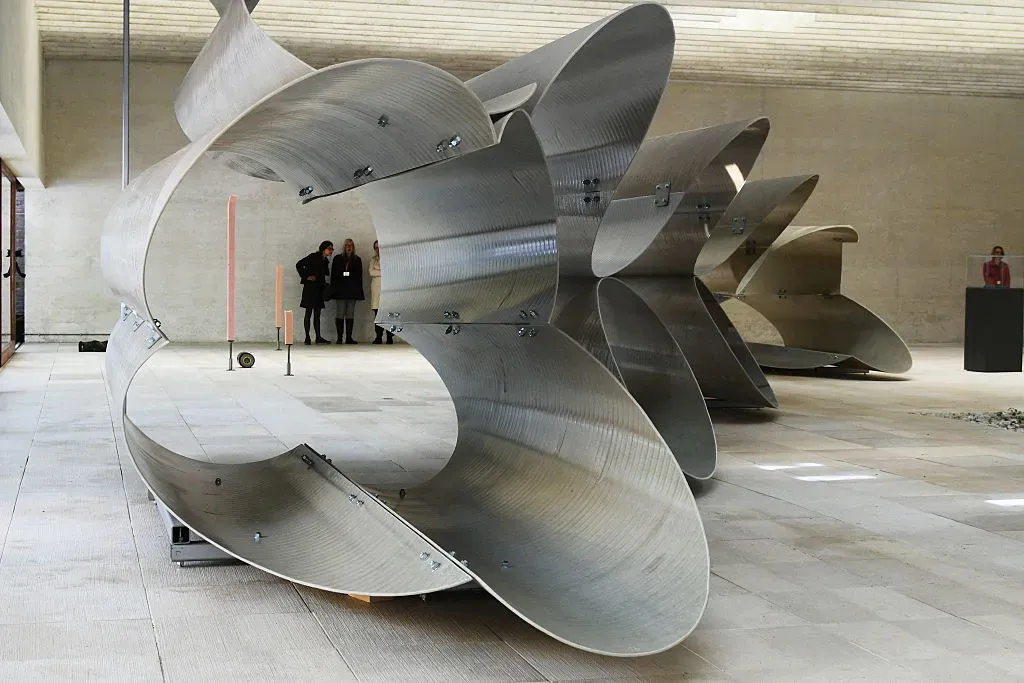
Siri Aurdal, the Norwegian artist who looked at industrial materials and saw not just pipes but playgrounds, passed away on March 31 at 88. She left us in Oslo, surrounded by the people she loved, after a lifetime of making us look at the world a little differently.
Born in 1937 to a pair of celebrated artists, Aurdal could have easily followed in their footsteps. Instead, she decided to forge her own path, one paved with plexiglass and reinforced fiberglass — the kind of stuff usually found in Norway's booming oil industry, not a gallery. She was utterly fascinated by how things, places, and people could transform.
Playgrounds, Politics, and Plexiglass
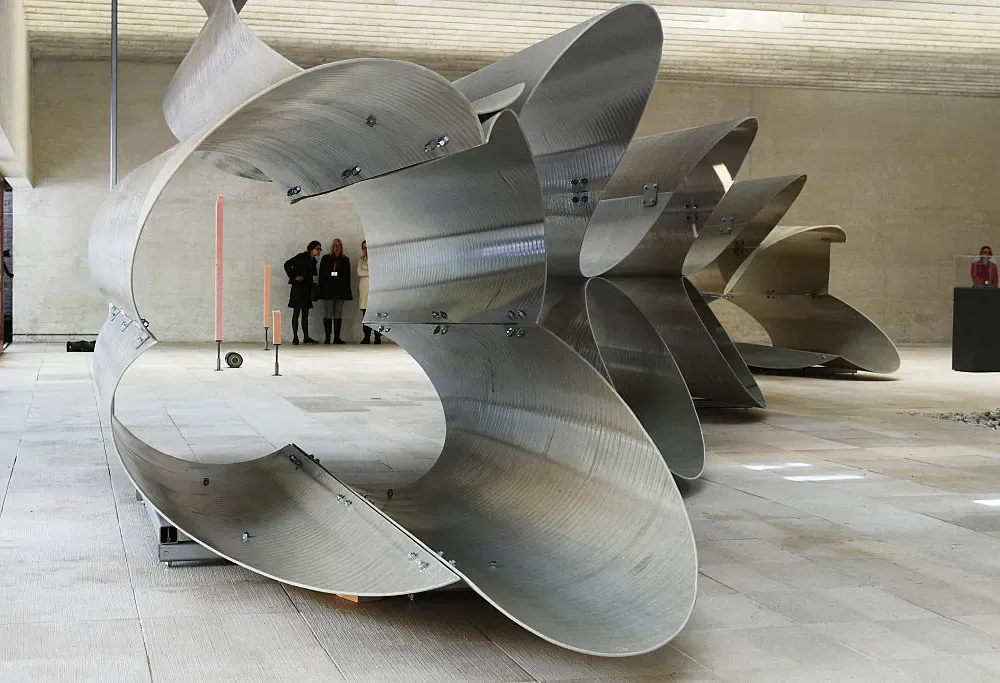
Her early ambitions leaned towards architecture, and you can see it in her work. It's modular, inviting. She'd take those industrial materials, cut them up, and reassemble them into wavy, flowing forms. Often, these weren't just for looking at; they were for interacting with, especially for kids.
We're a new kind of news feed.
Regular news is designed to drain you. We're a non-profit built to restore you. Every story we publish is scored for impact, progress, and hope.
Start Your News DetoxTake 1969, for instance. After a standout showing at the Nordic Biennial, Aurdal was commissioned to create interactive art for Oslo's schools and playgrounds. One piece, affectionately dubbed Havbølger (ocean waves) by the students themselves, was crafted from fiberglass-coated polyester pipes originally destined for the oil fields. Kids at Trosterud Elementary School absolutely loved clambering all over its rolling slopes. Because apparently, that's where we are now: turning oil infrastructure into kid-friendly art.
Aurdal believed that moving through art could connect people to each other and their environment. But her art wasn't all fun and games. Her painted polystyrene work, Januar 67 (sometimes called February 67), was a direct response to the Vietnam War. It now lives in the National Museum in Oslo, a testament to art's ability to speak truth to power.
An Infinite Work
Even with pauses in her prolific career, Aurdal viewed her sculptures as part of an ongoing, "infinite work." A piece she started in 1968, Interview, was reprised in 2018, featuring precisely cut plexiglass in vibrant reds, greens, and pinks. It's a bit like a greatest hits album, but made of art.
In 2017, Aurdal was one of six artists showcased at the Nordic Pavilion for the prestigious Venice Biennale. There, she explained her love for plexiglass: it "takes light" beautifully, allowing people to see themselves and others reflected in the art itself. A subtle way of saying, "Hey, you're part of this too."
She often recalled how her father, painter Leon Aurdal, used simple objects to explain complex ideas — like a ball and a lamp demonstrating Earth's orbit. It clearly stuck with her. Aurdal herself preferred not to define art, instead quoting Gerhard Richter: "Art is the highest form of hope." Which, if you think about it, perfectly encapsulates a life spent turning industrial cast-offs into visions of shared humanity and playful possibility.