A team at Politecnico di Milano has built the first integrated spin-wave chip that works without external magnets—a breakthrough that moves a promising telecom technology from lab curiosity into something that might actually fit inside your devices.
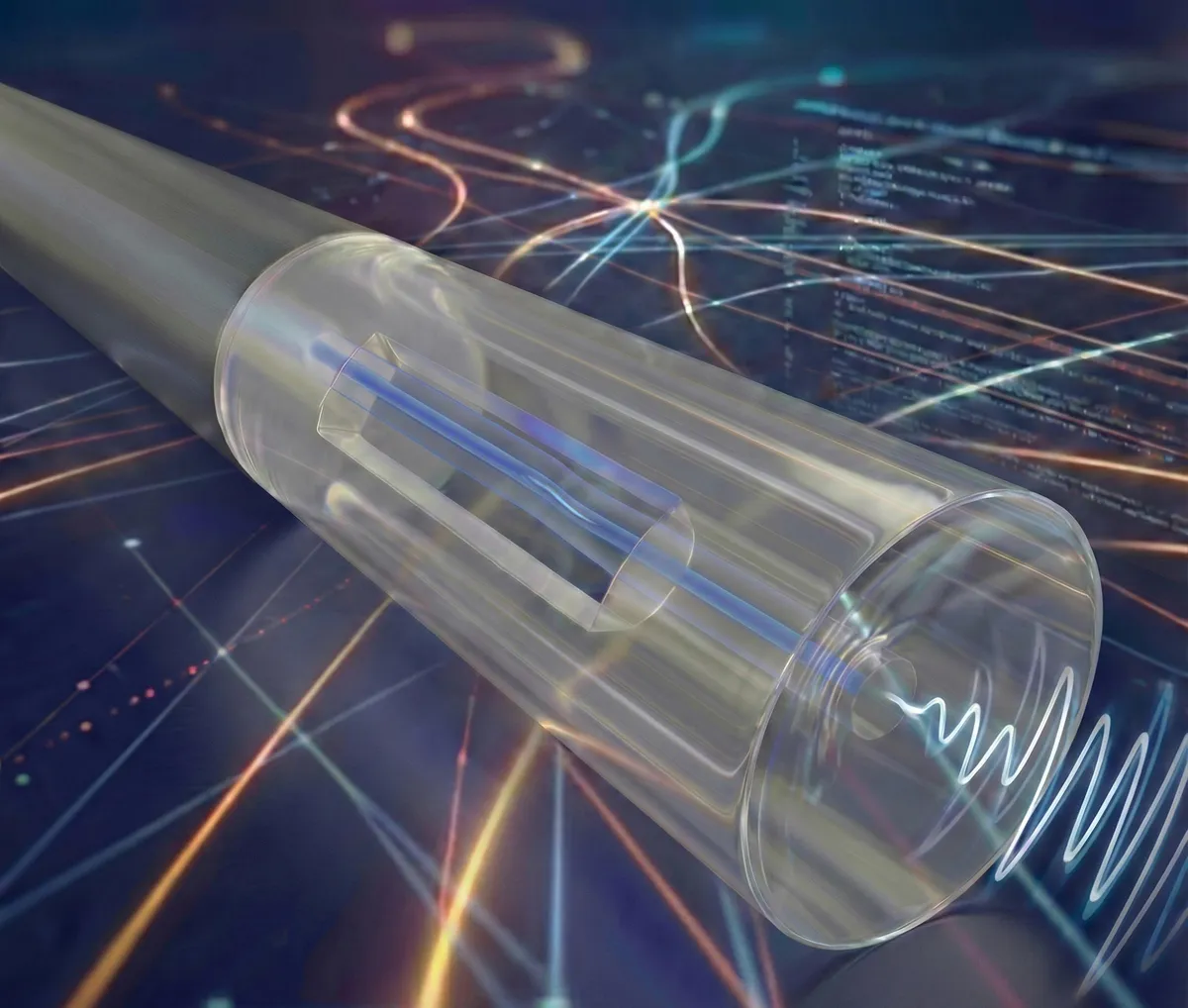
Spin waves are a bit like using the collective wobble of electrons' magnetic properties to carry information, instead of the traditional electrical signals we've relied on for decades. The catch has always been practical: previous prototypes needed an external magnetic field to function, which meant they couldn't be miniaturized or integrated into standard chips. That's where this new device changes the game.
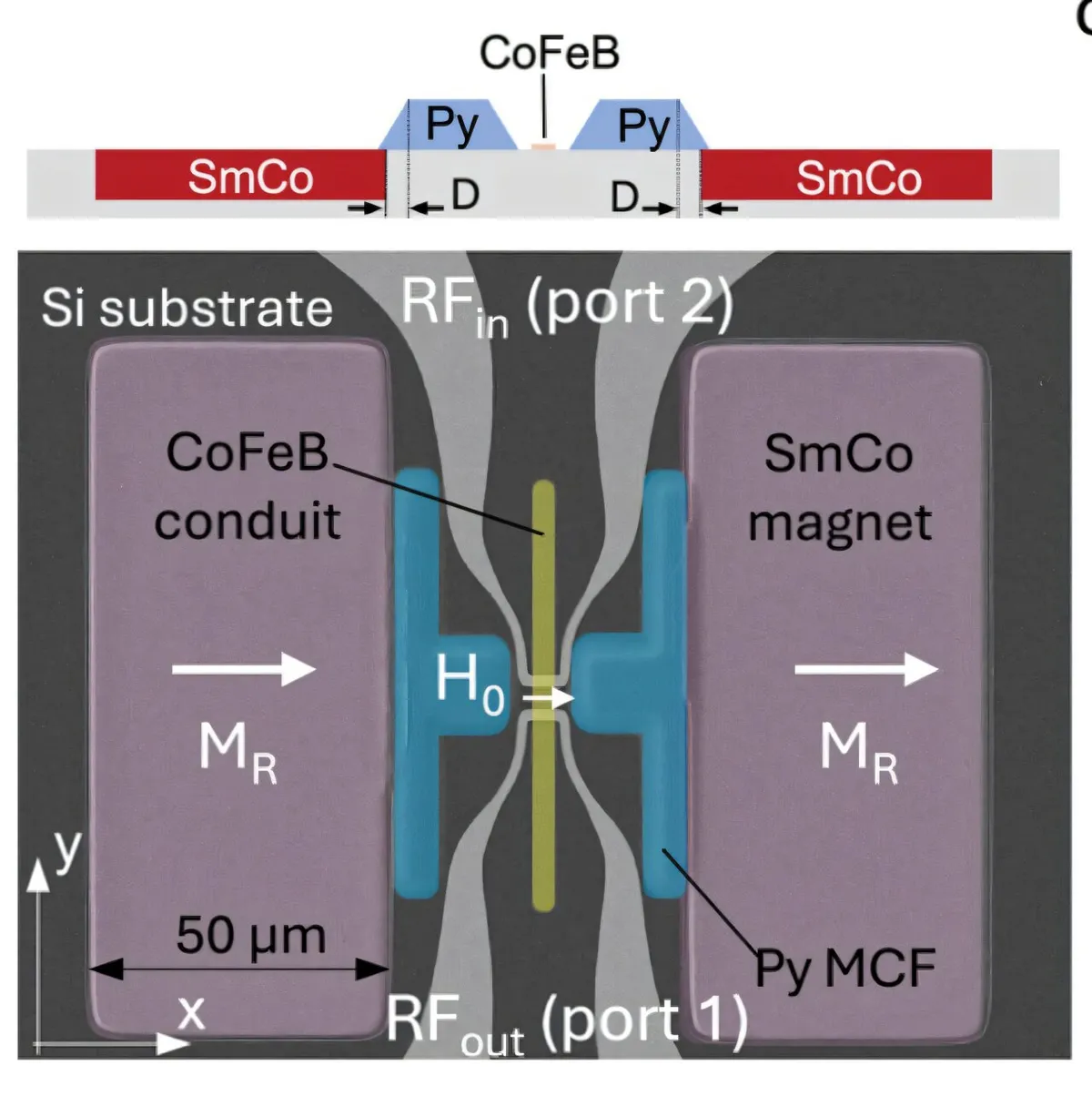
The researchers, led by Riccardo Bertacco, engineered a tiny chip—smaller than a grain of rice at 100 by 150 micrometers—that generates its own magnetic field using permanent SmCo micromagnets and flux concentrators built right into the silicon. The spin-wave guide is made of CoFeB, a material that conducts these waves efficiently, with two antennas for sending and receiving radio-frequency signals. Because the magnetic field is built in rather than applied externally, the whole thing can be shrunk down and integrated into existing electronics.
We're a new kind of news feed.
Regular news is designed to drain you. We're a non-profit built to restore you. Every story we publish is scored for impact, progress, and hope.
Start Your News DetoxWhat makes this particularly useful: the device can be tuned on the fly. The transverse magnetic field adjusts the operating frequency between 3 and 8 GHz and can shift the phase of the signal by up to 120 degrees at 6 GHz—capabilities that let engineers reconfigure how signals flow through the device without rewiring anything. Early prototypes are already working as time delay lines and phase shifters, components that are essential in telecom systems and radar.
There's also a thermal advantage. Those permanent magnets stay stable up to 200°C and consume zero power just sitting there, which matters for devices that need to operate in hot environments or where power consumption is critical.
This work is part of the MandMEMS project, a European research effort aimed at turning spin-wave technology into a real platform for next-generation communication devices. The goal is straightforward: make future telecom systems more efficient, more compact, and more flexible. Right now, the prototypes exist. The next phase is scaling this up and integrating it with other components to see if it can actually compete with traditional approaches in real-world systems.