
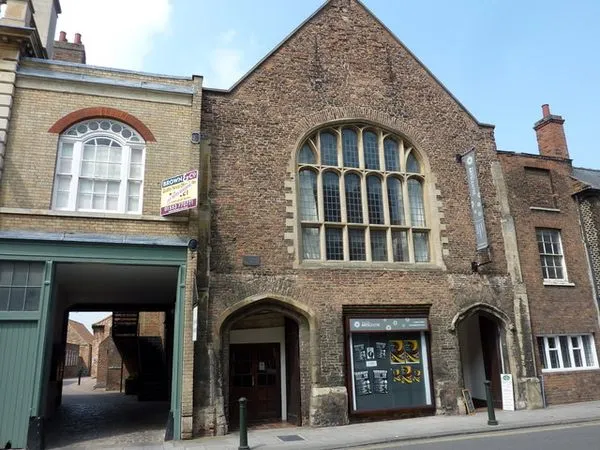
Imagine a building that's seen more drama than a reality TV marathon. That's St. George's Guildhall in King's Lynn, Norfolk, England, a place so old it makes your great-grandma's antique furniture look like it just rolled off the assembly line. Built around 1420 for a religious fellowship (think medieval community center, but with more solemn vows), it's now officially the largest medieval guildhall still standing in England. Because, apparently, some things just refuse to go quietly into the night.
This isn't just any old building, though. It's a stage. A really, really old stage. The first recorded performance was a nativity play in 1445, which means it was hosting amateur dramatics before America was even a twinkle in Columbus's eye. But here's where it gets interesting: legend has it, William Shakespeare himself trod these very boards in 1593.
He was supposedly with the Earl of Pembroke's Men, a troupe on the run from the plague in London. Because nothing says "touring company" like a continent-wide pandemic. The fact that Shakespeare's famous comic actor, Robert Armin, was born nearby only adds fuel to the historical fire. Some even whisper that a scene in Hamlet took inspiration from an event right there in King's Lynn. Which, if true, means this place literally helped write theatrical history.
We're a new kind of news feed.
Regular news is designed to drain you. We're a non-profit built to restore you. Every story we publish is scored for impact, progress, and hope.
Start Your News DetoxOf course, like any good drama, there were intermissions. Oliver Cromwell shut down performances during his Commonwealth government, because apparently, fun was strictly forbidden. But the show, inevitably, went on after Charles II took the throne in 1660.
Fast forward a few centuries, past a brief stint as a warehouse (the indignity!), and the guildhall found its calling as an arts center. And just when you thought its secrets were all out, 2023 renovations uncovered a floor. Tree ring dating confirmed it was from the exact era Shakespeare might have been there. Cue the dramatic music.
Then, in 2024, behind a panel, they found it: a 600-year-old door. Experts are convinced this was the entrance to Shakespeare's dressing room. So, if you ever wondered where the Bard prepped for his performances, it might just be through a door that's been waiting for its grand reveal for six centuries. Talk about a stage entrance.