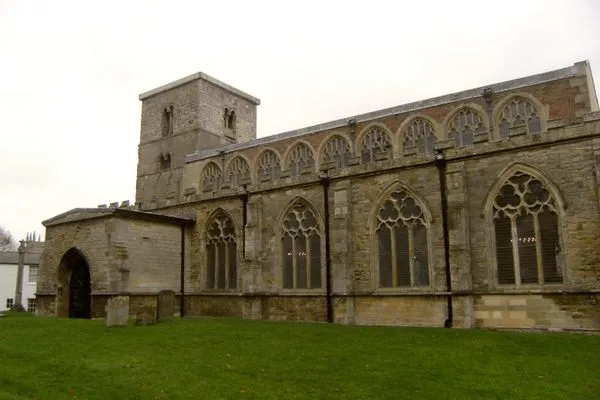
In 1819, an architect named Thomas Rickman was examining St Peter's Church in Barton-upon-Humber when he noticed something odd about the tower. On top sat a Norman stone structure—solid, recognizable medieval work. But underneath it were two older stories in a style nobody could quite place. Rickman made a logical leap: if they were older, they must be Anglo-Saxon. He was right. That moment of observation cracked open an entire lost period of English architecture.
The "Dark Ages" weren't really dark—historians just didn't have much to work with. For centuries, Anglo-Saxon building techniques remained a mystery. Then Rickman's discovery at this one church in Lincolnshire changed everything. St Peter's became one of the most studied Anglo-Saxon structures in England, a rare window into how people actually built things 1,300 years ago.
What the tower tells us
The church was originally built in a style called turriform—a distinctly Anglo-Saxon approach where the tower itself served as the main worship space, with the clergy's chancel tucked off to the side. It's an unusual layout, nothing like the churches that came after. When the Normans arrived and expanded the building centuries later, they fundamentally reorganized it, moving the congregation into a new nave and leaving that original tower standing as a record of an older way of thinking about sacred space.
We're a new kind of news feed.
Regular news is designed to drain you. We're a non-profit built to restore you. Every story we publish is scored for impact, progress, and hope.
Start Your News DetoxLook closely at the tower today and you'll see Roman stone worked into decorative pilasters and arches. These weren't salvaged from Roman ruins—they were copies, the Anglo-Saxon builders recreating the look of Roman stonework using techniques they'd learned from timber buildings. It's a small detail that reveals something larger: how knowledge travels, transforms, and gets embedded in the things we make.
When the church was declared redundant and closed in 1970, archaeologists finally got the chance to excavate properly. They found 3,000 skeletons on the grounds—a complete record of who worshipped there across centuries. Combined with the building itself, they could piece together not just how the church was constructed, but how it grew and changed as the community around it did.
Today St Peter's is managed by English Heritage. It stands as a monument not just to Anglo-Saxon craftsmanship, but to how a single careful observation—one architect noticing that something didn't quite fit—can unlock an entire lost chapter of how people lived.