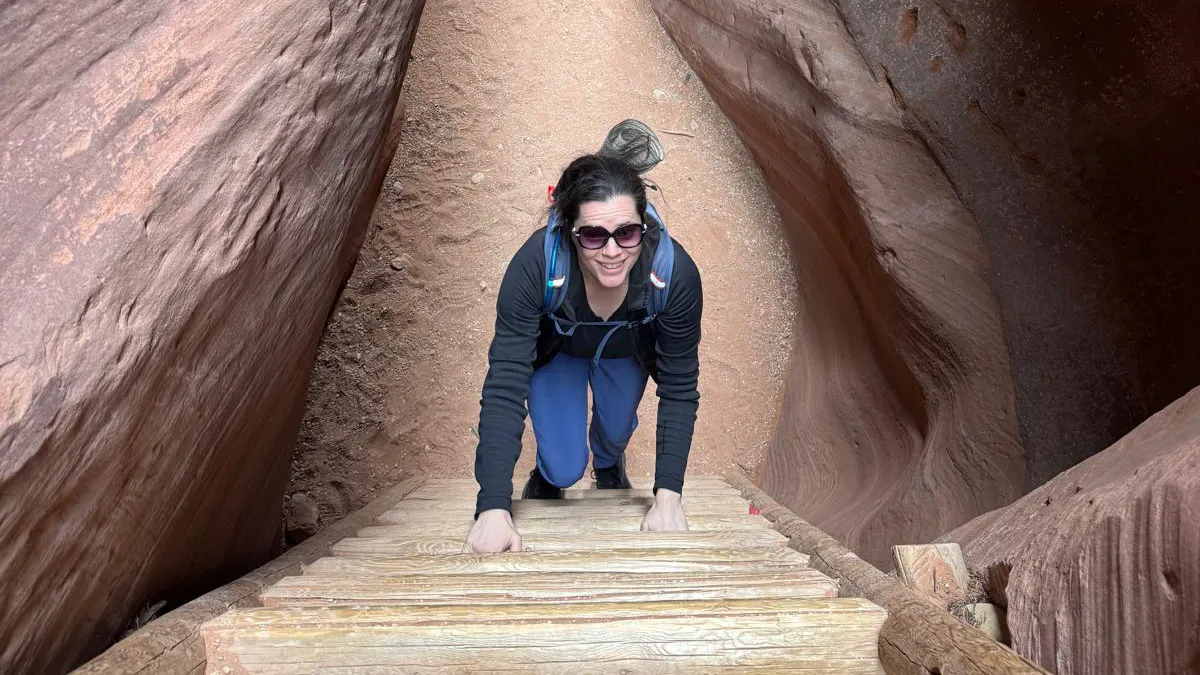
Isabel Esterman doesn't chase the next story. She stays with the last one until it changes something.
When Mongabay's investigations into Sumatran rhinos began, official counts put the species at over 100 animals in the wild. Esterman's team kept digging. Their reporting suggested a grimmer picture: closer to 30. Years of sustained coverage shifted the global baseline. Today, conservation agencies work from those more realistic numbers — and that difference, Esterman says, changes what's actually possible in saving the species.
"What I think about is the topics we've really stayed on and broken ground on that have changed the way people think and talk about issues," she explains. "It's not one story, but this collective body of reporting, and staying on it has been significant."
We're a new kind of news feed.
Regular news is designed to drain you. We're a non-profit built to restore you. Every story we publish is scored for impact, progress, and hope.
Start Your News DetoxThis is not the journalism of the viral moment. It's the kind that accumulates — one investigation into carbon credit land deals in Malaysia, another on ritual use as a hidden driver of ape trafficking in Africa, another on the Sumatran rhino. Each story builds on the last. Each one reshapes how the world understands a problem.
Since joining Mongabay in 2016, Esterman has become managing editor for Southeast Asia, one of the organization's longest-tenured staff members. That stability matters in a region where press freedoms are shrinking and reporting on environmental issues carries real risk. When she works with local journalists across Southeast Asia, risk assessment isn't bureaucratic overhead — it's the foundation of responsible coverage.
"That means responsibility to our reporters — almost all are based in the region — and responsibility to the communities we cover," she says. It's a constraint that shapes which stories get told, how they're reported, and who can safely tell them. It's also a reality that most environmental journalism in the Global South must navigate.
The long-term approach requires something increasingly rare: patience. Esterman's work shows what becomes possible when a journalist stays with a story long enough to move the needle on how we measure a problem, how we think about a solution, and what we're actually willing to do. Not every story breaks in a day. Some take years to reshape what we know.