For over a century, if you wanted to make concrete strong, you added steel rebar. It was the undisputed champion, the heavyweight titleholder of structural reinforcement. Turns out, its reign might be getting a little... wavy.
Researchers at the University of Sharjah in the UAE have just dropped a bombshell: specifically shaped plastic, 3D-printed with a bit of flair, can perform as well as steel bars in strengthening concrete. And sometimes, in certain tests, it performs up to 500% better. Let that sink in.
The Unsung Hero (and Villain) of Construction
Concrete is everywhere. It's the most common building material on Earth. And for good reason: it's strong, durable, and relatively cheap. But it's also brittle. So, we reinforce it with steel bars, creating what we call "reinforced concrete." About 20% of the nearly 2 billion tons of steel produced annually goes into this job. That's a lot of metal.
We're a new kind of news feed.
Regular news is designed to drain you. We're a non-profit built to restore you. Every story we publish is scored for impact, progress, and hope.
Start Your News DetoxBut steel has its issues. It's heavy, for one. A single cubic yard of reinforced concrete can contain 150 to 250 pounds of the stuff. More critically, steel rusts. And when it rusts, it expands, cracking the concrete from the inside out and weakening the entire structure. Not ideal for anything you plan on standing in for a while.
Then there's the environmental cost. Mining, refining, shaping, transporting, assembling – it all takes a colossal amount of energy and pumps out a lot of greenhouse gases. Steel is a significant carbon emitter in construction, which is why everyone's been looking for alternatives, from glass fiber-reinforced polymers to... well, now, plastic.
The Shape of Things to Come
The Sharjah team zeroed in on polylactic acid (PLA), a type of plastic that’s biodegradable. But here’s the twist: they didn't just swap materials. They decided to mess with the shape. See, traditional rebar – steel or otherwise – is usually cylindrical. Straight. Predictable.
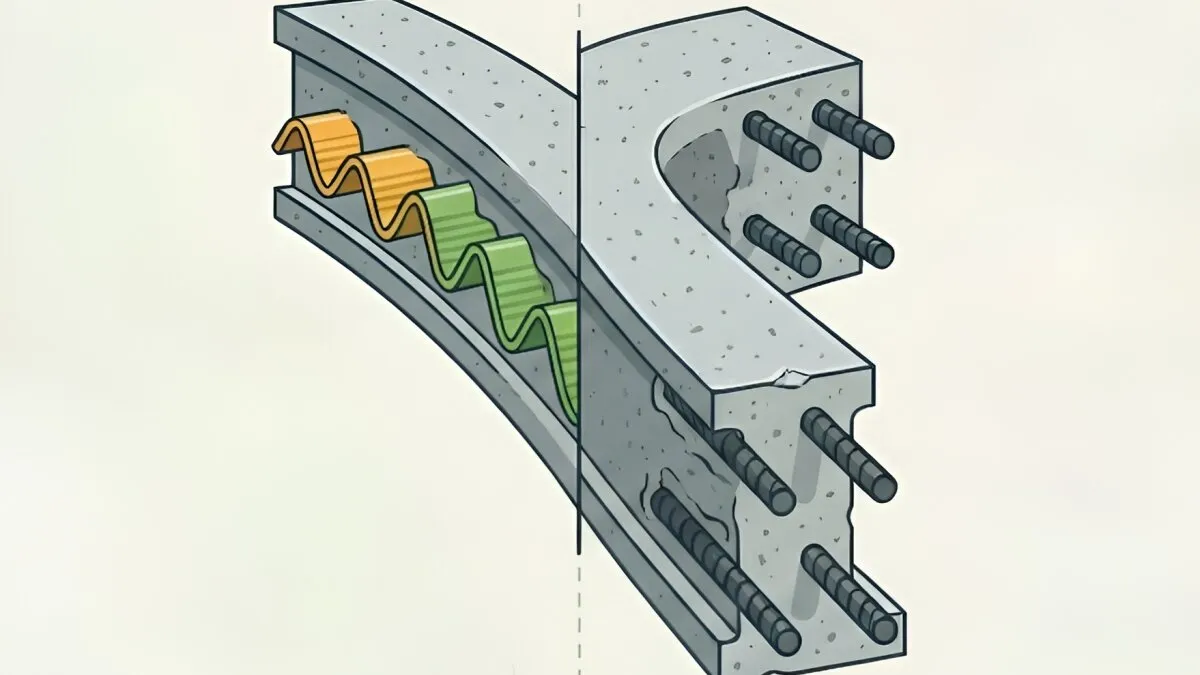
The researchers, using 3D printing, started experimenting with flat, plate-like structures. They tried wavy patterns, serrated edges, and even triangles. The idea was to create shapes that would grip the concrete better, transferring stress more effectively than a simple straight bar. And the results? Impressive doesn’t quite cover it. These unconventional shapes absolutely crushed the traditional straight PLA bars. Dr. Muhammad Junaid, who led the research, noted that plates, for example, allowed beams to handle twice the peak load and absorb five times more energy than simple bars. All thanks to a larger surface area creating a stronger bond.
Even after cracking, those triangular and wavy shapes kept things together. Dr. Junaid described them as acting “like teeth,” locking into the concrete and preventing slipping. Which, if you think about it, is both ingenious and slightly terrifying if you picture tiny plastic fangs in your building materials.
A Promising Partnership
So, how did these plastic marvels stack up against the reigning champ, steel? Surprisingly well. The most effective design – a mix of shapes forming triangular wavy plates – allowed the concrete to be as flexible as steel-reinforced concrete. Even better, these PLA plates achieved up to 80% of the bending strength of a traditional steel-reinforced beam. That’s a massive leap.
While steel isn't going anywhere tomorrow, this study offers a compelling vision for the future of construction. Imagine: lighter, corrosion-resistant, biodegradable reinforcement that can be custom 3D-printed on demand. We’re still talking prototypes here, but the implications are solid. Suddenly, "plastic fantastic" takes on a whole new meaning for your local skyscraper.