A team of researchers just cracked a problem that's been holding back flexible displays for years: how to make screens that don't dim or degrade when you bend them over and over again.
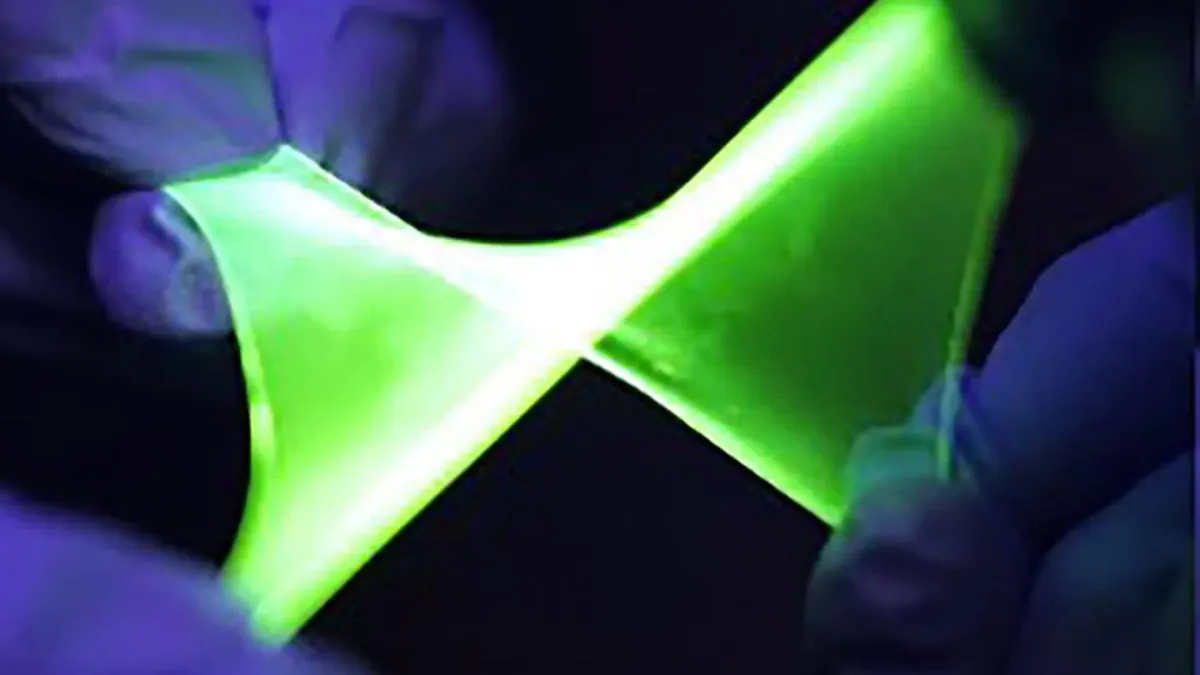
The breakthrough, published in Nature, redesigns the light-emitting layer of an OLED display using a specialized organic material that can actually stretch without losing its structure. They paired this with electrodes made from MXene, a two-dimensional nanomaterial that conducts electricity better than what's been used before. The result: displays that can stretch to 1.6 times their original length while keeping most of their brightness intact.
Why This Matters for Your Phone
OLED screens work by passing electricity through an organic layer, which creates light when positive and negative charges collide. The problem with flexible OLEDs has always been durability. Every time you bend the screen, the electrodes and organic materials gradually wear out. After a few hundred bends, brightness drops noticeably.
We're a new kind of news feed.
Regular news is designed to drain you. We're a non-profit built to restore you. Every story we publish is scored for impact, progress, and hope.
Start Your News DetoxThe new design flips this dynamic. The light-emitting layer they created, called an exciplex-assisted phosphorescent layer, is built to flex without damage. More importantly, it's engineered to push more of the electrical energy into actual light production — more than 57% of the charges create light, compared to only 12–22% in older polymer layers. That efficiency gain matters because it means the display stays bright even under stress.
The MXene electrodes add another layer of resilience. When researchers stretched prototype displays to 60% of their maximum strain, brightness only dropped by 10.6%. After 100 repeated stretches at smaller strain levels, the displays retained 83% of their light output. That's the kind of durability that suggests these screens could actually survive years in a wearable device.
The team demonstrated working prototypes, including a heart-shaped display and one showing numerical digits. Both performed well under repeated bending, suggesting the approach scales beyond lab conditions.
What comes next is the practical stuff: testing different flexible materials as the base layer, tuning the organic layer to produce reds and blues (they've demonstrated green so far), and figuring out how to manufacture these at scale without the process becoming prohibitively expensive. The researchers involved are already thinking about wearable devices and deformable displays — the kind of screens that might wrap around your wrist or fold into a pocket without losing functionality.