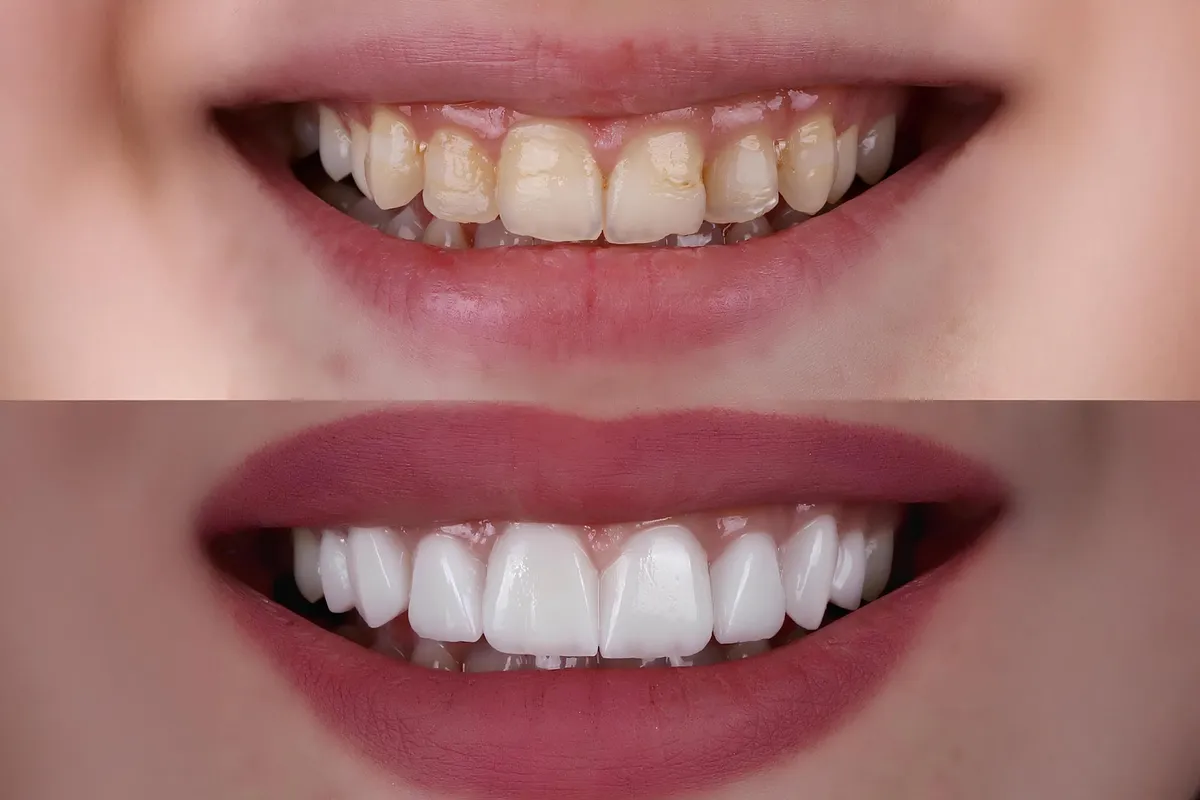
Researchers at the University of Texas at Dallas have found a way to 3D print permanent zirconia dental restorations quickly. This breakthrough could allow for same-day dental treatments that used to take multiple visits.
Zirconia is known for its strength, durability, and natural look, making it a top choice for dental work. Until now, getting this quality with 3D printing on the same day wasn't possible.
Faster, Stronger Crowns
The team, with support from the National Science Foundation (NSF), is working to bring this process to market. It could be used for crowns, bridges, veneers, and more.
We're a new kind of news feed.
Regular news is designed to drain you. We're a non-profit built to restore you. Every story we publish is scored for impact, progress, and hope.
Start Your News DetoxDr. Majid Minary, a professor of mechanical engineering, explained that this method offers more personalized care. Patients can get a custom-printed permanent crown in a single visit, making treatment faster and more convenient.
Dental crowns fix damaged or decayed teeth and can support bridges for missing teeth. Currently, patients often wait days or weeks for a permanent crown, sometimes using temporary ones.
3D printing has improved customization and production efficiency. However, existing same-day printed crowns often use ceramic resins. These are easier to process but not as strong as zirconia in the long run.
Zirconia crowns are available for same-day use, but they are typically milled from a solid block. Milling can limit design options and might cause tiny cracks.
To solve these issues, the UT Dallas team developed a method that greatly speeds up the post-printing process for zirconia restorations. Their findings were published in Ceramics International. The approach still needs clinical testing and regulatory approval.
The Debinding Breakthrough
After a zirconia crown is printed, it needs two steps: debinding and sintering. Debinding involves slowly heating the crown to remove the resin that holds the zirconia particles together. This step usually takes 20 to 100 hours. After debinding, sintering fuses the particles into a strong structure at high temperatures.
"Debinding has been the bottleneck," Minary said. "It must be done very slowly. If you speed it up, the gas from the burning polymer can't escape, and the crown might crack." He noted that 20 to 100 hours is too long for same-day dental service.

The new technique cuts debinding time to under 30 minutes. This makes same-day treatment much more practical. The process uses better heat transfer and porous graphite felt. This felt can reach over 2,550 degrees Fahrenheit (about 1,400 degrees Celsius). It surrounds the printed crown, letting gases escape as the resin is removed. A vacuum system then clears these gases.
"The combination of all these features makes it work," Minary explained. "With our technology, a dentist could offer a 3D-printed zirconia crown to a patient within just a few hours."
Deep Dive & References
Single-step thermal debinding for ceramics vat photopolymerization in less than 30 minutes - Ceramics International, 2025
This research was also supported by the U.S. Air Force Office of Scientific Research.