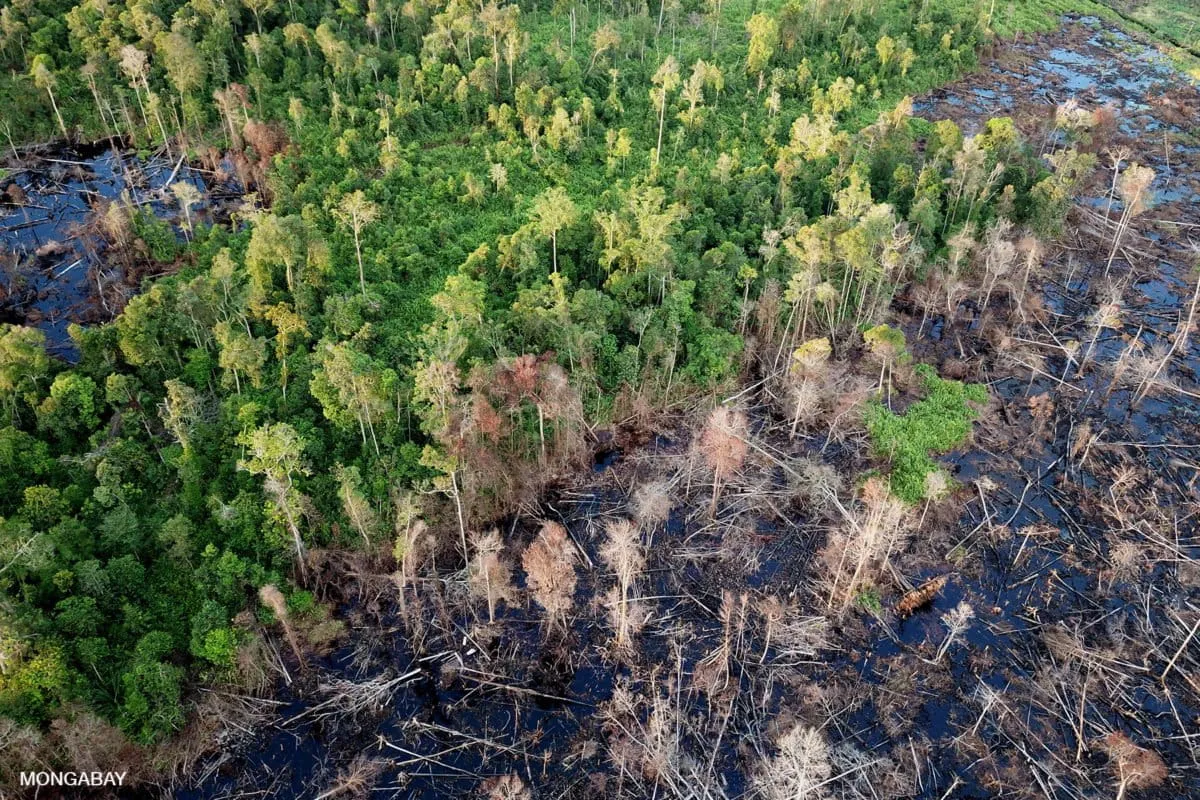
Indonesia's Ministry of Forestry has put a price tag on one of the country's most urgent environmental needs: roughly $9.2 billion to rehabilitate 12 million hectares of degraded forest and critical lands over the next nine years.
The scale is staggering. That's 1.3 million hectares annually — an area larger than the entire state of Connecticut every single year until 2034. The plan carves the work into two parts: 6.3 million hectares within existing forest areas and 5.7 million hectares on cleared or degraded land outside forests. The money will come from a mix of government budgets, international climate finance, corporate partnerships, and carbon credit schemes.
On paper, this looks like a government finally naming the cost of restoration and committing resources to it. Indonesia's forests are critical to the planet — they store vast amounts of carbon, anchor regional water cycles, and support some of Earth's most biodiverse ecosystems. Without intervention, the damage accelerates. So the fact that officials have calculated a figure and attached it to a timeline matters.
We're a new kind of news feed.
Regular news is designed to drain you. We're a non-profit built to restore you. Every story we publish is scored for impact, progress, and hope.
Start Your News DetoxBut here's where the picture gets murky. The Ministry hasn't publicly explained which 12 million hectares these are, or how they arrived at that specific number. There's no clarity on what "critical lands" actually means on the ground, or what condition these areas are in. And there's a potential overlap problem: the same Ministry is also running a Social Forestry Program covering 12.7 million hectares. Are these the same forests counted twice? Or genuinely different restoration efforts?
The transparency gap
The confusion deepens because these numbers emerged from different announcements. The President's Special Envoy for Climate announced 12.7 million hectares of reforestation at COP29 in Azerbaijan. Then the Forestry Minister said he'd develop a roadmap for 12 million hectares. A roadmap that, as of now, hasn't been released to the public.
This matters because large-scale environmental projects live or die by accountability. Without knowing which forests are being restored, by whom, using what methods, and with what results, it's impossible to track whether the money actually works. It's also harder for communities living near these forests to have a say in plans that will affect their land and livelihoods.
Indonesia has experience with this problem. Past reforestation efforts have sometimes planted trees in the wrong places, chosen species that don't survive, or failed to address the underlying causes of forest loss — like illegal logging or agricultural pressure. Money spent without transparency can vanish into ineffective projects or worse.
The commitment itself is real and necessary. The cost estimate signals that the government understands restoration isn't free, and it's not something that can happen through goodwill alone. But the next step — making the plan public, detailing exactly where the work will happen, and setting up independent monitoring — will determine whether this becomes a genuine turning point for Indonesia's forests or another well-intentioned plan that loses momentum in the details.