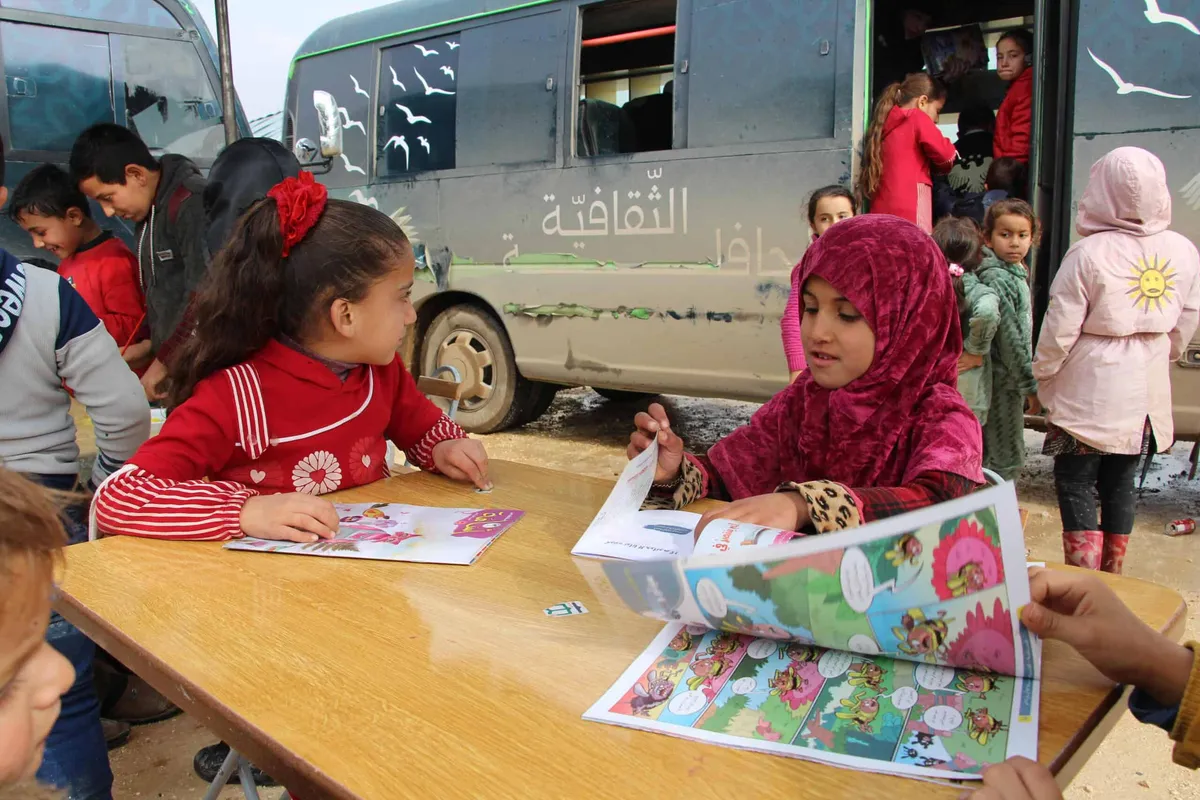
In rural Syria, a bright, cheerful bus pulls up, and suddenly, a small, vibrant festival erupts. Out pour books, art supplies, and puppets, transforming dusty roadsides into impromptu libraries and theaters for children who’ve grown up knowing little else but conflict.
This isn't your average school bus. It's the Mobile Cultural Bus, a project from Syria's Ministry of Culture, powered by a dedicated crew of volunteers. Their mission? To deliver culture, art, and the simple joy of a good story to kids and families in camps and remote communities who haven't seen a library in years—if ever.
Wheels of Wonder
When the bus rolls in, it’s like a beacon. Kids flock to it, eyes wide at the sight of shelves brimming with books, colorful art supplies, and a pint-sized puppet theater. Laughter quickly fills the air as stories unfold and imaginations take flight. For a few precious hours, these children get to just be children — drawing, reading, and playing, far from the shadows of displacement and fear.
We're a new kind of news feed.
Regular news is designed to drain you. We're a non-profit built to restore you. Every story we publish is scored for impact, progress, and hope.
Start Your News DetoxMohammad Murad, the project director, puts it simply: many of these kids had never set foot in a library. The solution? If the children can't come to culture, then culture, quite literally, needs to get on a bus and go to them.
The initiative began with a donated, decidedly un-glamorous old bus. Volunteers, with a lot of elbow grease and bright paint, transformed it into a mobile haven. Now, it's packed with everything from novels and short stories to learning materials and art supplies for all ages.
A typical visit is a multi-hour affair. It might kick off with a group storytelling session, transition into drawing or quiet reading time, and often wraps up with a lively puppet show or educational games. Sarah al-Khatib, a volunteer teacher, notes the immediate shift: the tension melts away, replaced by pure joy. It’s an extraordinary event, she says, for children who rarely experience such things.
Of course, no book or puppet show can erase trauma. But they can offer something equally vital: consistent attention, a sense of routine, and a brief, much-needed return to the carefree world of childhood. Al-Khatib admits that the sight of the children’s happiness makes the volunteers forget their own exhaustion. A simple story, a splash of paint – it goes deeper than you’d think.
Take Walid al-Samahi, 12, from rural Damascus. He loves science fiction but can't afford books. The mobile library is his portal to other worlds, a place where he can lose himself in stories. He dreams of becoming a teacher himself, ensuring other children never feel the loneliness of a bookless life.
A Crucial Journey
So far, the Mobile Cultural Bus has brought its unique brand of magic to thousands of children across dozens of villages and neighborhoods. What started in Damascus has since expanded to other provinces like Homs. Currently, two buses are in operation, but the demand, predictably, far outstrips their reach.
Syria faces an enormous education crisis. UNICEF reports that over 2.5 million children are out of school, and nearly 8,000 schools are in desperate need of repair. Classrooms are overcrowded, buildings are damaged, and learning materials are scarce. It’s a stark reality.
While a brightly painted bus can’t fix an entire crisis, it does reach children who are otherwise completely cut off from learning and culture. It’s a vibrant, rolling reminder that they have a right to ask questions, to create, to laugh, and to imagine a future that extends far beyond their current hardships. Murad and his team firmly believe culture isn’t a luxury for city kids; it’s a fundamental right for every child, no matter where they are. And for those waiting on the roadside, that bus brings a rare, precious window of joy, learning, and new dreams.