When it comes to what happens to our bodies after death, the environmental math is surprisingly unforgiving. Cremation—long marketed as the cleaner option—actually releases 500 to 600 kilograms of carbon dioxide per body, and roughly 14 percent of all mercury in U.S. waterways comes from flame cremation alone. Conventional burial buries the problem literally: embalming chemicals, metal caskets, and concrete vaults that stay in the ground essentially forever, requiring mining, manufacturing, and transportation for materials that will never decompose.
Yet the answer to what's actually best for the planet isn't flashy. It's the opposite of flashy.
The case for doing less
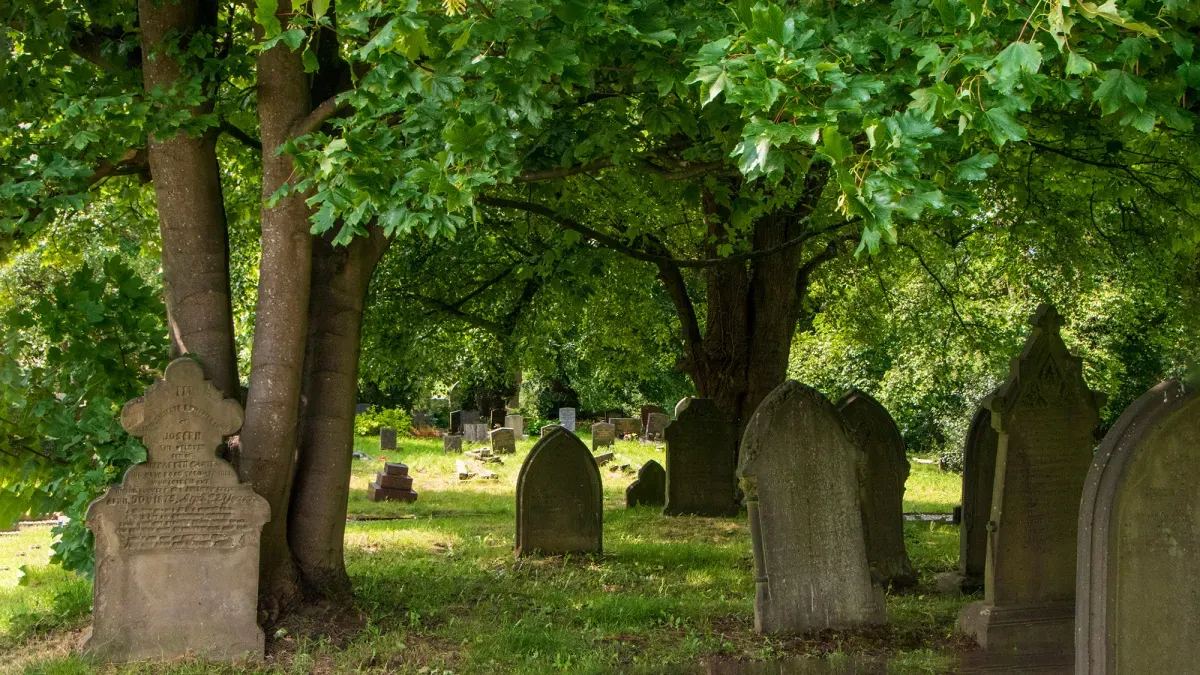
Natural burial—placing a body in a biodegradable shroud or simple wooden box directly into soil, with no embalming or vault—consistently ranks as the lowest-impact option across lifecycle assessments. Microbes and insects handle decomposition naturally. There's no leftover material to transport, no chemical runoff, no machinery humming away. A 2017 lifecycle assessment confirmed what Lee Webster, former president of the Green Burial Council, put simply: "Everybody wants something shiny, new and exciting, but the simplest solution is usually the best."
We're a new kind of news feed.
Regular news is designed to drain you. We're a non-profit built to restore you. Every story we publish is scored for impact, progress, and hope.
Start Your News DetoxWhat makes this particularly interesting is that natural burial sites often do double duty as conservation land. Ramsey Creek Preserve in North Carolina, established in 1996 and widely considered the first modern green burial site in the U.S., protects habitat rather than consuming it. Your final resting place becomes part of an ecosystem's recovery—a small but real form of legacy.
Newer alternatives like aquamation (which uses heated water and lye to break down tissue) and human composting (which uses straw, wood chips, and microbes) sound more innovative, but they come with hidden costs. Aquamation generates 100 to 300 gallons of liquid waste per body that enters wastewater systems. Human composting produces roughly 250 pounds of material that families often transport long distances for spreading—and some inputs like alfalfa are grown in water-stressed regions. The environmental math doesn't work out better than simply letting the soil do what it's evolved to do.
There's a broader pattern worth noticing here: the most advanced climate solution often turns out to be the one that requires the least intervention. We tend to reach for technology and innovation as answers, but sometimes the answer is older than any of us—it's what human bodies have returned to for millennia, before we decided to fight decomposition with chemicals and heat.
An emerging technology using a proprietary mixture to accelerate breakdown of both soft tissue and bone is in development, but it's not yet available. And Webster's point about grocery shopping applies here too: you can't simply trust the word "green." You have to know what went into it.
For now, if your final act on Earth should also be good for the Earth, the choice is clear. It's the one that asks the least of the planet.