The Dutch nonprofit The Ocean Cleanup hauled more than 25 million kilograms of plastic from global waters in 2025 alone — their most productive year yet. Since they started operations, they've removed over 45 million kilos total. The numbers sound enormous until you learn the actual scale of the problem: the UN estimates 11 billion kilograms of plastic flow into oceans every year. For every ton The Ocean Cleanup removes, hundreds more are entering.
But here's where the strategy shifted. Rather than just fishing plastic out of the water, the organization started asking a harder question: where is all this coming from? A breakthrough finding answered it: just 1,000 rivers — a mere 1% of the world's waterways — are responsible for nearly 80% of ocean plastic pollution. That's a radically smaller target than "fix the whole world."
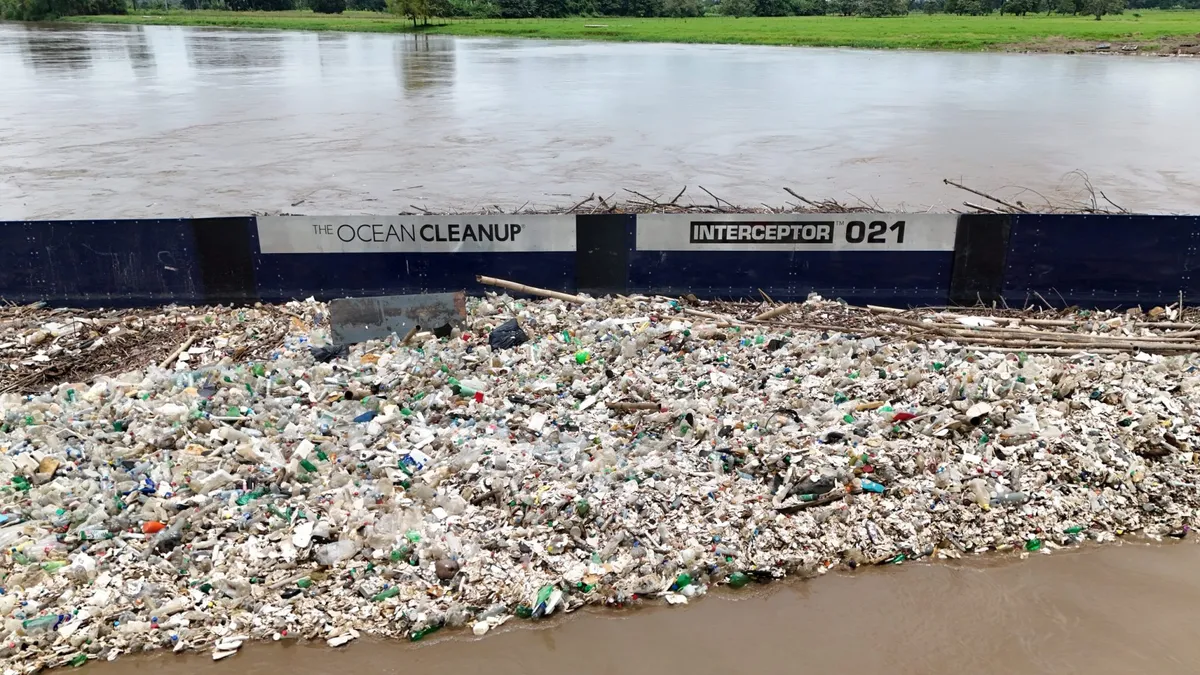
So The Ocean Cleanup deployed solar-powered "river interceptor" devices designed to catch plastic before it ever reaches the sea. These machines sit in rivers in fast-growing cities where waste management infrastructure hasn't kept pace with population growth. It's the difference between mopping up a flood and fixing the leak.
We're a new kind of news feed.
Regular news is designed to drain you. We're a non-profit built to restore you. Every story we publish is scored for impact, progress, and hope.
Start Your News DetoxFrom cleanup to prevention
The 2025 milestone came from what the organization calls "years of research, data-driven decision-making, and commitment to implementing responsible solutions adapted to local contexts." Translation: they didn't just drop the same technology everywhere and hope. They studied each river system, understood local waste patterns, and designed accordingly.
The organization's official goal is to remove 90% of floating ocean plastic by 2040. To get there, they launched their 30 Cities Program, focusing on the urban rivers doing the most damage. These are places where plastic production is accelerating but the systems to manage it haven't caught up — the typical story of rapid urbanization in Southeast Asia, Africa, and parts of South America.
What comes next requires something harder than technology. It requires prevention: fewer single-use plastics manufactured in the first place, redesigned packaging that doesn't become litter, better recycling systems, and global standards for how we handle waste. The Ocean Cleanup can remove plastic. But stopping it at the source means changing how we make, sell, and discard things.
The real work of the next decade unfolds on two tracks at once: scaling up the cleanup operations to work faster and more efficiently, and driving the upstream changes — in production, consumption, packaging design — that actually reduce the flow. The organization's biggest strength may be that it's learned to do both, partnering with local communities and waste management systems rather than treating ocean cleanup as a problem to solve alone. That's the difference between a band-aid and a strategy.