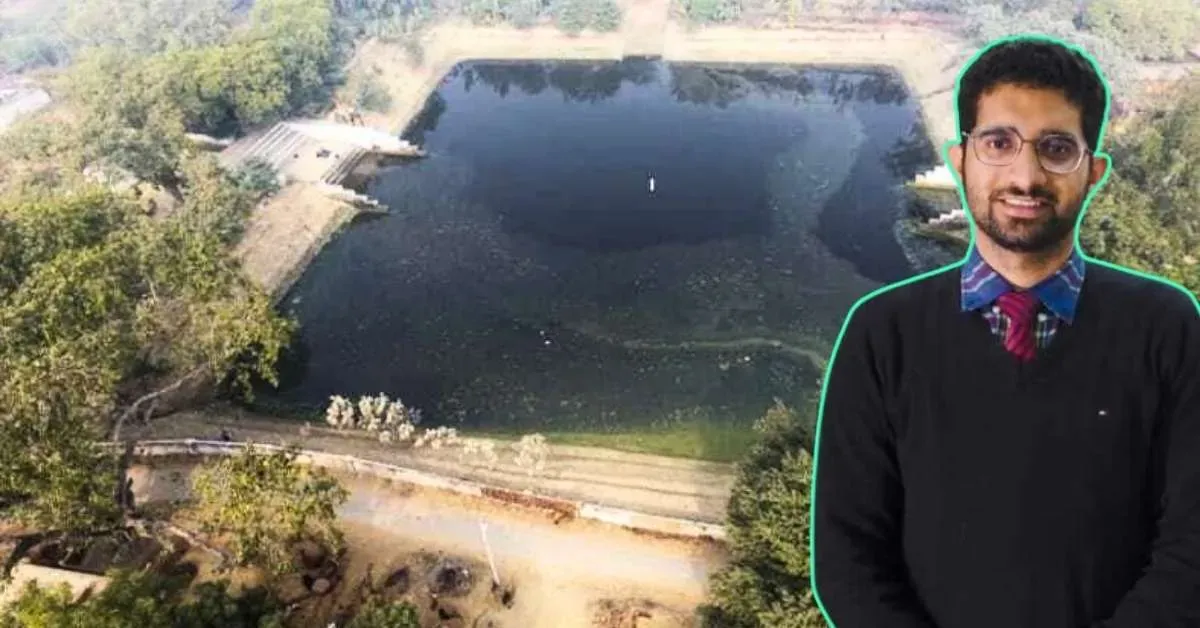
In Varanasi, an IAS officer noticed something that most people would have missed: waterlogging on a college campus during monsoon season and a shortage of rooftop space for rainwater harvesting were two sides of the same problem.
Himanshu Nagpal, the Chief Development Officer, was 27 when he connected those dots. The solution was straightforward — install rainwater harvesting systems on public building rooftops. Schools and colleges could stop flooding their grounds during the rains. Private companies extracting groundwater could fulfill their legal obligation to recharge aquifers. One action. Two problems solved.
But Nagpal also noticed something else: the numbers didn't add up. The district was issuing only about 30 permits for groundwater extraction annually, yet at least 700 borewells were being dug each year. "Even those who took a permit wouldn't set up rainwater harvesting structures," he says. So he started enforcing the rule — and building the infrastructure to make it possible.
We're a new kind of news feed.
Regular news is designed to drain you. We're a non-profit built to restore you. Every story we publish is scored for impact, progress, and hope.
Start Your News DetoxFrom rooftops to rivers
The project grew from there. Nearly 1,000 public buildings across Varanasi now have rooftop rainwater harvesting systems. But Nagpal didn't stop at roofs.
He introduced 393 artificial ponds called Amrit Sarovars — one-acre plots designed to catch and hold rainwater — with another 50 under construction. He rehabilitated the Nad River, which had become little more than an industrial drain over a 30-kilometre stretch, clearing it and building check dams and ponds to let water soak back into the ground. Around 6,000 hand pumps now have water-soak pits that capture excess water instead of letting it run off into streets.
The work involved NREGA workers, village councils, the World Wildlife Fund, and researchers from IIT-BHU. It was collaborative, distributed, and grounded in the landscape itself.
The numbers
In two years, Varanasi's water table rose by 1 metre overall. In Pindra, one of the district's most depleted blocks — designated "dark" for critically low groundwater — the water table climbed 1.7 metres. The block had been so dry that authorities had banned all groundwater extraction. Now extraction is possible again.
Nagpal speaks about this work with quiet clarity. He talks about the person in a rural area walking miles for water, about the tap that seems endless but isn't, about leaving a sustainable ecosystem for the next generation. Not as inspiration porn, but as the actual stakes of the problem. "No life is possible without water," he says.
What started as a conversation about a waterlogged campus became a blueprint for how a region can reverse groundwater depletion — not through one grand gesture, but through dozens of small interventions that work together. The solution was simple. The execution took coordination, patience, and someone paying attention to what the landscape was trying to tell them.