A livestream camera in Gaylord, Michigan is letting people around the world watch a 60-member elk herd navigate a Midwestern winter without leaving home. The elk cam, run by the Gaylord Area Convention & Tourism Bureau in partnership with local aging and city services, points at Elk View Park's feeding area where the animals gather for corn, hay, sugar beets, and vitamins.
It's a small thing—a camera pointed at a snowy field. But it's solving a real problem: winter makes it hard to get outside, and nature connection matters for our mental health. For people who can't travel, have mobility limitations, or simply can't face another frozen morning, the cam offers something genuine.
How elk came back to Michigan
The herd itself is a restoration story. These 60 animals started with three elk rescued when a local nature center closed. But the bigger picture is even more striking. Wild elk vanished from northern Michigan in the late 1800s—hunted out, habitat gone. In 1918, seven Rocky Mountain elk were brought to the Gaylord area as an experiment. By the 1960s, the population had grown to nearly 1,500. Poaching and habitat loss knocked that down in the mid-1970s, but sustained management by local government and private landowners brought it back. A 2016 aerial survey counted around 1,300 wild elk in the Pigeon River Country State Forest area—one of the largest free-roaming elk herds east of the Mississippi.
We're a new kind of news feed.
Regular news is designed to drain you. We're a non-profit built to restore you. Every story we publish is scored for impact, progress, and hope.
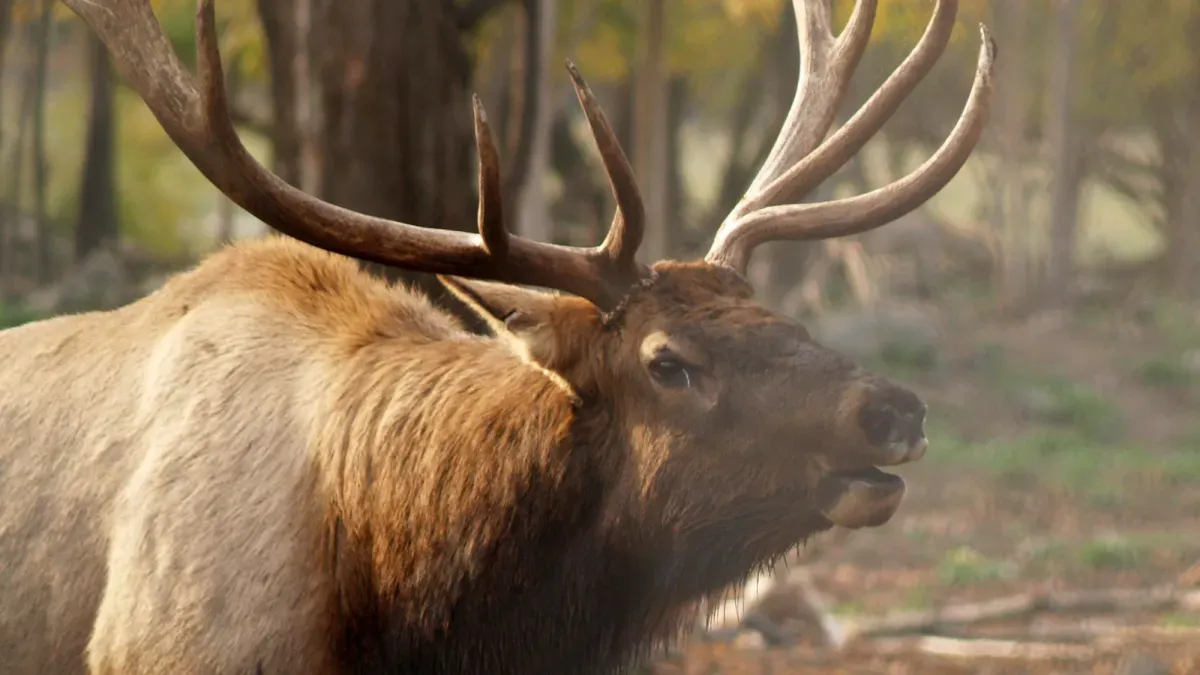
Start Your News DetoxThose bulls are massive. Some weigh over 800 pounds and stand taller than six feet. In September and October, when the mating season begins, they bugle—a sound that carries across the forest—and thrash brush with their antlers to establish dominance. If you want to see that raw territorial display in person, autumn is the time.
Gaylord's tourism bureau found in a 2017 study that 60% of visitors come specifically to watch elk. It's become a local anchor, something people return for and want to share. The livestream extends that without requiring the drive or the cold.
Other states have started similar projects. Pennsylvania and Virginia run elk cams at various times of year. These unedited feeds—no narration, no editing, just animals being animals—offer an accessible entry to nature for people of all abilities. That matters more than it might seem. The next wave of people connecting with wildlife might do it first through a screen, then decide to visit in person.