More than 50 years after Martin Luther King Jr.'s assassination, the United States still fractures along lines of race, poverty, and unequal justice. The divisions feel intractable. But King's lesser-known work points toward something that might actually bridge them: a specific kind of love that has nothing to do with sentiment.
The work that was interrupted
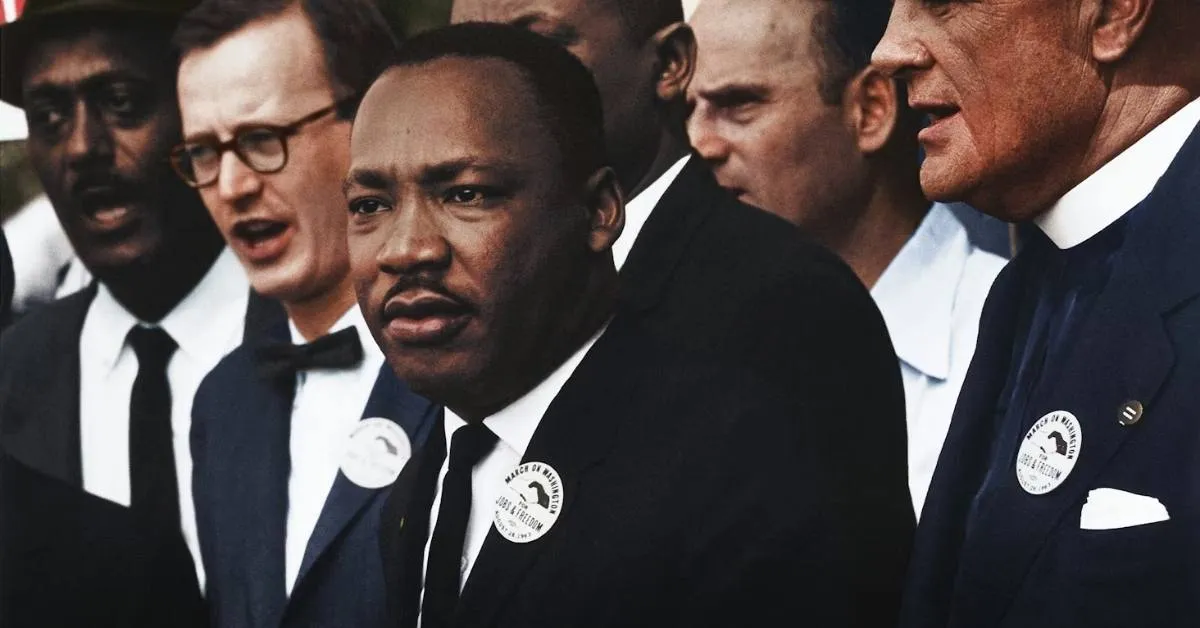
When King was killed in Memphis in 1968, he wasn't there to give speeches about his dream. He was organizing. Specifically, he was building toward a "Poor People's Campaign" that would have brought tens of thousands of economically disenfranchised people to Washington to demand policies that addressed poverty directly. His public career had focused on ending segregation and racial discrimination — the "I Have a Dream" speech remains the most visible marker of that work. But by the end, King had shifted his attention to economic justice, understanding that racial and economic oppression were inseparable.
That campaign never happened. The vision was interrupted.
What King meant by love
At the core of King's philosophy was an argument about love as a moral tool. Not the feeling kind. He made careful distinctions between three Greek words for love: eros (romantic attraction), philia (friendship), and agape — the one he returned to again and again.
We're a new kind of news feed.
Regular news is designed to drain you. We're a non-profit built to restore you. Every story we publish is scored for impact, progress, and hope.
Start Your News DetoxAgape, King said, was "understanding, redeeming goodwill for all men, an overflowing love which seeks nothing in return." It was the willingness to engage with someone who had harmed you, not out of affection, but out of a commitment to restore their humanity and the community's wholeness. As he put it: "If I respond to hate with a reciprocal hate, I do nothing but intensify the cleavages of a broken community."
This wasn't naive. King wasn't asking people to like their oppressors or to accept injustice quietly. He was proposing something harder: that the path to a functioning society required seeing the humanity in people across a divide, and acting from that recognition.
Why this matters now
In a moment when political divisions feel weaponized, when violence against minority communities continues, when economic inequality has deepened since King's time, his framework offers something concrete. It's not a call for niceness or forgetting harm. It's a proposal that restoring community — actually building the kind of society that works for everyone — requires approaching difference with what he called "redeeming goodwill."
That means conversations that acknowledge where we are, without assuming the worst about the person across from you. It means recognizing that agape, as King described it, is fundamentally about restoration: of dignity, of connection, of the possibility that we can live together.
The Poor People's Campaign King was building toward never launched. But the moral framework he was working from — that love, properly understood, is a tool for justice — remains available to us. It requires something harder than anger, and something more durable than hope.