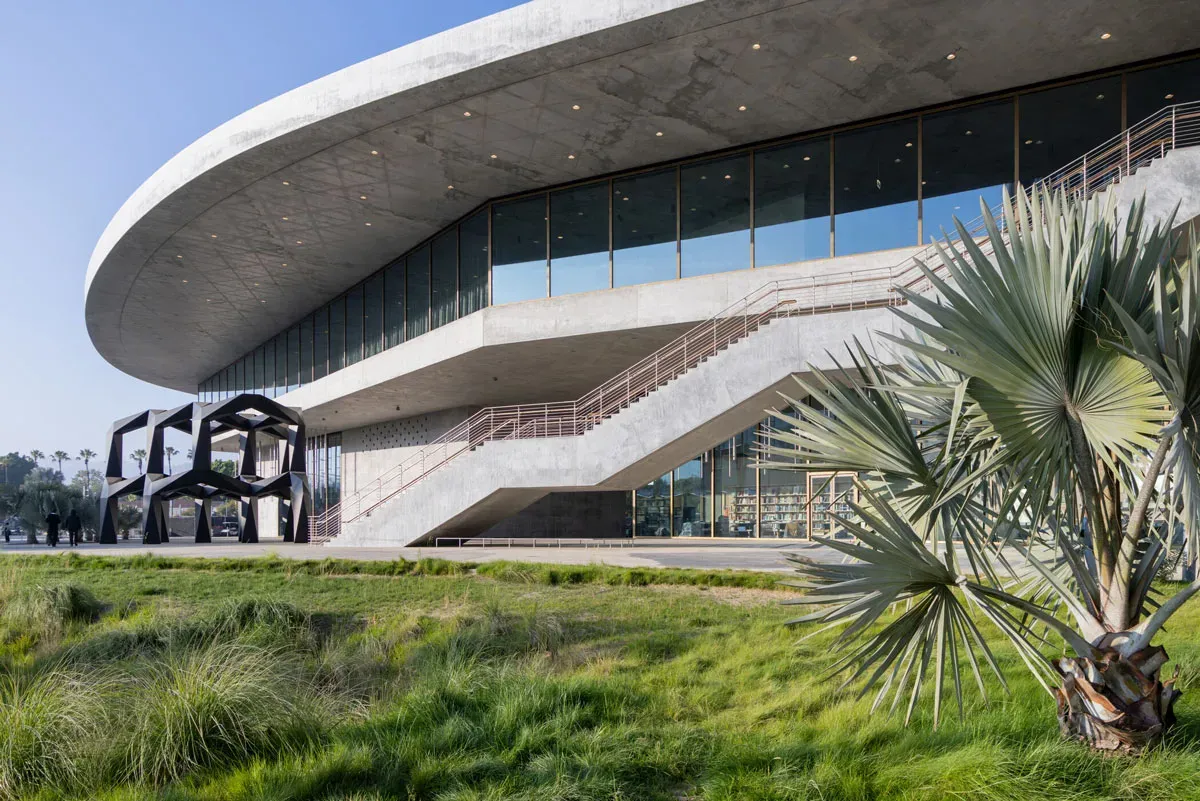
Get ready to rethink everything you thought you knew about art museums. The new David Geffen Galleries at the Los Angeles County Museum of Art (LACMA), which opened to the public on May 4, isn't just a building — it's a defiant middle finger to the traditional art history timeline. Forget walking in a straight line through European paintings; LACMA is now mixing centuries, continents, and conversations. Because apparently, that's where we are now: art history, but make it global.
This isn't just a fresh coat of paint. It's a fundamental shake-up, designed to create a more interconnected, less Eurocentric view of art. Imagine a 15th-century Turkish mosaic chatting across the gallery with a Baroque painting by Guido Reni. That's the vibe.
The $724 Million Earthquake-Proof Vision
The idea for this radical revamp started 25 years ago, finally coming to fruition under the watchful eye of LACMA director Michael Govan and Swiss architect Peter Zumthor. Yes, it cost a cool $724 million, with a generous $125 million from LA County. And yes, it even faced some criticism for reducing exhibition space. But Govan, clearly undeterred by mere details like square footage, pushed through his vision: a single-level structure that throws out the old rulebook.
We're a new kind of news feed.
Regular news is designed to drain you. We're a non-profit built to restore you. Every story we publish is scored for impact, progress, and hope.
Start Your News DetoxNo more special treatment for European masters. Art from the Americas, Africa, and Oceania now stands proudly in the spotlight. LACMA, bless its unrestricted heart, enjoys a rare freedom from donor demands, allowing Govan to call the Geffen Galleries a "laboratory." Curators are encouraged to constantly shift displays, keeping the permanent collection feeling less like a dusty archive and more like a lively, ongoing conversation.
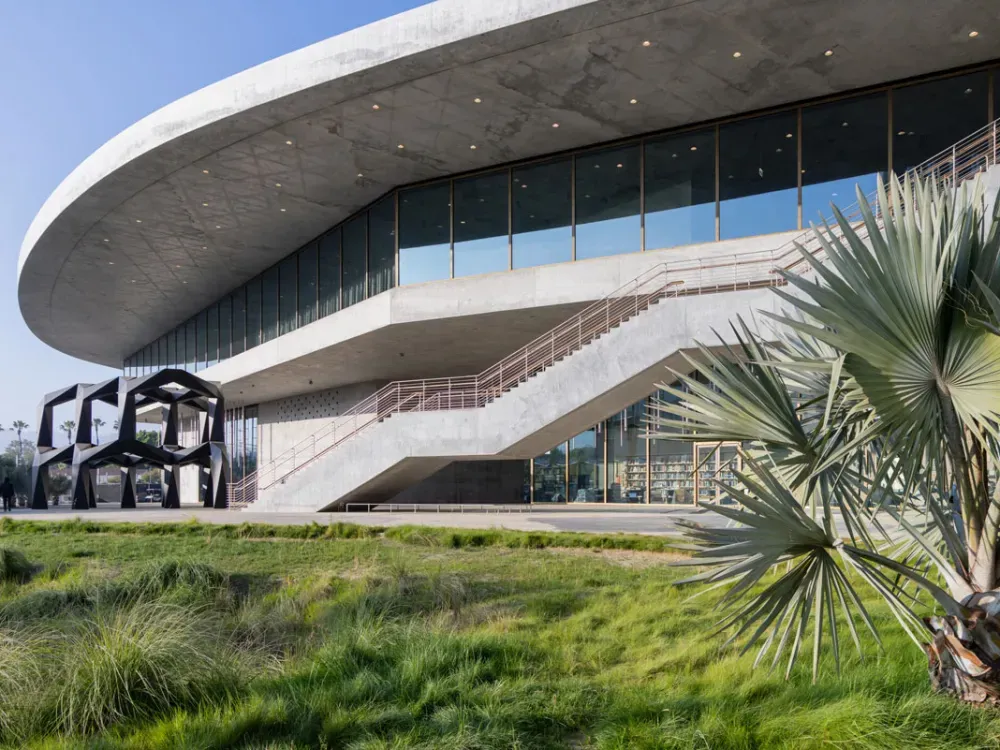
The building itself is a concrete beast, designed to sway a full five feet in an earthquake without so much as a crack. Some galleries even have colored pigment mixed into the concrete, adding an unexpected warmth, while massive windows pull the L.A. sprawl right into the art experience. Outside, restored sculptures like Alexander Calder’s Three Quintains (Hello Girls) and Jeff Koons’s Spilt-Rocker greet visitors, because what's a museum without a little controversy on the lawn?
Zumthor's initial design, which involved crossing Wilshire Boulevard, was controversial. But the finished curve, now an elegant, almost freeway-like overpass, feels distinctly Los Angeles. Because of course it does.
Oceans, Cars, and Challenging Histories
LACMA's curators have gone all-in with 78 thematic sections. One highlight: "Car Culture," a nod to LA's very soul. It features a 1963 Studebaker Avanti alongside Carlos Almaraz’s Crash in Phthalo Green and Ed Ruscha’s "Parking Lots" photographs. Because nothing says L.A. like admiring a classic car while contemplating its artistic implications.
The museum's overarching theme is inspired by four oceans — Pacific, Indian, Mediterranean, and Atlantic — viewing "art and history as a dynamic, oceanic flow." Translation: wander, get lost, and discover wild connections. You might find a Nahua artist's Pax sculpture near a painting of the Virgin of Guadalupe that secretly honors an Aztec goddess. Because why not?
The new galleries don't shy away from difficult histories either. "Transatlantic Exchange and Its Legacies" tackles the slave trade, bringing together Winslow Homer’s The Cotton Pickers, a "Lady of the Lake" Quilt, and Betye Saar’s searing I’ll Bend But I Will Not Break. It’s a powerful, unvarnished look at the threads connecting cotton, textiles, and human suffering.
With 1,700 objects currently on display and more to come, the Geffen Galleries promise an experience where you encounter art first, and then, perhaps, go home and Google everything you just saw. Which, if you think about it, is both impressive and slightly terrifying for your weekend plans.