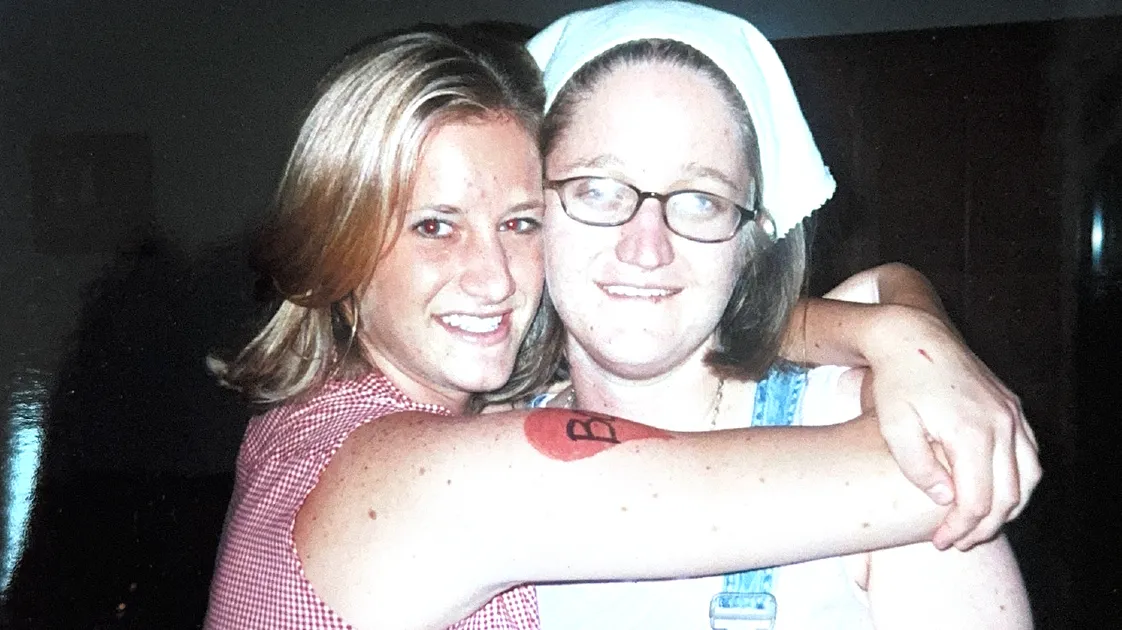
My older sister, Maria, has an intellectual disability. When we were kids, she talked to herself and got overwhelmed easily. School was tough for her.
I loved Maria, but then I learned others saw her as "different." As a child, I just wanted to fit in. It was hard with an older sister who stood out.
Often, if I was invited somewhere, the condition was, "Take your sister." I hated those words. Once, in middle school, my parents made me take Maria to the movies. My friends and I were meeting boys. I pulled Maria aside and told her, "Don't talk. Just stand over there."
We're a new kind of news feed.
Regular news is designed to drain you. We're a non-profit built to restore you. Every story we publish is scored for impact, progress, and hope.
Start Your News DetoxThat memory still hurts. But Maria always loved me. She came to my sports games and took pictures with me before every dance. She was my maid of honor and is now godmother to my three boys. She was my biggest fan before I learned to be hers.
From Embarrassment to Purpose
Over time, my embarrassment turned into fierce protectiveness. It hurt when people called Maria names. Looking back, I think that pain quietly turned into purpose.
I also remember the people who loved Maria for who she was. My high school friends included her. At one party, she danced on the counter with us, wearing a cowboy hat. (She also told my parents everything when they got home.)
My college friends welcomed Maria too. One night, her coat disappeared, which was very upsetting for her. A few football players stayed with her, keeping her safe and talking to her. The rest of us searched for her coat. Years earlier, I would have been mortified. Instead, I felt very grateful.
My parents always encouraged Maria to dream big. At 26, she met a charming man with special needs at her job. They fell in love and joined Special Olympics together. Soon, they talked about marriage.
My siblings and I worried. Maria struggled with daily decisions. How could she manage a marriage? But my parents supported her. I thought they were crazy then, but now I understand. The marriage didn't last, but Maria deserved to experience love, marriage, and life's lessons, just like anyone else.
I was her maid of honor. In my speech, I joked she didn't teach me typical older sister things like fashion or makeup. Instead, she taught me patience, kindness, and empathy. These things mattered much more.
Creating Sunday Strong
Years later, I moved back to Vero Beach. Maria and I started spending time together regularly, this time by choice. The gym was my happy place, so I started taking Maria with me. I still laugh thinking about a spin class where everyone was working hard on a "hill." Maria, not understanding to add resistance, pedaled like she was racing downhill.
The class wasn't right for her. It didn't offer the individual help she needed to enjoy or connect with the workout.
Then I had an idea. What if I created a class just for her and others like her?
I asked a local gym if I could use their space on Sundays when they were closed. Three athletes came to the first class, including Maria. Volunteers gave them individual coaching and modified exercises. They did squats, presses, and other movements at their own pace. They were engaged and challenged, not just following along.
This was the start of Sunday Strong. It's a nonprofit that helps adults with intellectual disabilities be more active. We partner with gyms to offer free weekly group exercise classes in a welcoming environment.
Maria has worked at Publix for over 25 years. She knows everyone in town. Once, she told someone while bagging groceries that I had been sick. I was pregnant. Thanks, Maria.
Now, she's my unofficial marketing director. If she meets someone with a disability, she tells them, "You have to come to our exercise class!"
Once, at an airport, my child asked about a man in a wheelchair. I explained that his legs worked differently and the wheelchair helped him move. The man thanked me. He said many parents panic when kids ask questions. He noted that kids are curious and just need an explanation.
Inclusion starts with understanding.
Sunday Strong has changed many lives. It has helped our athletes and their families. It has also changed the gyms that donate space, the coaches who volunteer, and all our helpers. People who had never spent time with someone with an intellectual disability often say, "I got way more out of this than I gave."
It has changed my life the most. I once asked my sister to be quiet at the movies. Now, I find purpose in creating a place where people with intellectual disabilities feel they belong.
For years, I wished my sister wasn't "different." Now, I can't imagine my life without everything her differences have given me.