Theresa Hak Kyung Cha was an artist who explored many art forms. She moved between mediums to show her interest in history, people in exile, and the changing nature of language. For Cha, no idea was ever fixed. Instead, these big concepts were always shifting, even four decades after her death.
Her unique style is best seen in Dictée. This book combines poetry, memoir, calligraphy, and stories of revolutionary women like Joan of Arc and her mother, Hyun Soon Huo. Dictée was published in 1982, just weeks before Cha's murder. It established her as a powerful voice. Since then, it has become a key text in fields like comparative literature and Asian American studies.
A Resurgence of Interest
Recently, Cha's work, especially her films, has gained new attention. This followed a special presentation at the 2022 Whitney Biennial. Contemporary artists like Na Mira and Cici Wu have also explored her archives. They create new works that seem to pick up where Cha left off.
We're a new kind of news feed.
Regular news is designed to drain you. We're a non-profit built to restore you. Every story we publish is scored for impact, progress, and hope.
Start Your News Detox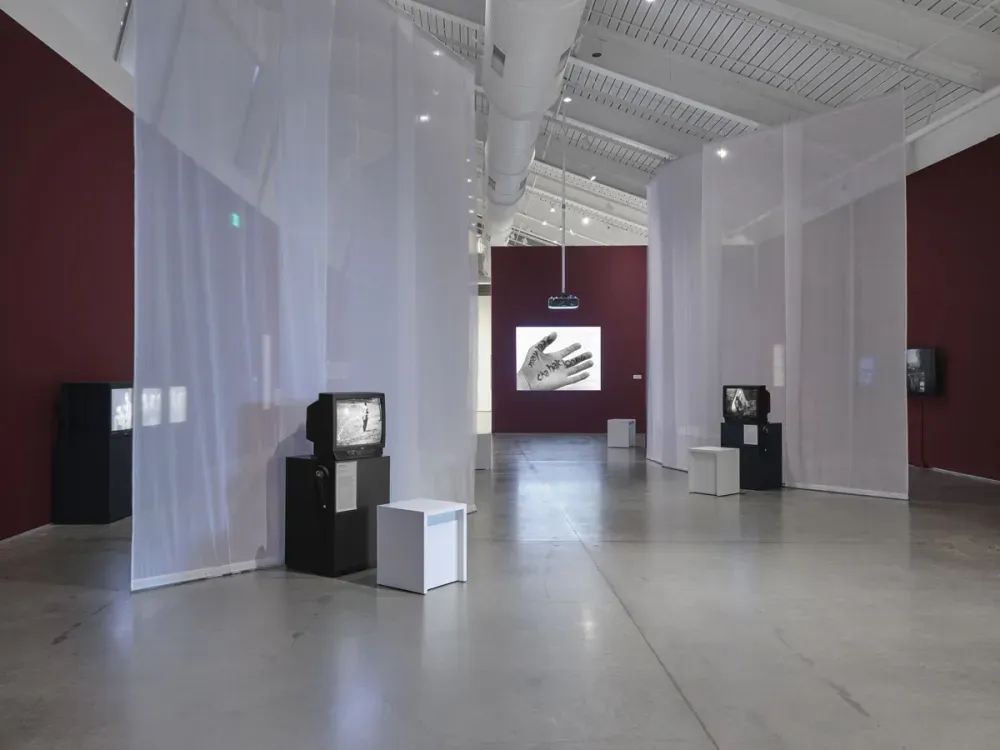
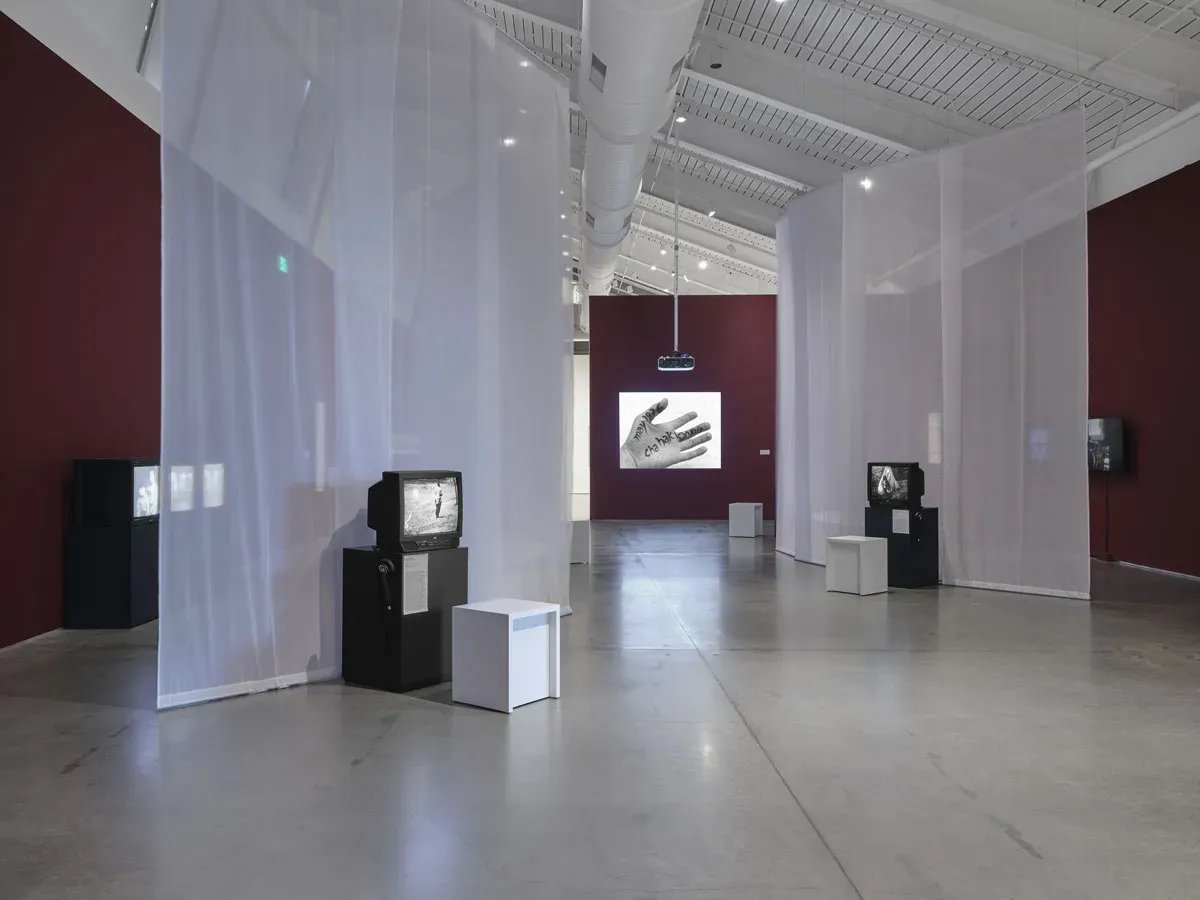
The Berkeley Art Museum and Pacific Film Archives (BAMPFA) manages Cha's art and archives. This winter, BAMPFA opened "Multiple Offerings," the most complete retrospective of Cha's work to date. This is her first exhibition of this size in 25 years. Interest in her work has grown greatly, with three-quarters of all research requests to BAMPFA related to Cha. The exhibition took three years to plan. It also led to a huge effort to re-catalog BAMPFA's entire Cha collection, which includes about 26,000 objects.
The show's title comes from Cha's own idea for her art: "Multiple Telling with Multiple Offerings." She invited viewers to find new meaning through their experience of the art.
The exhibition, curated by Victoria Sung, is vast and diverse. It captures Cha's spirit in the galleries. Over 100 of Cha's works are shown alongside pieces by 10 other artists. This mix includes Cha's mentors, peers, and younger artists influenced by her varied practice.
The exhibition starts with Cha's family. Untitled (Poem to Mother and Father), an ink on cloth work from the 1970s, is at the entrance. It's written in the Korean sijo poetic form. Cha's family was key to her art and to preserving her legacy. Her siblings often collaborated with her. Her family also donated many of her works to BAMPFA, starting in 1992. Cha marked the poem with her red thumbprint, showing her lineage. In the poem, she thanks her parents for her life and for making her art career possible. She ends with a question about family relationships: "Where could I ever repay them / for their loving kindness, infinite as the sky?"
The exhibition follows Cha's career mostly in order. It highlights the places she lived and worked between 1969 and 1982. This includes her decade at UC Berkeley, where she earned four degrees. Later, it covers her time in France and New York, and her return to South Korea, which she left in 1962 when she was 12.
Even Cha's early works in traditional mediums hinted at how her art would grow. As an undergraduate, she worked in Peter Voulkos’s ceramic studio. One ceramic piece from his studio, on display at BAMPFA, shows the influence of the Bay Area ceramics scene of the late 1960s and early 1970s. It mixes funky and formal styles. Cha added her own touch by including elements of traditional Korean dal hangari (moon jars).
These inspirations might not be clear to all visitors. But this is part of what makes Cha's art exciting. With some research, parts of her art become clear, while others remain a mystery. Cha enjoyed this uncertainty. If visitors embrace it, they might find comfort there.
This idea is clearest in the displays of her artist statements, performance notes, and poems. Cha excelled at questioning language, breaking it down letter by letter.
For example, her script for Monologue (1977) begins, "what if / i say / this / in saying that / for lack of a better word." In Repetitive Pattern (1975), the words "repetitive" and "pattern" are repeated until they lose meaning. It Is Almost That (1977) is a series of 19 sheets that served as a model for a slide projection. It features different word arrangements, often like sentence diagrams. The words "YOU" and "ME" appear on opposite sides of a line cutting through a circle. Other sheets play with first, second, and third person.
Art as a Form of Protest
Cha's work was not just art for art's sake. Her 1975 performance Aveugle Voix is an early example. The title means "blind voice" in French, but phonetically it can mean "the blind sees." Cha performed this work on the Berkeley campus. She wore all white and was blindfolded with cloth printed with the title words. She then unrolled a banner that read, "WORDS FAIL ME." This evoked early resistance to Japan's occupation of Korea in the early 20th century. She connected this to her present, with anti-war protests and student strikes at Berkeley pushing for ethnic studies departments.
Cha's action "exposed the limits of speech and the politics of who is allowed to speak," according to a wall text. This message feels relevant today. Protests on college campuses, including those against the genocide in Gaza, are often silenced by police or campus security. Some students face punishment or expulsion.
"Multiple Offerings" is full of video works. Some are easy to understand quickly, while others reveal their depth slowly after many viewings. In many of these works, Cha explores the changing nature of language by adding the element of time.
Permutations (1976), one of Cha's most famous video works, does this. Over 10 minutes, we see her sister, Bernadette, in six different one-second shots. These include "head facing the camera with eyes closed" and "head back to the camera with eyes open." These shots are arranged using a chance method. Bernadette stares blankly at the camera, then turns her back. Are her eyes open or closed? This sense of refusal from both Bernadette and Cha, who appears for one second at the end, makes the work hard to understand, even though it seems simple.
Cha never finished her major film, White Dust from Mongolia (1980). However, her archives contain many notes and storyboards. These outline a story of life in Korea during the Japanese occupation, a topic not well-studied in 1980. Cha planned to tell a fictionalized version of her parents' lives. As children, they lived in Japanese-controlled Manchuria, where they were forbidden from speaking Korean.
Her parents' story, along with Cha's own experience learning English after moving to the US, deeply influenced her. She wrote in a fellowship application, "The content of my work has been the realization of the imprint, the inscription etched from the experience of leaving, the experience of America. It has served as both shadow and reflection in my work and myself as an individual."
Cha's descriptions for the film mention two separate stories that would eventually combine into "one complete superimposition, to one point in Time." But as artist Na Mira noted in a conversation with Cici Wu, "White Dust held everything and nothing of Cha’s practice, and the only way for me to engage with it was never to finish; it was to continue, in fragmentation."
Cha's career ended too soon, leaving her full potential unknown. But by engaging with her art, viewers are reminded that the pieces of life and history are ours to put together. Cha hinted at this in a letter from Audience Distant Relative (1977–78), titled "object/subject":
in our relationship i am the object / you are the subject in our relationship you are the object / i am the subject