Less than one in ten blockbuster films made between 2013 and 2022 even mention climate change, despite depicting worlds where it's clearly happening. A disaster movie shows cities flooding. Another features a jellyfish miles from its normal habitat. Neither acknowledges why.
A nonprofit called Good Energy decided to measure this gap using a framework borrowed from film criticism. The Bechdel Test, created in 1985, asks whether a movie has two women who talk to each other about something other than a man. It's a simple measure, and it reveals patterns. Good Energy adapted the idea: Does a film set in our world acknowledge that climate change exists, and does at least one character name it?
It sounds basic. Yet when researchers from Good Energy and Colby College's Buck Lab applied this "Climate Reality Check" to 250 major releases, fewer than 10% passed.
We're a new kind of news feed.
Regular news is designed to drain you. We're a non-profit built to restore you. Every story we publish is scored for impact, progress, and hope.
Start Your News DetoxWhy this matters
Films shape how we understand the world, especially for audiences who won't read climate reports or sit through documentaries. When a movie shows environmental chaos without naming its cause, it leaves viewers with a vague sense of dread but no framework for understanding it. The opposite — a character simply saying "this is climate change" — can shift that entirely.
Take Nyad, the 2023 film about Diana Nyad's record-breaking swim from Cuba to Florida. A box jellyfish appears miles from its normal habitat, and a character names it: global warming. The moment is brief, organic, and grounded in the story itself.
Mission: Impossible — Dead Reckoning Part One goes further. Tom Cruise's character discusses with an older ally how the next global conflict will be fought over "drinkable water" and "breathable air." It's not the film's main plot, but it's there, woven into the world.
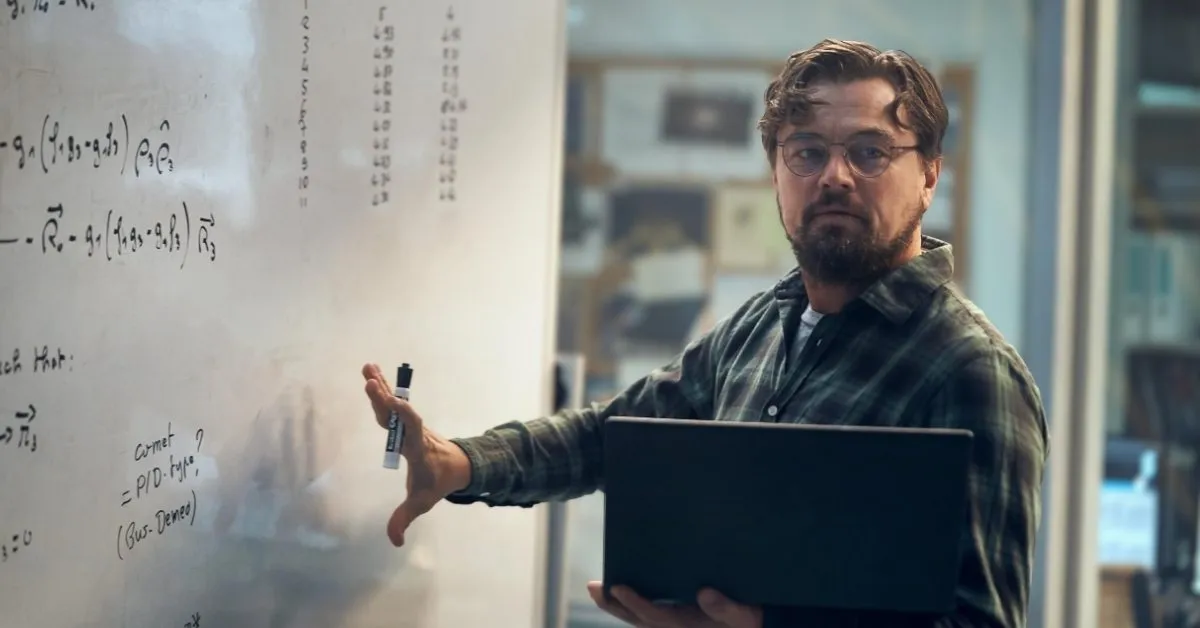
And then there's Don't Look Up, which made climate change its central metaphor — two scientists desperately trying to warn the world about an extinction-level threat while the media and politicians ignore them. Director Adam McKay managed to entertain, reach people, and educate simultaneously, according to critics.
Carmiel Banasky, Good Energy's editor-in-chief, emphasizes that this isn't about forcing messaging into stories. "We are very story-first," she said. "Climate needs to bubble up in an organic way." The point isn't propaganda. It's acknowledging reality.
Screenwriter Eric Schneider-Mayerson, who led the study, frames it differently: "If more films meet the Climate Reality Check, it would expand our capacity to respond to the climate crisis." That's not hyperbole. Stories change what we think is normal, possible, urgent. When Hollywood stops pretending climate change doesn't exist in the worlds it creates, audiences start expecting it to be part of conversations everywhere else.
The fact that fewer than one in ten films currently do this suggests there's enormous room for change — and filmmakers are beginning to notice.