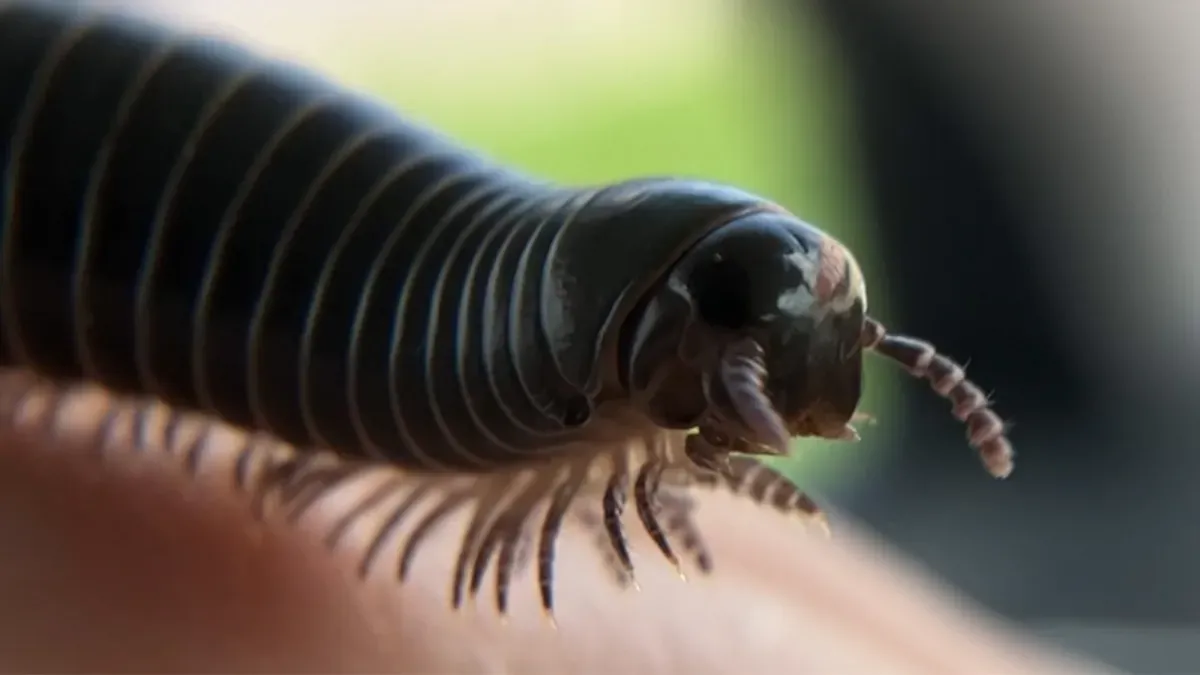
Anne Sawl was moving dirt around a plant in her lab when she spotted something that made her stop. A tiny white speck, barely visible. She picked it up and realized what she was holding: a baby millipede. After months of trial and error trying to get the Florida scrub millipede to breed in captivity, this single offspring felt like vindication.
"I was completely flabbergasted," Sawl, a conservation biology graduate student at the University of South Florida St. Petersburg, recalls. The breakthrough came when she finally recreated something the lab had been missing: plants from the millipedes' actual home.
These millipedes—Floridobolus penneri—are giants by arthropod standards, reaching up to four inches long and moving on more than 100 legs. They exist nowhere on Earth except the Lake Wales Ridge in central Florida, a sliver of elevated land that became isolated millions of years ago when sea levels dropped. That isolation created a pocket of evolution: species found here and nowhere else.
We're a new kind of news feed.
Regular news is designed to drain you. We're a non-profit built to restore you. Every story we publish is scored for impact, progress, and hope.
Start Your News DetoxBut here's the problem. Humans have destroyed 85% of the ridge's original habitat. The Florida scrub millipede hadn't been properly studied in nearly two decades. Almost no one knew how they reproduced, what they actually ate, or how many remained.
Sawl's research is changing that. Her work has revealed that these millipedes are surprisingly picky about their living conditions—they need the right plants, the right soil, the right everything. And they prefer fungi and mushrooms to the plant material researchers had assumed was their primary diet. These details matter because they shape what kind of habitat restoration actually works.
"Millipedes might not be glamorous, but they are ecological champions in these fragile habitats," her adviser, Deby Cassill, noted. The millipedes break down organic matter and recycle nutrients back into the soil—work that keeps the entire ridge ecosystem functioning. Lose the millipedes, and the whole system weakens.
What makes Sawl's contribution significant is that she took a group of animals most people overlook and produced publishable research that didn't exist before. She answered basic questions: How do they breed? What do they eat? How are populations distributed across the ridge? These answers are now informing conservation strategy for a species most Floridians will never see, let alone know exists.