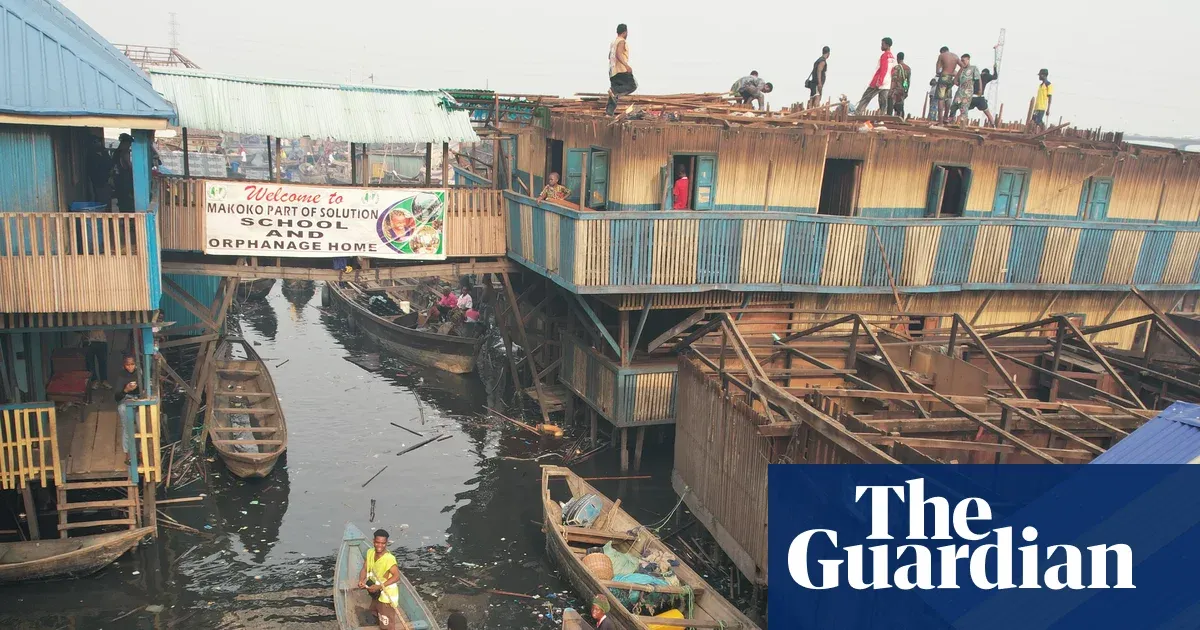
On December 21st, excavators and armed police tore through Makoko, a waterfront community in Lagos that has existed for over a century. Wooden homes built on stilts collapsed into rubble. It was the second demolition operation that year, and residents say they had almost no warning—and no idea where they were supposed to go.
Augustine Agpoko, 42, was a fisher with eight children and a six-bedroom home. When the bulldozers arrived on January 16th, he was trying to salvage materials from his house. He had to evacuate his family immediately. Timothy Ategi, 60, watched his home—built by his father, repaired by his sons—get flattened along with his fishing nets, buried under debris.
The demolitions weren't surgical. They destroyed homes, schools, businesses, and the fish smoking sheds that families depend on for income. Some residents ended up sleeping on boats among the wreckage.
We're a new kind of news feed.
Regular news is designed to drain you. We're a non-profit built to restore you. Every story we publish is scored for impact, progress, and hope.
Start Your News DetoxWhat Went Wrong
Community leader Emmanuel Shemede says the government broke a verbal agreement: officials promised to only demolish structures within 100 meters of a high-voltage power line. Instead, buildings over 200 meters away were destroyed. No compensation has been offered. No resettlement plan exists.
Amnesty International Nigeria's executive director, Isa Sanusi, called it a serious human rights violation. Residents suspect the real motive: property developers and wealthy investors want to replace their community with luxury high-rises and condominiums.
Why This Matters
Makoko isn't a slum that needs fixing. It's a community engineered by its residents to live with water, not against it. Homes and livelihoods coexist on the lagoon in a delicate, functional system refined over generations. Dr. Abisoye Eleshin, a research fellow at the University of Lagos, argues the government could learn from this. Instead of erasing Makoko, she suggests engaging residents to formalize a way of living that serves both climate adaptation and water management—goals Lagos desperately needs as sea levels rise.
Instead, hundreds of people are displaced. Their homes are gone. Their means of earning are gone. And no one from the government has told them what comes next.