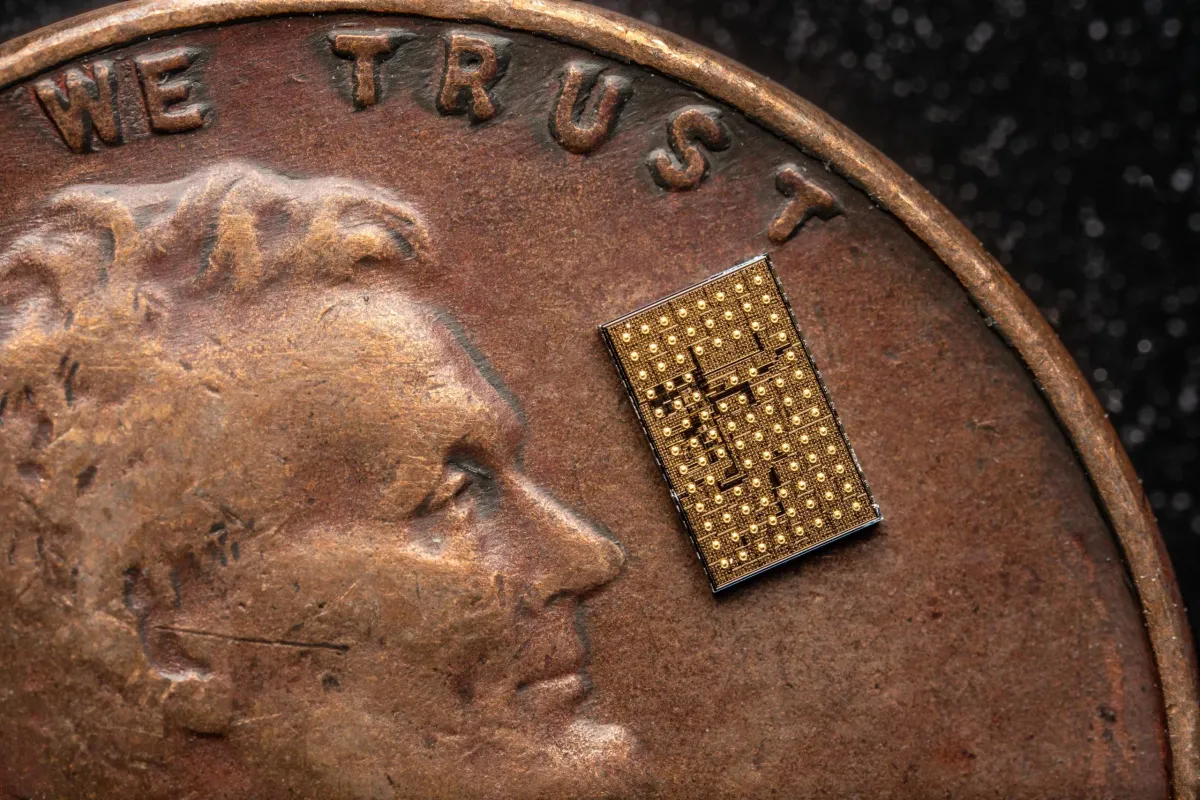
Engineers at UC San Diego have created a new chip that could make data centers much more energy efficient. The chip improves how power is delivered to GPUs.
Data centers use a lot of electricity. This new design helps GPUs handle power more effectively. It focuses on converting high voltages to the lower levels needed by computer hardware.
In tests, a prototype chip efficiently converted power under conditions similar to modern data centers. This research, published in Nature Communications, could lead to smaller, more energy-efficient computing systems.
We're a new kind of news feed.
Regular news is designed to drain you. We're a non-profit built to restore you. Every story we publish is scored for impact, progress, and hope.
Start Your News DetoxRethinking Power Conversion
The new chip redesigns a common part called a DC-DC step-down converter. These converters are in almost all electronic devices. They protect circuits by lowering incoming voltage to safe levels for each component.
Data centers typically distribute electricity at 48 volts. However, GPUs need much lower voltages, usually between one and five volts. It's hard to manage this large voltage drop efficiently, especially as systems become more powerful and space is limited.
Traditional converters struggle with big voltage differences. Their efficiency drops, and they can't always supply enough current. Most current designs use magnetic parts like inductors. These are reaching their limits and are hard to scale for future needs.
Patrick Mercier, a professor at UC San Diego and senior author of the study, noted that there isn't much room left to improve inductive converters.
A New Approach with Piezoelectric Resonators
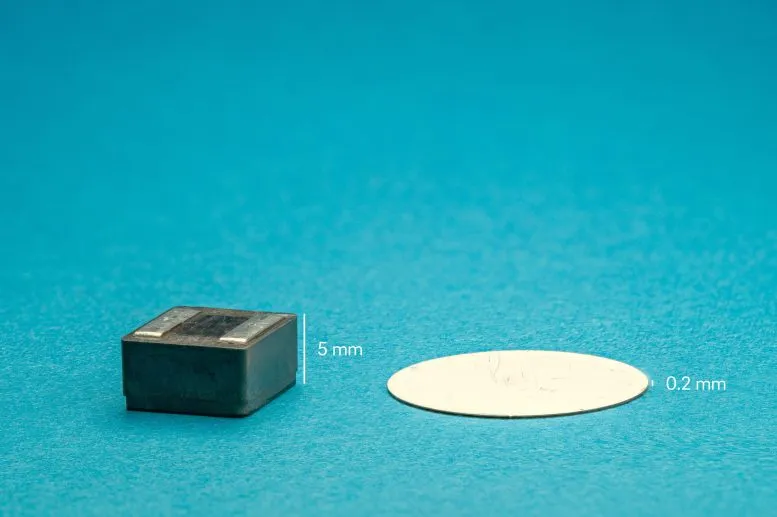
Mercier's team, including lead author Jae-Young Ko, explored using piezoelectric resonators. These small devices store and transfer energy through mechanical vibrations, not magnetic fields.
Piezoelectric converters could be smaller, more energy-dense, more efficient, and easier to make in large numbers. Mercier believes they have a lot of potential for better performance.
However, earlier versions of these converters struggled to stay efficient and provide enough power with large voltage differences.
High Efficiency from a Hybrid Design
To fix these issues, the researchers created a hybrid design. It combines a piezoelectric resonator with small, off-the-shelf capacitors in a special setup. This allows the converter to handle larger voltage drops more effectively.
They built this design into a prototype chip and tested it. The chip successfully converted 48 volts down to 4.8 volts, a common level in data centers. It achieved a peak efficiency of 96.2%. The chip also delivered about four times more output current than previous piezoelectric designs.
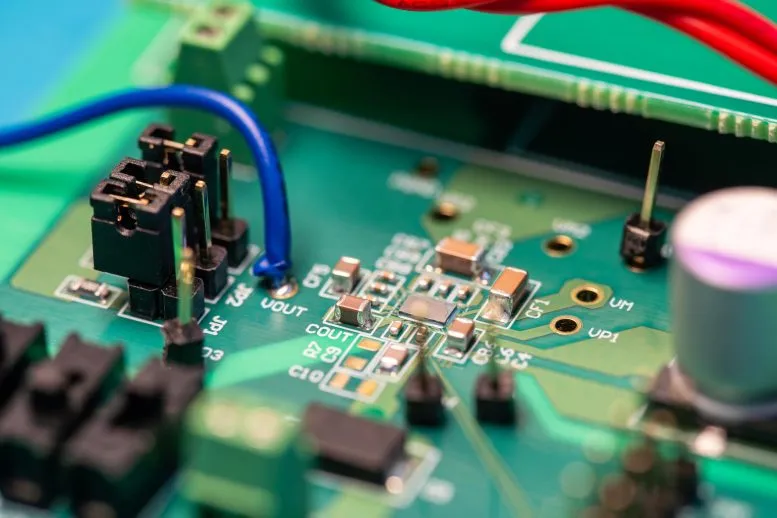
This hybrid setup offers several benefits. It creates multiple paths for power, reduces wasted energy, and lessens the load on the resonator. These improvements boost efficiency and power delivery, with only a slight increase in chip size.
Future Steps
This technology is still new. Researchers see it as a key step to overcome the limits of current power converters. Future work will focus on improving materials, circuit performance, and packaging.
One challenge is that piezoelectric resonators vibrate. This means they can't be attached to circuit boards with standard soldering. New ways to integrate them into electronics will be needed.
Mercier noted that piezoelectric converters are not yet ready to replace existing technologies. However, they offer a path for improvement. Continued work on materials, circuits, and packaging is needed to prepare this technology for data center use.
Deep Dive & References
A hybrid piezoelectric resonator-based DC-DC converter - Nature Communications, 2026