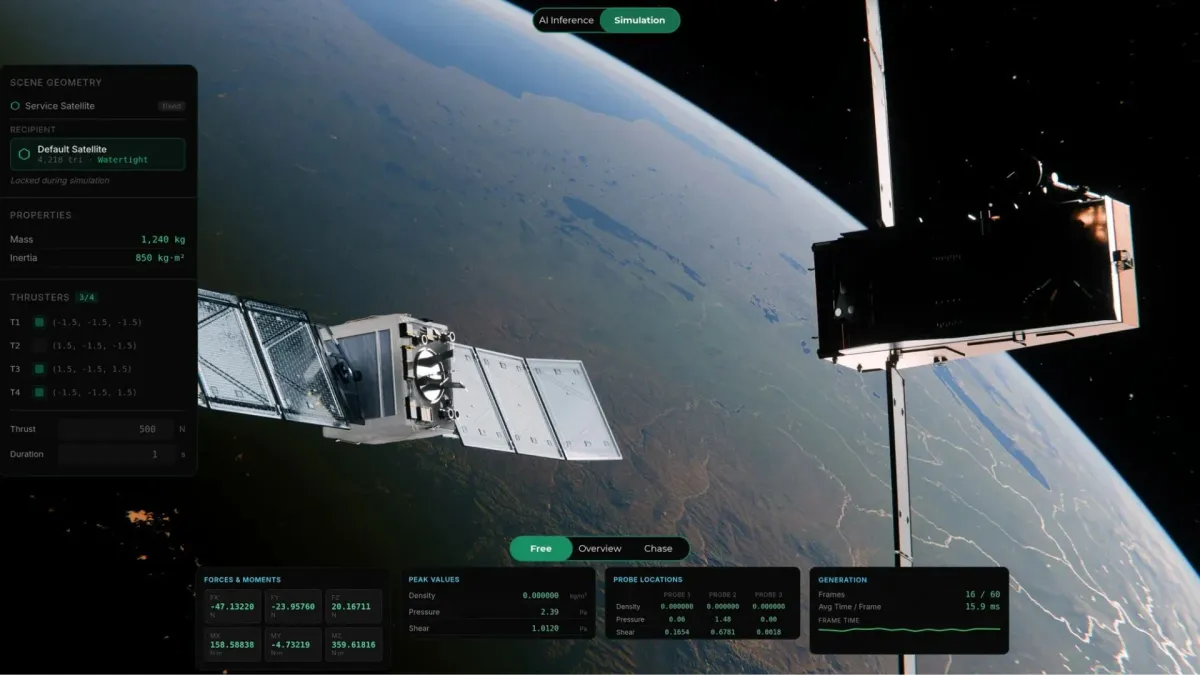
In Earth's orbit, even a few centimeters can decide if a spacecraft docks successfully or crashes. Preparing for these delicate maneuvers used to take months of intense data work. Now, it takes seconds.
This change comes from a new collaboration between Flexcompute, Northrop Grumman, and NVIDIA. They have created a "Physics AI" system. It automatically simulates spacecraft plume impingement. This is the complex way a thruster's exhaust interacts with nearby parts of the spacecraft.
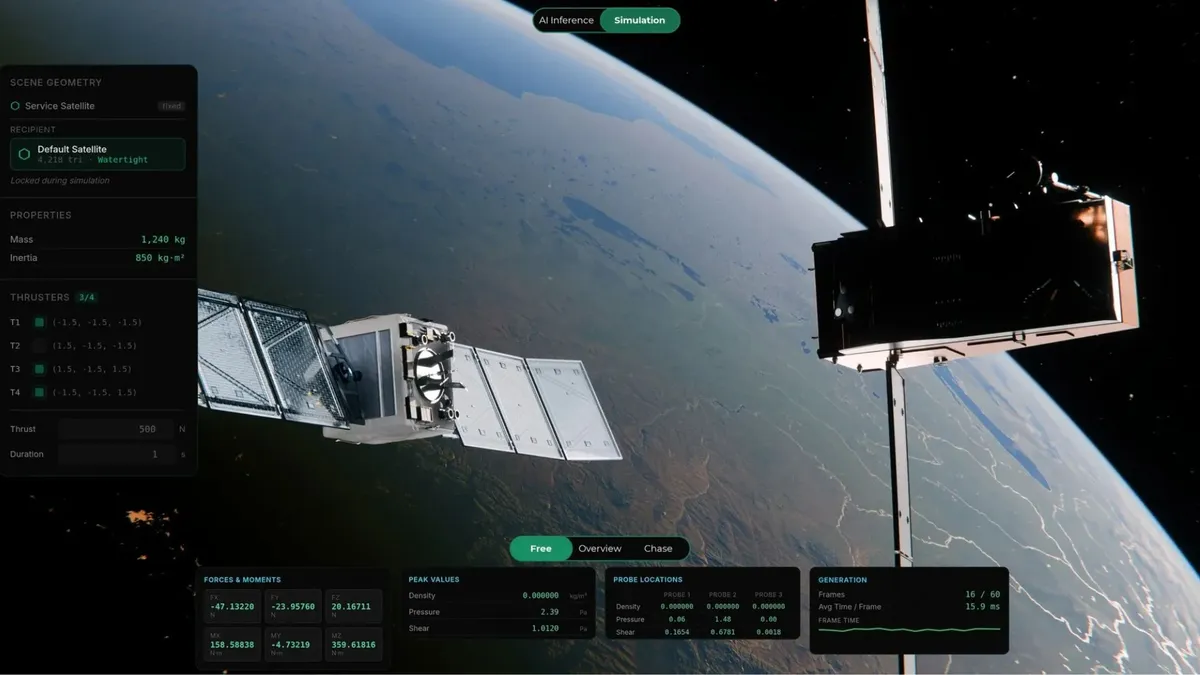
The partners have cut simulation times by 100 times. This gives engineers a clear view of future space operations. This technology could lead to more efficient spacecraft. It allows for lighter designs, better fuel use, and longer mission lives.
We're a new kind of news feed.
Regular news is designed to drain you. We're a non-profit built to restore you. Every story we publish is scored for impact, progress, and hope.
Start Your News DetoxVera Yang, President and Co-Founder of Flexcompute, explained that they are taking accurate physics and turning it into trained AI solutions. These solutions help engineers solve problems faster and more confidently.
Physics-Informed AI
Space is full of unknowns, which can lead to sudden events. When a rocket thruster fires in a vacuum, the gas expands instantly and powerfully. This creates complex heat and forces that are almost impossible to recreate on Earth.
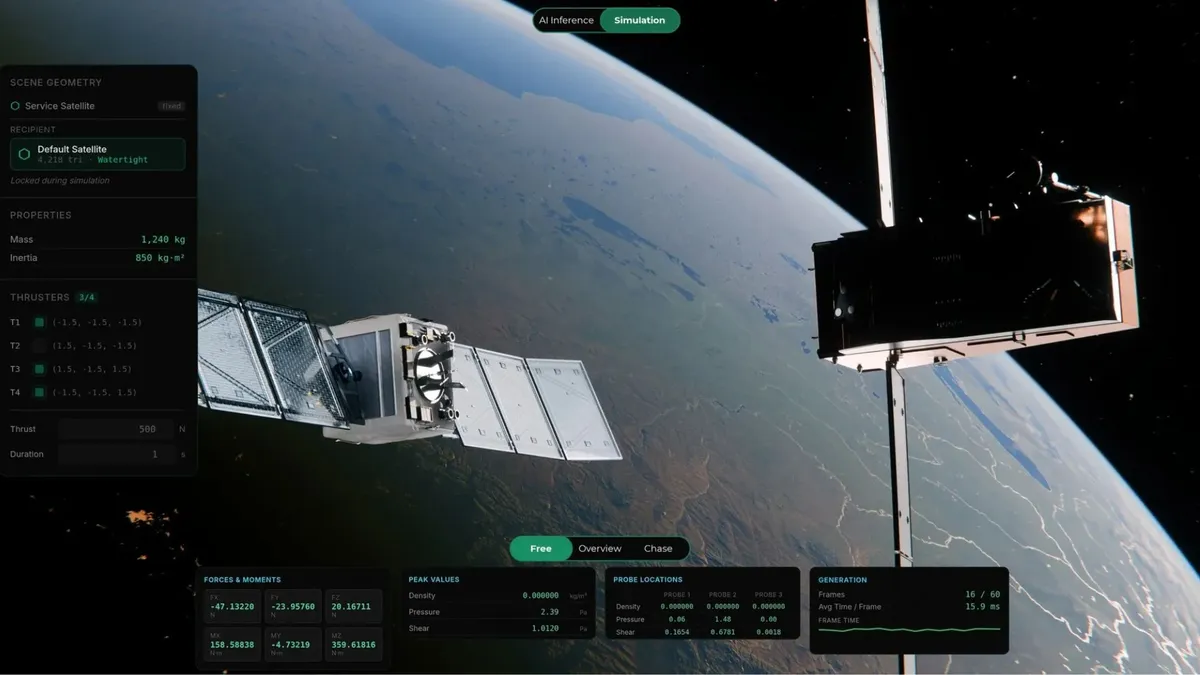
To deal with this, engineers used to spend months running millions of precise simulations. They needed huge amounts of data to make sure a spacecraft wouldn't accidentally damage its solar panels or misalign a docking port. This challenge slowed down space exploration.
This new advancement shifts the focus from raw computing power to AI that understands physics. It uses the NVIDIA Physics NeMo framework. This framework builds physical laws directly into the AI model. Flexcompute created a system that understands nature's rules, not just analyzes data. This system provides the data needed for critical space robotics and control decisions.
Fahad Khan, Director of AI Foundations at Northrop Grumman, noted that they are using physics AI to speed up design. It helps solve complex problems like plume impingement, which is vital for station keeping and space robotics. He added that partnering with Flexcompute and NVIDIA helps them deliver space capabilities faster.
Built-in Trust
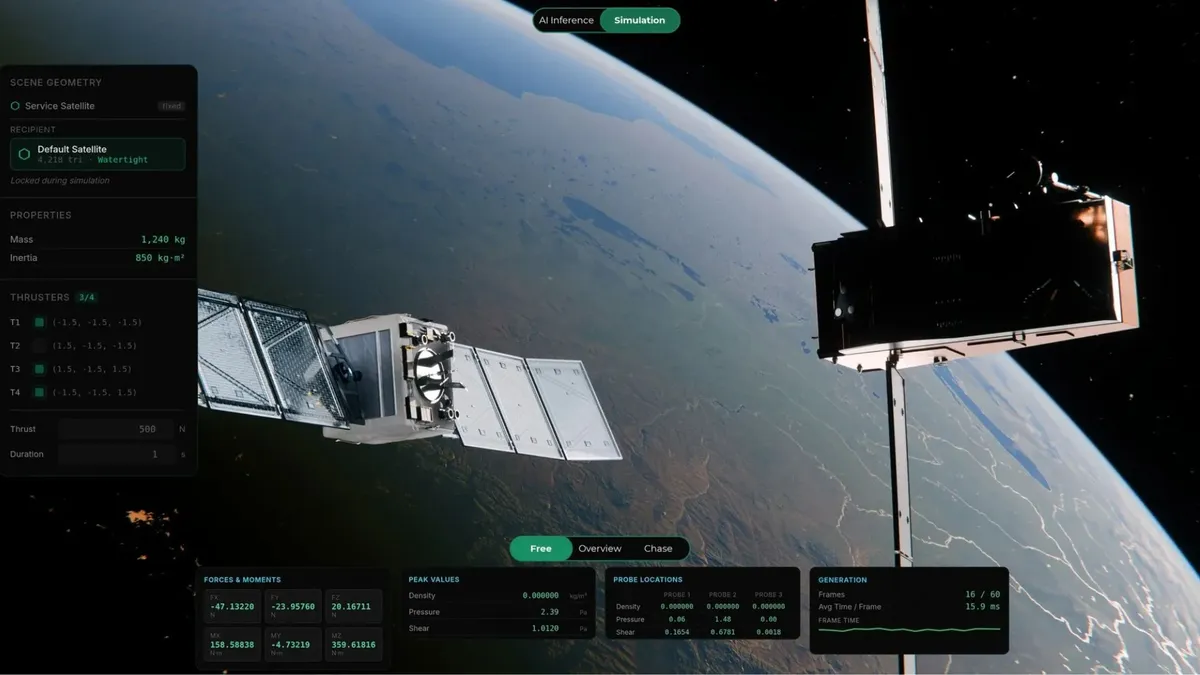
For space missions, speed means nothing without accuracy. Older AI systems might give an answer without explaining how sure they are. But this new system calculates its own confidence level for every prediction. This transparency means engineers can fully trust the AI to guide real-time maneuvers and complex robotic tasks.
The benefits are many. Better accuracy helps sustainability by reducing fuel waste. More precise modeling could also lead to lighter spacecraft designs with tighter safety limits. This increased agility also changes mission planning. Projects that once took years can now adapt in weeks.
By turning days of calculations into seconds of insight using NVIDIA Physics NeMo, this partnership speeds up the journey from idea to orbit.