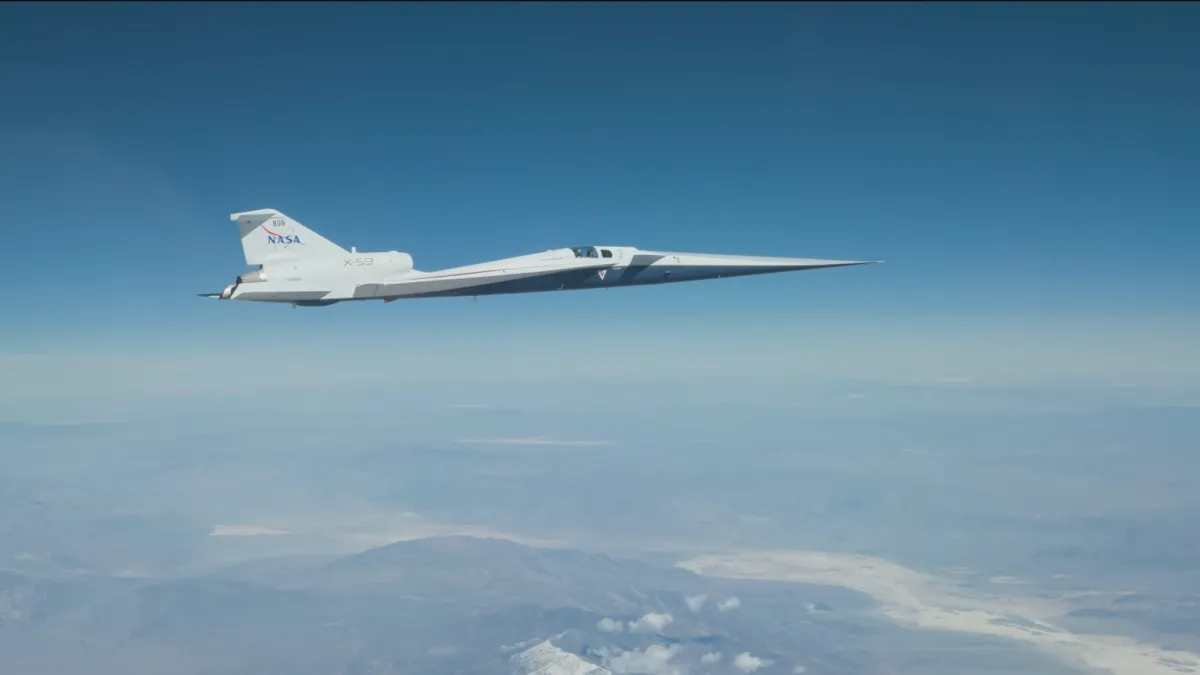
For over a decade, NASA and Lockheed Martin have been quietly cooking up something truly wild: the X-59 Quiet SuperSonic Technology (QueSST) aircraft. Its entire mission? To fly faster than sound without making your windows rattle or your dog howl. Because apparently, we've decided sonic booms are so last century.
Now, new footage shows this sleek, needle-nosed marvel pulling off some seriously impressive climbs and turns, looking less like a plane and more like a sci-fi movie prop. While it hasn't quite broken the sound barrier in public yet—hitting a brisk 0.95 Mach (about 730 mph) in testing—it's getting awfully close.
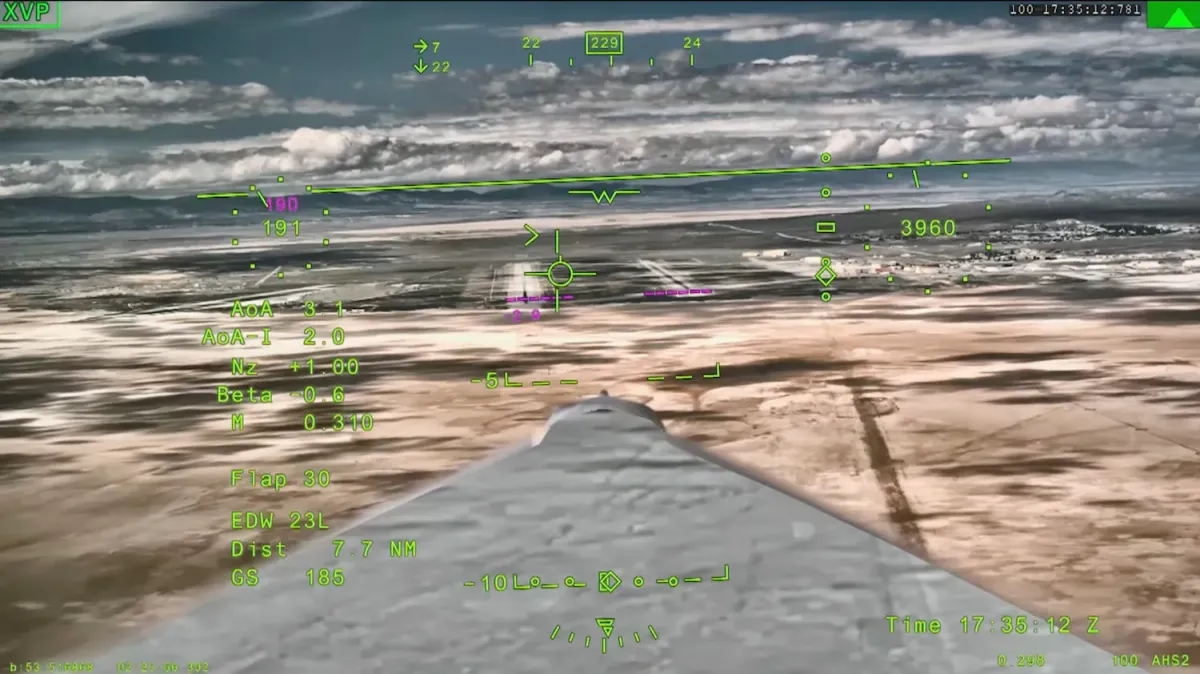
Lockheed Martin is putting the X-59 through its paces, testing performance at various speeds before unleashing it into the true supersonic realm. The grand plan? To cruise at 55,000 feet and hit Mach 1.4, delivering what they're calling the world's first "quiet supersonic thump." Which, if you think about it, is both a technical marvel and a slightly adorable name for a groundbreaking sound.
We're a new kind of news feed.
Regular news is designed to drain you. We're a non-profit built to restore you. Every story we publish is scored for impact, progress, and hope.
Start Your News DetoxThe Sound of Silence (Almost)
This isn't just about speed; it's about polite speed. The X-59 is designed to top out around Mach 1.5 (990 mph) with a cruising speed of Mach 1.42 (940 mph). But the real party trick is that "thump." Instead of the ear-splitting crack of a traditional sonic boom, this jet aims for a sound more akin to a car door slamming in the distance. That's about 16 times quieter than the Concorde's infamous roar. Your neighbors (and their pets) will thank you.
While NASA and Lockheed are pitching the X-59 for a future of commercial supersonic travel—imagine zipping across continents without a boom-induced headache—it's worth noting that a plane this advanced likely has a few other, less public, applications in mind. Military uses, perhaps? We'll just have to wait and see what other quiet surprises this jet has in store.