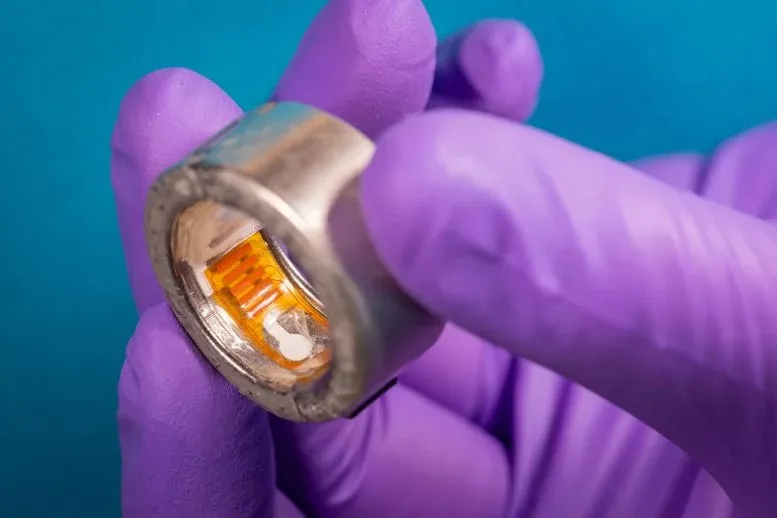
A new smart ring can do more than just track sleep or heart rate. Engineers at the University of California, San Diego, have created a smart ring that continuously checks sweat from a finger. It monitors several molecules related to metabolism, nutrition, exercise, and alcohol.
This prototype can measure up to four biomarkers at once. Its interchangeable sensors can detect glucose, ketones, vitamin C, uric acid, lactate, and alcohol.
Beyond Basic Tracking
Most smart rings track physical things like heart rate, movement, and skin temperature. This new device focuses on chemical information from inside the body.
We're a new kind of news feed.
Regular news is designed to drain you. We're a non-profit built to restore you. Every story we publish is scored for impact, progress, and hope.
Start Your News DetoxTamoghna Saha, a researcher in Joseph Wang’s lab, explained that commercial rings only give physical data. They miss the molecular details from biochemical markers that offer deeper insights into a person's health.
The researchers published their findings in Nature Communications. They describe it as the first fully integrated smart ring for regular biochemical monitoring. Joseph Wang is a professor at the UC San Diego Jacobs School of Engineering.
How It Works
One key feature is that users don't need to exercise to sweat. Fingers naturally release small amounts of moisture, even at rest. The ring captures this fluid using osmosis, a method developed by Saha.
A soft osmotic hydrogel creates a pressure difference. This gently pulls sweat through the skin into a narrow channel. It's a painless process, similar to how plants draw water from soil.
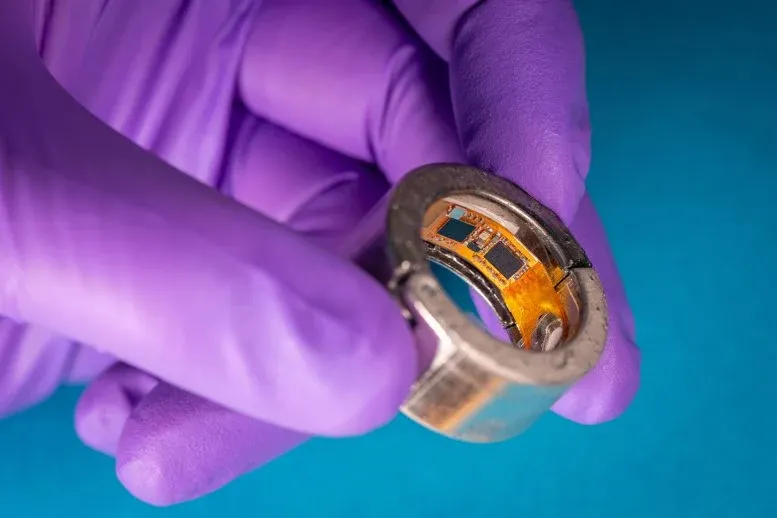
Inside the ring, an electrochemical sensor array measures molecules in the sweat. Electronic signals are then turned into estimated concentrations using personalized calibration factors. This personal setup is important because sweat composition varies among individuals.
Real-Time Health Insights
Tracking several molecules together can reveal patterns that a single reading might miss. For example, glucose and ketones offer different but connected information about how the body gets and uses energy. Continuous monitoring can show how these levels change after meals, during fasting, exercise, or with medication.
Wang noted that a ring providing dynamic molecular information in real time would be very helpful for making health, diet, and lifestyle choices. He added that tracking both glucose and ketones continuously could greatly help with insulin dosing for diabetes management.
In tests with healthy volunteers and people with type 1 diabetes, the ring's glucose measurements matched commercial continuous glucose monitors. Its ketone results also closely matched commercial blood ketone meters.
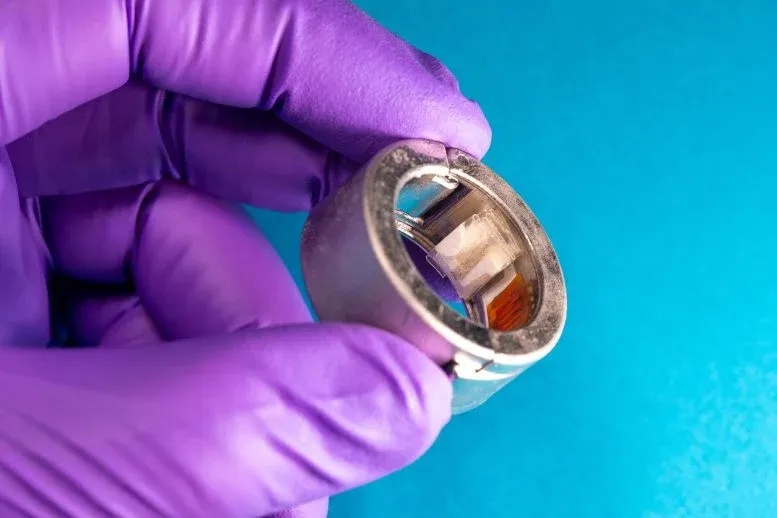
The ring holds the entire sensing system. One part contains the sweat collection system, fluid channel, and sensors. The other part has the battery and circuit board. Results are sent wirelessly to a smartphone app, showing biomarker changes over time.
A flexible, rechargeable zinc-silver oxide battery powers the prototype for up to 12 hours. The circuit board is smaller than a U.S. quarter, and the outer shell is made from a 3D-printed polymer. Wang called this integration into a small ring "amazing."
Deep Dive & References
A fully integrated smart ring for daily biochemical monitoring - Nature Communications, 2026