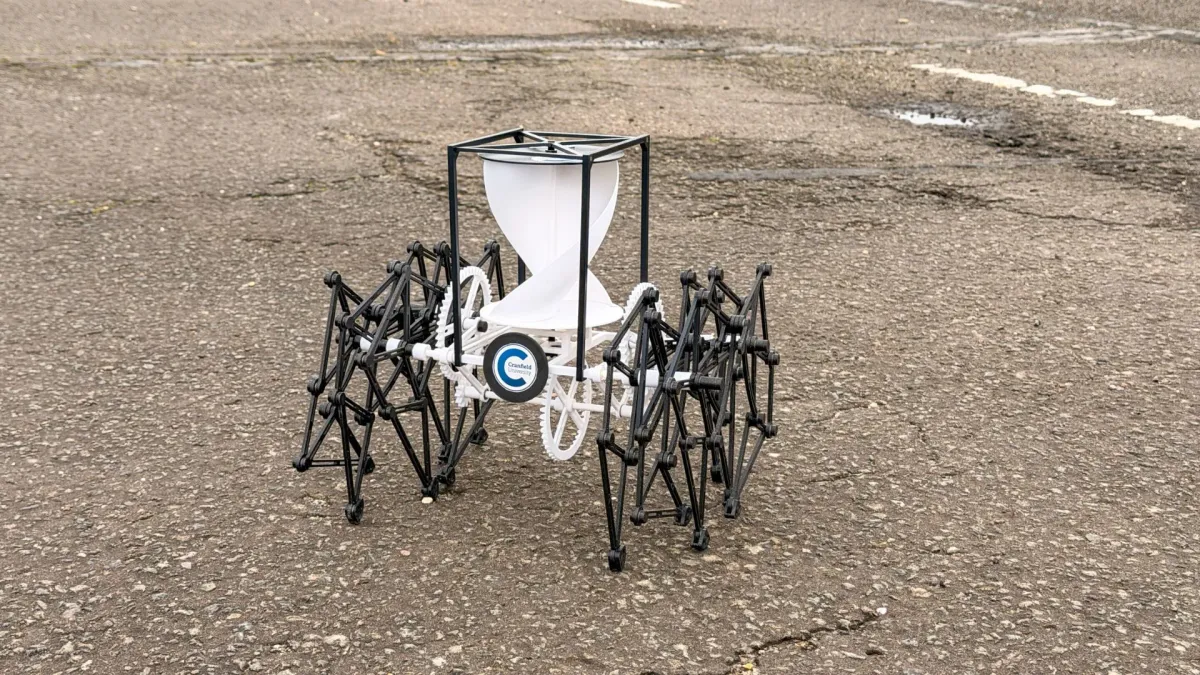
A new floating device with a spinning flywheel could greatly improve how we capture energy from ocean waves. This invention could help turn the ocean's power into endless clean energy.
Tapping into Ocean Power
Ocean waves are a huge and steady source of renewable energy. However, turning this constant motion into electricity has been a tough challenge. Most current wave energy systems only work well under specific conditions. This limits their use in the ever-changing ocean.
A researcher at the University of Osaka has explored a new solution. It's a gyroscopic wave energy converter (GWEC). This device uses a spinning flywheel inside a floating platform to create electricity.
We're a new kind of news feed.
Regular news is designed to drain you. We're a non-profit built to restore you. Every story we publish is scored for impact, progress, and hope.
Start Your News DetoxThe GWEC generates electricity using a spinning flywheel inside a floating structure. As the platform moves with the waves, the flywheel turns that motion into energy. This system uses gyroscopic behavior. This means it can be adjusted to capture energy efficiently across many different wave frequencies. Other systems often only work well in a narrow range.
How it Works
The main idea behind the device is gyroscopic precession. This happens when a spinning object reacts to an outside force. When waves make the floating structure pitch (move up and down), the spinning flywheel changes its direction through precession. This motion is connected to a generator, which then produces electricity.
Takahito Iida, the study's author, noted that wave energy devices often struggle because ocean conditions are always changing. He explained that a gyroscopic system can be controlled to keep absorbing a lot of energy, even when wave frequencies change.
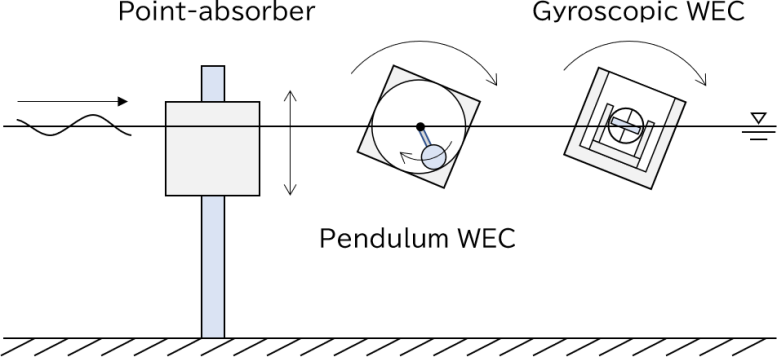
Researchers used linear wave theory to model how ocean waves, the floating platform, and the gyroscope interact. They found the best settings for the flywheel’s speed and the generator’s operation. Their analysis showed that a properly tuned GWEC can reach the theoretical maximum energy absorption efficiency of one-half at any wave frequency.
Iida explained that this efficiency limit is a basic rule in wave energy theory. He finds it exciting that this limit can be reached across many frequencies, not just at one specific condition.
Promising Results
The team tested these findings with computer simulations. The results showed that the device stays very efficient near its resonance frequency. This means it works best when its motion matches the natural rhythm of the waves.
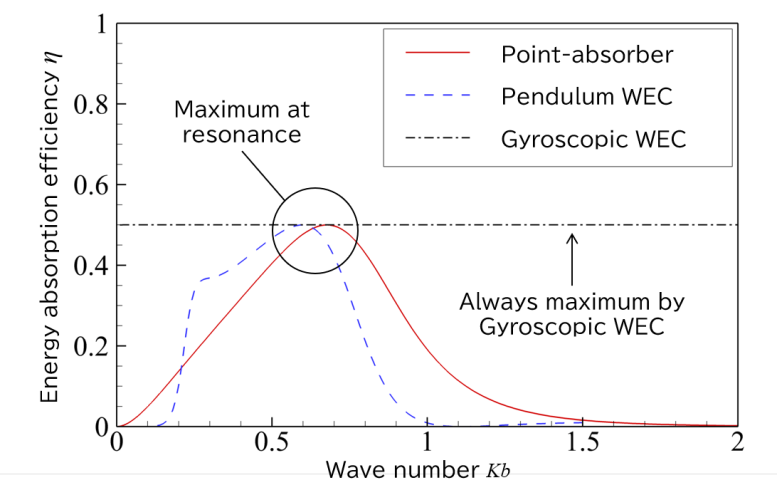
This study shows how to fine-tune the gyroscope for the best performance. It offers a clear path toward more adaptable wave energy systems. As the need for reliable renewable energy grows, innovations like this could help unlock the huge energy potential of the oceans.
Deep Dive & References
Linear analysis of a gyroscopic wave energy converter: absorbing half of the wave energy over broadband frequencies - Journal of Fluid Mechanics, 2026