A coffee shop in London where deaf staff take your order in sign language. A school redesigned so sight lines work as well as sound systems. An AI that translates text into sign language in real time. These aren't theoretical fixes — they're already reshaping what accessibility looks like in everyday spaces.
Dialogue Express Cafe: Deaf staff, hearing customers, one conversation
Walking into Dialogue Express in London, you might order differently than usual. The staff are deaf and hard-of-hearing, trained by the Dialogue Hub social enterprise to help customers communicate using British Sign Language. Video guides and simple visual aids do the work that menus usually do. What emerges isn't a charity model — it's a space where deaf and hearing people simply meet over coffee, no performance required.
"It's not just about accessibility," says Hakan Elbir, founder of Dialogue Hub CIC. "It's about celebrating diversity and making it part of everyday life." That shift matters. When accessibility becomes invisible because it's just how things are built, it stops feeling like accommodation and starts feeling like normalcy.
We're a new kind of news feed.
Regular news is designed to drain you. We're a non-profit built to restore you. Every story we publish is scored for impact, progress, and hope.
Start Your News DetoxHeathlands School: Design that thinks in sight lines, not just sound
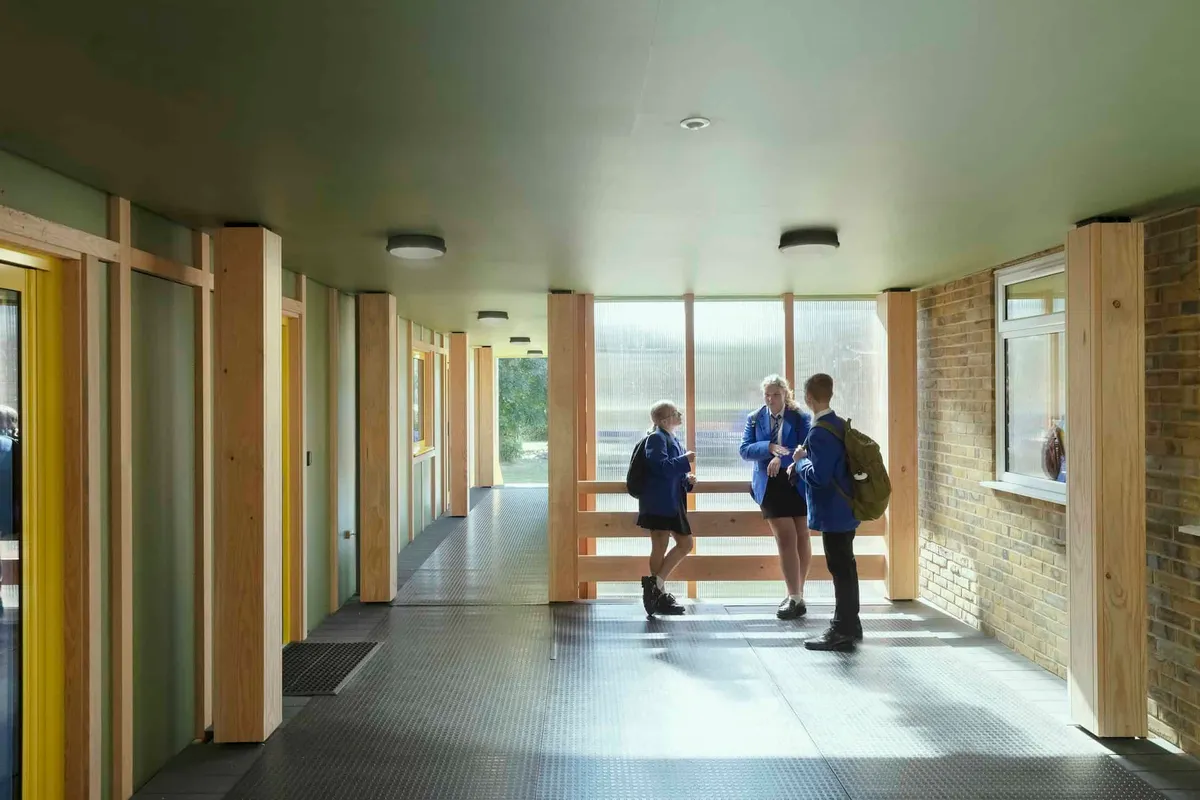
At Heathlands School in St Albans — the UK's largest school for deaf children and young people — the architecture itself has been rethought. DeafSpace design is an approach that prioritizes visual communication. Rooms are arranged so signing is visible across sightlines. Colors are soft. Natural light floods in to reduce eyestrain. The ventilation runs quietly so hearing aid users aren't fighting background noise.
These aren't luxuries. They're the difference between a room where you can see and hear, and one where you can't. Co-headteacher Lesley Reeves Costi noticed: "It's amazing the difference that tiny details make and how welcoming the school feels." When a building is designed for deaf students first, everyone benefits — the architecture becomes clearer, calmer, more intentional.
Silence Speaks: Sign language from text, in real time
The third project sounds like science fiction but it's already being tested. Silence Speaks, a UK startup, is building an AI avatar that translates text into sign language instantly. The crucial detail: it was designed by deaf engineers and built to reflect regional sign language styles, capturing emotion and intent alongside the words themselves.
The applications are sprawling — transport hubs, hospitals, banks, shopping centers, even greeting cards. What matters is the principle: technology that doesn't force deaf people to adapt to how hearing people communicate, but instead meets them halfway.
Dr. John LeeAllen, an NHS doctor on the company's board, frames it simply: "As a doctor, I've seen firsthand how silence can isolate — but I've also seen how the smallest act of communication can restore dignity." These three projects, in different ways, are betting that communication isn't a feature to add on. It's foundational. What's next is scaling — moving these models from pioneering spaces into the everyday infrastructure of how we all move through the world.