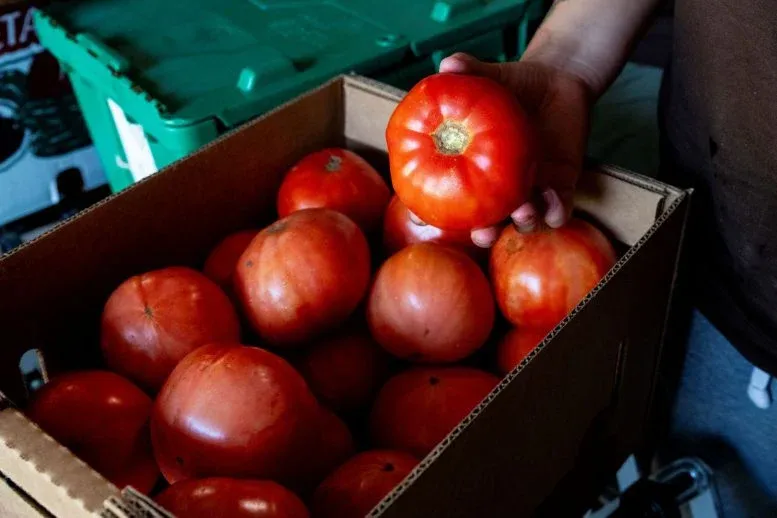
You know that satisfying feeling of biting into a ripe, red tomato? Well, it turns out those juicy globes are hiding a colorless secret weapon for your liver. Researchers at Tufts University just dropped the news: a compound called phytoene, invisible to the eye, significantly reduced fatty liver disease in mice. This might explain why a whole tomato — not just its celebrity antioxidant, lycopene — does such a good job protecting our internal filters.
This isn't just about a few mice enjoying some healthy snacks. The study, published in Molecular Nutrition & Food Research, took a hard look at metabolic dysfunction-associated steatotic liver disease (MASLD). If that mouthful sounds complicated, just know it’s a chronic condition affecting up to 38% of adults in the U.S. — roughly 100 million people. That number jumps to 75% for those with obesity or diabetes, which are, you guessed it, often linked to metabolic issues.
The Silent Problem in Your Middle
MASLD starts innocently enough: a bit of fat building up in your liver cells. At first, you might not even notice. But let it keep going, and you're looking at inflammation, damage, and eventually, something called cirrhosis. Not exactly a party.
We're a new kind of news feed.
Regular news is designed to drain you. We're a non-profit built to restore you. Every story we publish is scored for impact, progress, and hope.
Start Your News DetoxDiet, naturally, plays a starring role here. So, scientists are constantly on the hunt for foods and nutrients that can help the liver store less fat and burn more of it. Tomatoes have long been a suspect in the "good for your liver" lineup, with animal studies consistently linking them to better liver health.
For years, lycopene — the pigment that gives tomatoes their glorious red hue and antioxidant superpowers — got all the glory. But here’s the rub: tomato powder often outperformed purified lycopene in animal tests. This hinted that maybe, just maybe, the tomato's magic wasn't a solo act.
Enter phytoene. This compound is what plants use to make lycopene and other colorful carotenoids. But unlike its vibrant offspring, phytoene itself is completely colorless. Think of it as the quiet, unassuming stage manager behind the flashy lead performer.
Na Youn Lee, the lead author and a Ph.D. candidate at Tufts, points out that both lycopene and phytoene are abundant in tomatoes. Crucially, phytoene is also more easily absorbed by the body. So, they put it to the test.
They fed mice a diet high in refined carbohydrates for six months – basically, the mouse equivalent of a steady stream of sugary drinks and snacks. Half of these mice also got a dose of phytoene, roughly equivalent to what a human would get from eating three to four medium raw tomatoes or 3.5 ounces of tomato paste daily. Because apparently, that's where we are now.
How This Invisible Hero Works
What they found was pretty stark: the mice getting phytoene developed much less severe fatty liver disease, despite chowing down on the same unhealthy diet. And it wasn't due to changes in gut bacteria. Instead, phytoene seemed to activate several proteins that essentially tell the liver to burn excess fat for energy, rather than letting it accumulate.
There was an intriguing twist, though. Mice that lacked two specific enzymes for processing carotenoids accumulated more phytoene but didn't get the same liver protection. This suggests phytoene might need to be broken down into smaller, active parts to work its magic. So, it’s not just about getting it in, but breaking it down, too.
Genetic differences in these processing enzymes could explain why some people respond differently to the same amount of phytoene. And, because biology loves to complicate things, biological sex might also play a role. Female mice had more phytoene in their livers than males, though researchers aren't yet sure if this changes its protective power.
Xiang-Dong Wang, the study's senior author, is optimistic. Phytoene is plentiful not just in yellow, orange, and red tomatoes, but also in carrots, red peppers, pink grapefruit, watermelon, and apricots. If these findings hold up in humans, loading up on phytoene-rich foods could be a surprisingly simple way to prevent metabolic liver disease or slow its progress. Just another reason to enjoy that caprese salad.