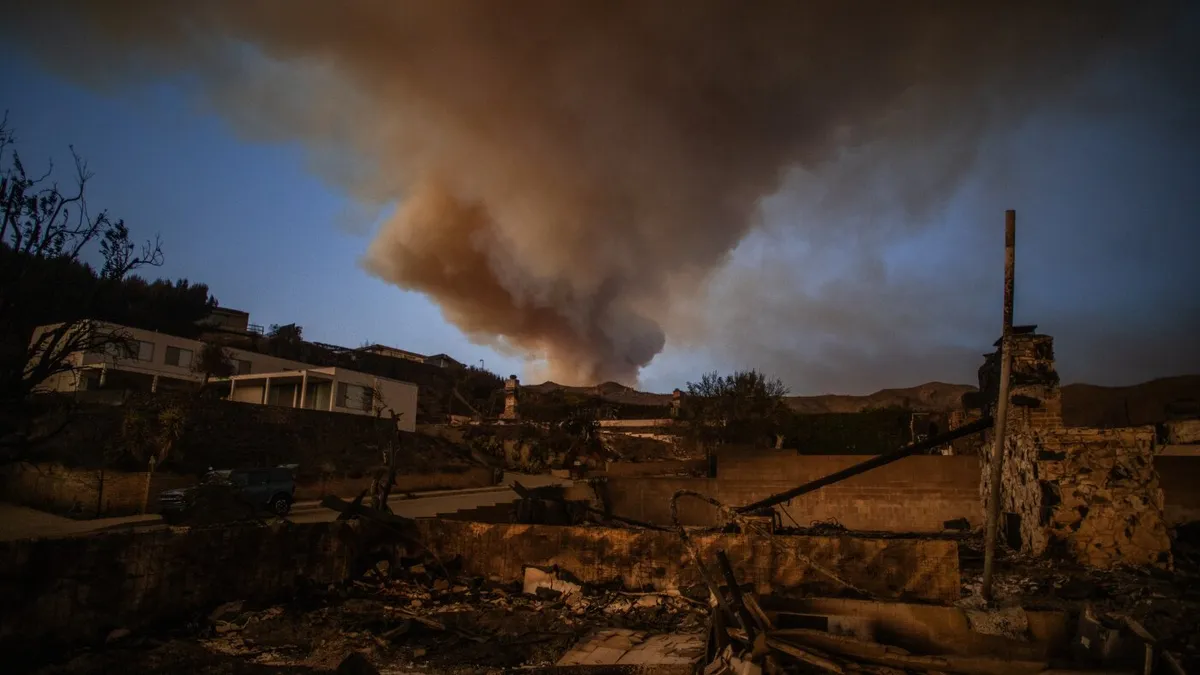
Last January, wildfires swept across Los Angeles, and the smoke that followed wasn't just uncomfortable — it was measurably dangerous. Researchers found the air contained a cocktail of toxins: lead, arsenic, benzene, and hexavalent chromium, a carcinogenic compound that lingers in homes, soil, and water long after flames die.
The health impact was immediate and stark. One major hospital reported a 24% spike in respiratory issues and a 47% jump in heart attacks during the 90 days following the fires. Blood tests showed something more subtle but potentially more concerning: widespread disruptions to metabolic and immune systems, the kind of damage that can unfold over years.
What's happening now
Scientists aren't waiting to see what happens next. Researchers are tracking over 4,000 LA residents to map the full scope of health consequences — heart disease, respiratory decline, mental health impacts. The early data suggests these effects won't disappear quickly. People with high smoke exposure face particular risk.
We're a new kind of news feed.
Regular news is designed to drain you. We're a non-profit built to restore you. Every story we publish is scored for impact, progress, and hope.
Start Your News DetoxWhat's becoming clear is that individual precautions — N95 masks, HEPA filters, careful home cleanup — matter, but they're not enough. After the fires, residents faced inconsistent decontamination guidance and patchy support. Some homes got thorough cleanups; others didn't.
The real lesson emerging from this research is structural. Emergency response needs coordination. Public health directives need clarity. Communities need preparation before the next fire, not scrambling after. Climate change is making these events more frequent, not less, which means the infrastructure for responding to them has shifted from optional to essential.
Researchers are now pushing for exactly that kind of solution-focused work — not just documenting the damage, but building the systems to prevent it from spreading so far next time.