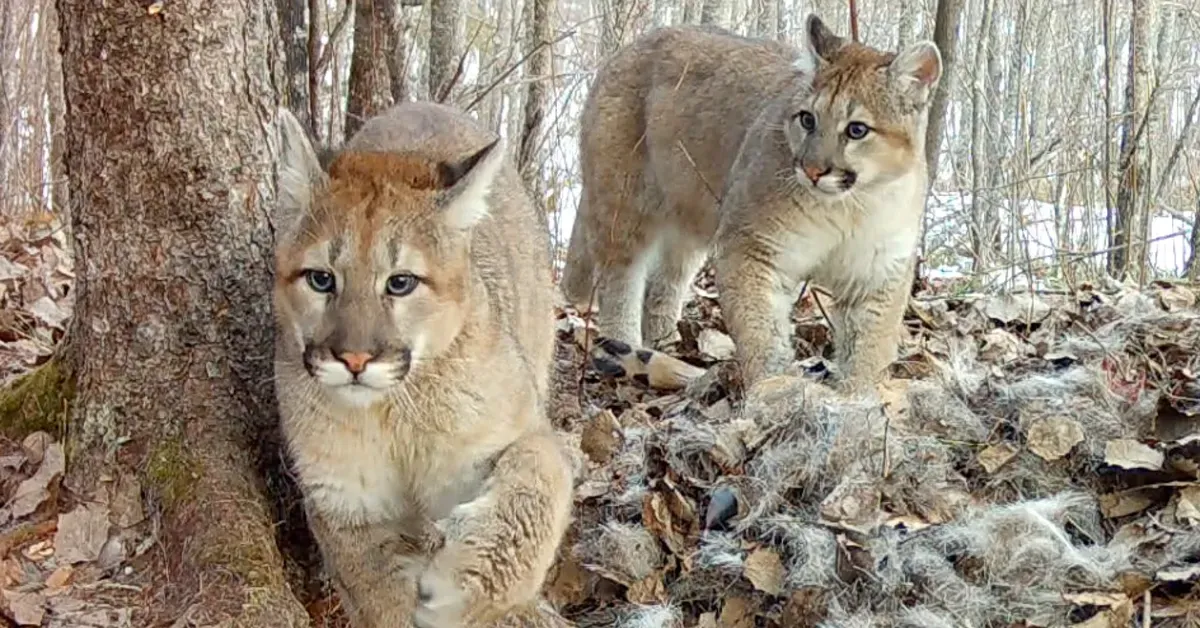
For over a century, Minnesota's wild spaces have been missing a certain purr-fect predator. That is, until a few months ago when trail cameras in Voyageurs National Park caught something truly wild: a female cougar and her three surprisingly large kittens.
The footage, shared by the University of Minnesota's Voyageurs Wolf Project with the state's Department of Natural Resources in April, marks the first confirmed cougar breeding in Minnesota in over 100 years. Let that satisfying number sink in.
A Whim, a Deer, and a Whole Lot of Kittens
The Voyageurs Wolf Project uses hundreds of trail cameras to study wolves in northeast Minnesota. They've spotted lone cougars eight times since 2023, but never a family. These particular videos were captured by two cameras placed over a deer carcass — because apparently, that's where the magic happens.
We're a new kind of news feed.
Regular news is designed to drain you. We're a non-profit built to restore you. Every story we publish is scored for impact, progress, and hope.
Start Your News DetoxThomas Gable, who leads the project, checked the cameras on a whim, expecting to see a bobcat. Instead, he found four cougars just hanging out. He told the Minnesota DNR that seeing them together was "surreal." The cameras captured about four hours of footage, showing the mother grooming her kittens and the little ones generally kitten-ing around.
Mountain lions, also known as cougars or pumas, used to roam across the entire U.S. But thanks to "eradication campaigns" over a century ago, they largely vanished from most areas. While they've made a comeback in some places, a stable population east of the Dakotas has been a pipe dream.
Experts had been pretty pessimistic about Minnesota's chances, with a 2024 study predicting only a 30% likelihood of cougar reproduction in the next 75 years. Oops. Guess nature didn't get the memo.
John Erb, a research biologist with the Minnesota DNR, estimates the kittens are seven to nine months old, meaning they were born last fall. And because mama cougar stuck around to raise them, it suggests she's established a territory. Which, if you think about it, is both impressive and slightly terrifying.
Gable and his team are now analyzing genetic samples from the family, because when you stumble upon a century-old mystery, you dive in. Erb notes that while these kittens face threats from wolves, male cougars, or even vehicles, they could also kickstart a slow but steady increase in cougar numbers. The chance of a self-sustaining population, he concluded, has officially gone up. Take that, 30% prediction.