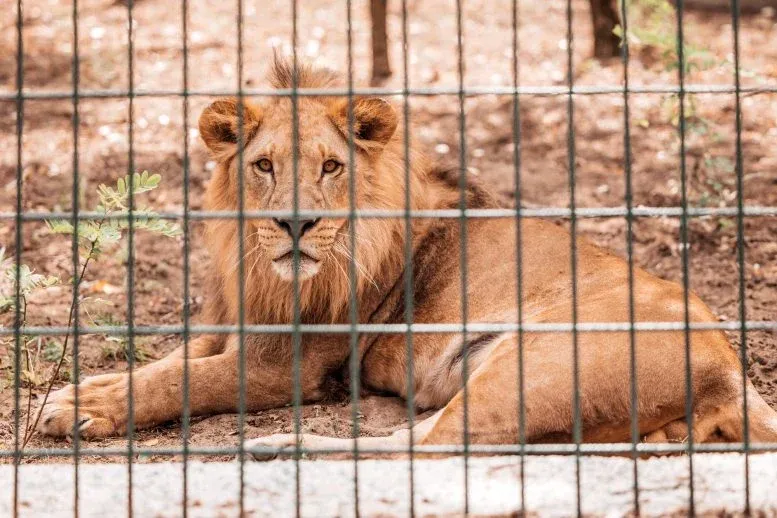
For most of their lives in captivity, lions have had a pretty predictable dinner schedule. Like clockwork, food arrives. But in the wild? It's less 'dinner at 7' and more 'hope we catch something, otherwise it's ramen for a week.' This difference, it turns out, makes a pretty big impact on their overall vibe.
Now, a new study out of Australia has found that by simply changing how and when zoo lions get their grub, they start acting a whole lot more like their untamed cousins. We're talking more tearing, more exploring, and a whole lot more napping after a good meal. Because apparently, even apex predators appreciate a food coma.
The All-You-Can-Eat, Then Nothing, Buffet
The research, a collaboration between Adelaide University and Monarto Safari Park in South Australia, focused on a group of adult male African lions. The big idea was to introduce whole animal carcasses into their diet every nine days, on top of their usual — but still feast-and-fast-inspired — routine. Basically, giving them the full hunting experience, minus the actual hunting.
We're a new kind of news feed.
Regular news is designed to drain you. We're a non-profit built to restore you. Every story we publish is scored for impact, progress, and hope.
Start Your News DetoxFor three months, video cameras were the silent, ever-watching eyes. What they saw was telling: when the carcasses were delivered, the lions spent nearly three times longer eating. They’d tear, pull, and generally get messy with their food, engaging in all the natural behaviors usually reserved for the savannah.
Then, the magic happened. After their big feast, the lions would settle down for significantly longer rest periods. Their activity would then slowly ramp up as the fasting days continued, creating a natural rhythm that mimics the wild. As lead author Lesia Hryhorenko from Adelaide University put it, wild lions don't punch a clock for dinner, and these zoo lions responded beautifully to a more authentic schedule.
It turns out whole carcasses aren't just a meal; they're an enrichment program. They allow for prolonged engagement with food, letting the lions really work for their supper, just like nature intended.
Interestingly, the study also looked at pacing — that repetitive back-and-forth often seen in zoo animals anticipating something. While pacing did increase slightly, it wasn't consistently linked to hunger. Instead, it spiked most when keepers typically arrived or during habitat shifts. So, less about a rumbling tummy, more about a rigid schedule.
And for anyone worried about a lion food fight, the good news is the new feeding plan didn't lead to any increased aggression within the pride. Just more satisfied, sleepy big cats. Co-author Alexandra Whittaker emphasized that observing these animals over the entire feeding cycle, not just right after a meal, was key. It showed that feeding plans can influence behavior for days, proving that sometimes, the best way to understand a lion is to watch it digest.