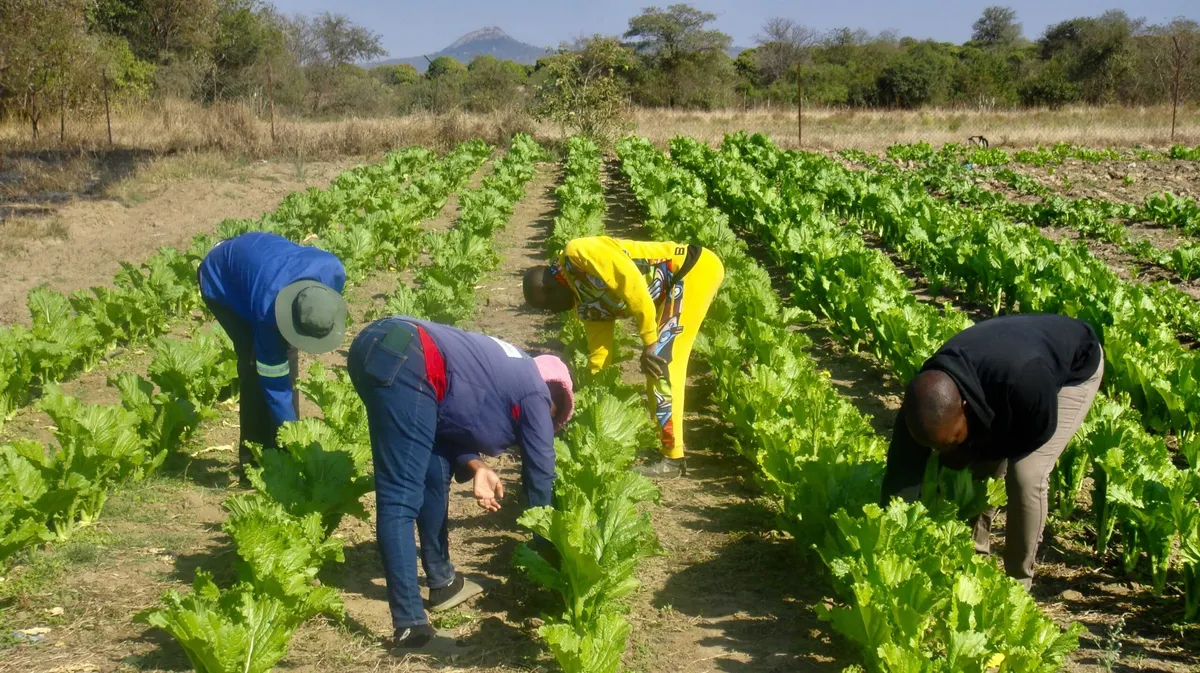
Most schools are just trying to get the kids to eat their vegetables. Tiyani Secondary School in South Africa's Limpopo province? They're busy cooking breakfast and lunch for over 1,000 students using, wait for it, biogas generated from local cattle dung.
Yes, you read that right. Cow poop. From the village. Every weekday, four dedicated volunteers hook up an ox-drawn cart and collect the day's "deposits" from local homes. Because apparently, that's where we are now: turning farm waste into fuel for the masses.
The University of Venda kicked off this pilot project in 2022. The process is surprisingly elegant, if a little... fragrant. The collected manure gets mixed with water, then slurped into a sealed, oxygen-free digester. Inside, tiny microbes, doing their best microscopic chef impression, get to work, transforming the mixture into methane-rich biogas.
We're a new kind of news feed.
Regular news is designed to drain you. We're a non-profit built to restore you. Every story we publish is scored for impact, progress, and hope.
Start Your News DetoxThat gas then travels directly through pipes to the school kitchen, where it powers the stoves for 1,054 hungry students. Project manager Fosta Chavalala summed it up perfectly: "We never imagined that something we regarded as waste could become a source of energy." Which, if you think about it, is both impressive and slightly terrifying. (Don't worry, the gas is odorless by the time it reaches the kitchen.)
While they still use some firewood when the bovine contributions aren't quite enough, the goal is clear: less chopping, more... well, you know. It's a remarkably practical way to reduce reliance on firewood, cut down on greenhouse gas emissions, and make good use of what the cows are already generously providing. Truly, the circle of life, powered by methane.