Marine heat waves along the U.S. West Coast are getting longer and more intense. But a new study suggests something unexpected: fish don't always flee when the water heats up.
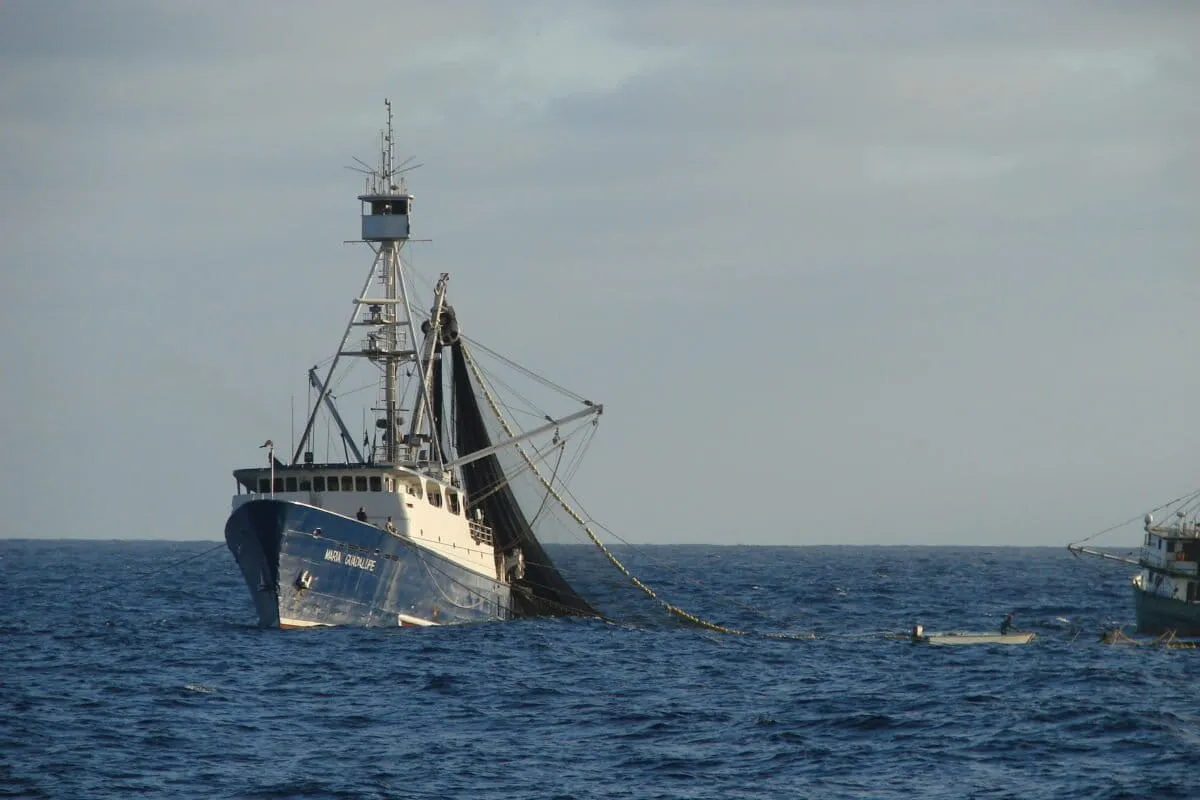
Researchers analyzed fishing vessel tracking data from 2010 to 2024 and found that albacore and Pacific bluefin tuna sometimes stay put during extreme temperature spikes, while other times they shift dramatically northward or closer to shore. The patterns weren't random. The data, published in Proceedings of the National Academy of Sciences in December 2025, showed clear signals of when tuna were actually responding to heat stress and when they were simply tolerating it.
"We have so much data on fishing vessel activity," said Heather Welch, the study's lead author and marine spatial ecologist at UC Santa Cruz. "These data are traditionally used for surveillance, and it is exciting that they may also be useful for understanding ecosystem health."
We're a new kind of news feed.
Regular news is designed to drain you. We're a non-profit built to restore you. Every story we publish is scored for impact, progress, and hope.
Start Your News DetoxThe insight matters because it reframes how we think about climate resilience. Not every temperature spike triggers a migration. Tuna populations showed surprising flexibility—sometimes enduring conditions that models predicted would force them out, sometimes responding with rapid shifts. This nuance is crucial. It means some fish stocks may have more adaptive capacity than worst-case scenarios suggest, even as heat waves intensify.
The tracking approach itself is novel. Commercial fishing vessels already broadcast their location constantly for safety and regulatory reasons. Welch's team realized this existing infrastructure could double as an ecological early-warning system. When fishing effort concentrates in new areas or vanishes from traditional grounds, it signals something has changed in the ecosystem—sometimes before other detection methods would catch it.
"This is an exciting new application of fishing vessel tracking data," Welch noted. "It allows us to monitor the impacts of climate change on marine ecosystems in near-real time."
The work doesn't suggest tuna are safe from warming oceans. Rather, it shows that the relationship between temperature and fish behavior is more complex than a simple cause-and-effect. Some years, albacore tolerate heat. Other years, the same conditions trigger flight. Understanding which factors tip the balance—prey availability, competition, water chemistry—could help fisheries managers predict where to find fish and how to protect vulnerable populations when they do migrate.
As marine heat waves continue to intensify, this kind of real-time monitoring becomes essential. The next phase is understanding why tuna respond differently to similar conditions, and whether that flexibility will hold as temperatures climb beyond historical ranges.