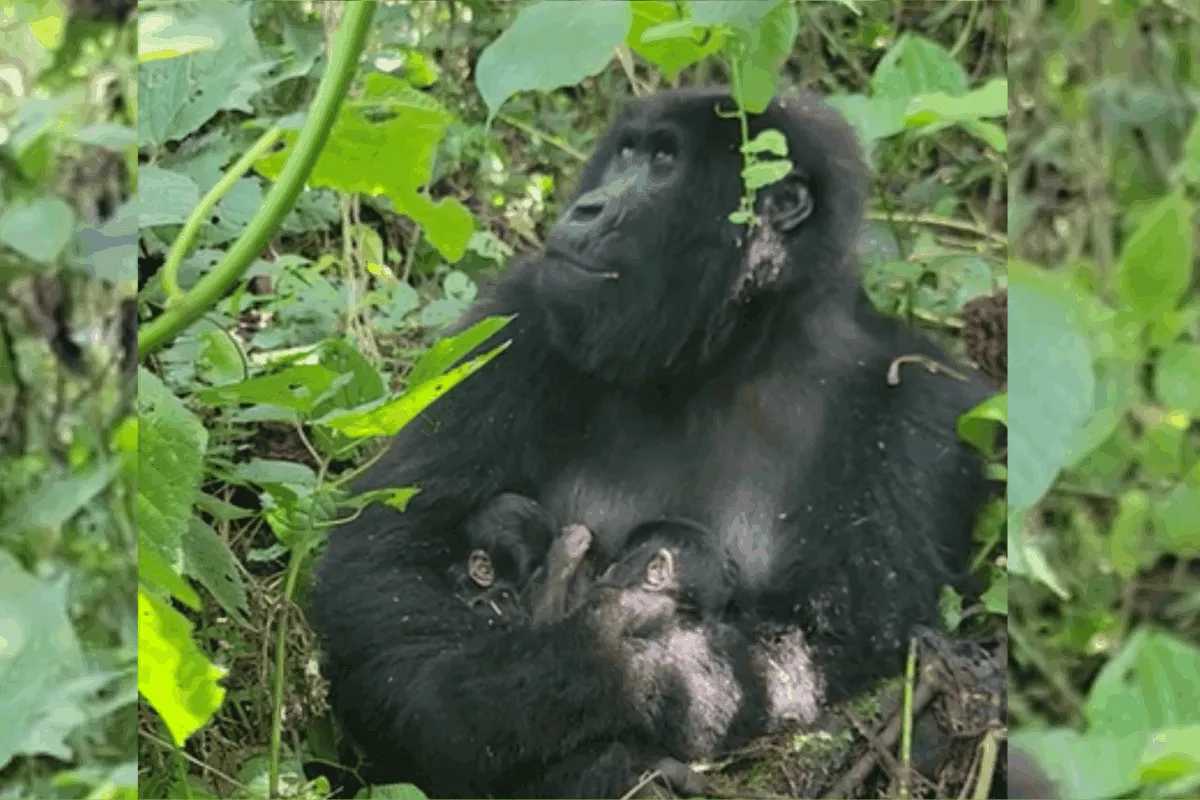
A mother gorilla named Mafuko gave birth to twin males in Virunga National Park on January 3—an event so rare that it's happened fewer than 10 times in living memory. Both calves arrived healthy, and the birth has rippled through conservation circles as a quiet landmark in one of Africa's most fragile ecosystems.
Mountain gorillas exist nowhere else on Earth except the Virunga Mountains, a volcanic range straddling the borders of the Democratic Republic of Congo, Rwanda, and Uganda. The subspecies is classified as endangered, while eastern gorillas more broadly sit at critically endangered status. For decades, their survival looked uncertain. Habitat loss, poaching, and civil conflict pushed populations toward the edge.
That's what makes this January birth significant. It signals that years of careful, on-the-ground work are creating conditions where these gorillas don't just survive—they reproduce and thrive. Katie Fawcett, science director at the Gorilla Rehabilitation and Conservation Education Center (GRACE), called it "a huge sign of hope and a great way to start the new year."
We're a new kind of news feed.
Regular news is designed to drain you. We're a non-profit built to restore you. Every story we publish is scored for impact, progress, and hope.
Start Your News DetoxThe momentum is building. In 2025 alone, GRACE successfully rewilded three gorillas back into Virunga, part of a broader strategy to rebuild wild populations from rescued and rehabilitated individuals. Each birth, each successful reintroduction, each year without decline—these are the metrics that matter in species recovery. They're unglamorous compared to a single dramatic rescue, but they're how extinctions get prevented.
Virunga National Park authorities framed the twin birth as validation of their "ongoing conservation efforts to support the continued growth of the endangered mountain gorilla population." That language might sound bureaucratic, but it reflects something real: a coalition of park rangers, scientists, local communities, and international organizations making daily choices to protect these animals.
The road ahead remains uncertain. Caring for newborn gorillas in a region still navigating conflict and resource scarcity requires constant vigilance and funding. But the fact that Mafuko could carry twins to term and deliver them safely—in a place where mountain gorillas were once hunted to near-extinction—suggests that the trajectory is finally shifting in their favor.