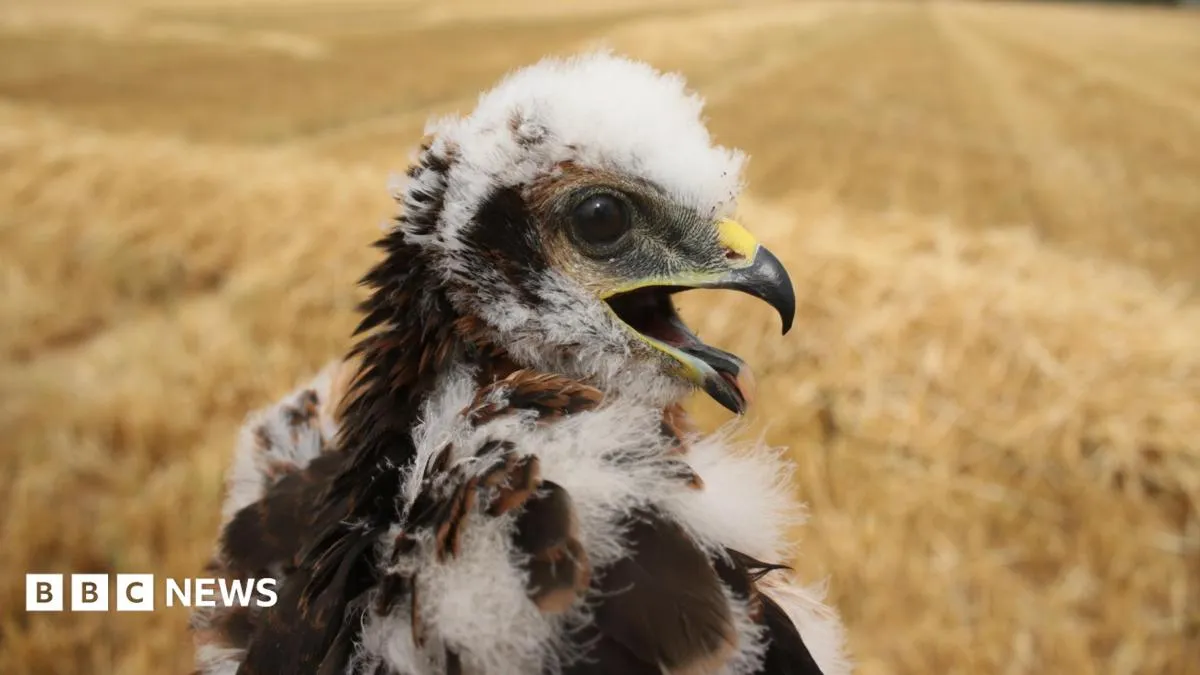
In news that sounds like a plot twist from a nature documentary, the UK's absolute rarest bird of prey, the Montagu's harrier, has managed to successfully nest for the second year running. And not just nest — one particularly ambitious male, known only as "AU," somehow bred with two females, raising a total of six chicks across two different nests on English farmland. Because apparently, when you're on the brink of extinction, you don't do things by halves.
These elegant, long-winged birds found themselves on the UK's "red list" in 2021, meaning they're basically in the avian ICU. Their numbers have plummeted from a modest nine successful nests in 2011 to, well, zero successful breeding evidence between 2020 and 2024. So, six new, fledged harriers? That's not just good news; it's practically a miracle, especially after last year's four chicks from the same secret spot.
The Secret Sauce (and Satellite Tags)
The Royal Society for the Protection of Birds (RSPB), along with some very helpful local farmers, turned into avian bodyguards. They carefully monitored the nests, putting up fences to deter ground predators like foxes. Meanwhile, AU, the multi-nest patriarch, was reportedly working overtime, keeping both sets of hungry mouths fed. The BBC even caught a glimpse of their mid-air feeding acrobatics: dad drops the snack, mom flips upside down, snatches it with her talons. Because apparently that's how you do dinner when you're a Montagu's harrier.
We're a new kind of news feed.
Regular news is designed to drain you. We're a non-profit built to restore you. Every story we publish is scored for impact, progress, and hope.
Start Your News DetoxThese birds spend their winters sunning themselves in Africa before returning to Europe to nest, often choosing the convenience of farm fields. But here's the rub: once the chicks fledge, conservationists usually lose track of them. So, for the first time ever, the RSPB has fitted two of this year's chicks with satellite tags. Think of it as a tiny, very important tracking device for a very rare teenager.
Mark Thomas, head of investigations at the RSPB, is hoping these tags will fill in some crucial blanks. Where do they go? How long do they stay in Africa? Do they even bother coming back to the UK in their first or second year? These are the burning questions. Plus, the tagging could offer a proactive solution to a very modern problem: nests getting accidentally flattened by farm machinery during an increasingly early harvest season, thanks to climate change. Because even the rarest birds can't catch a break from global warming.
So, if you happen to spot a slender, long-winged bird looking a bit lost, the RSPB would like a word. Specifically, an email to [email protected]. You might just be helping to piece together the future of the UK's most elusive feathered resident.