
Uncovering Ancient Egypt's Industrial Heartland
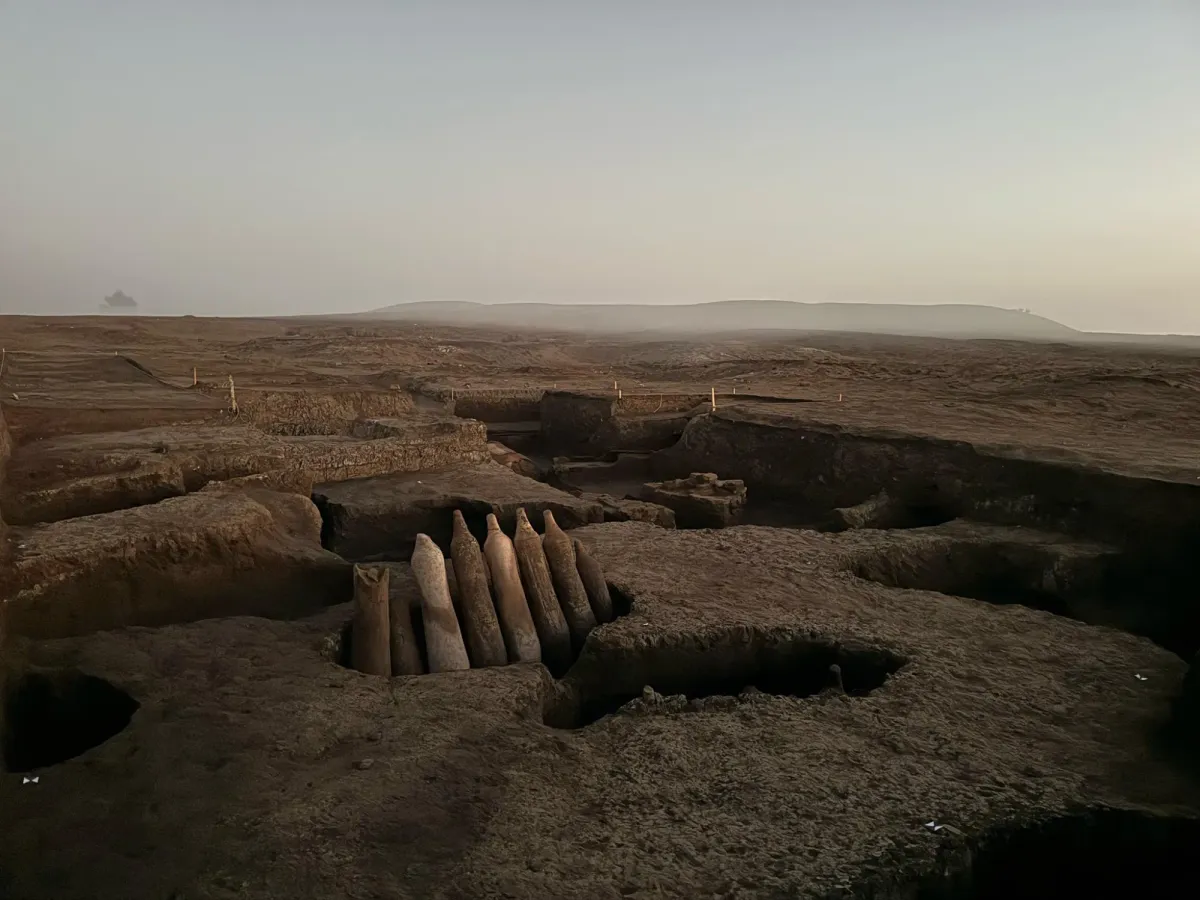
An international team of archaeologists has made a remarkable discovery in Egypt's western Nile Delta region. They have uncovered several industrial workshops and a burial complex spanning the Ptolemaic and Roman periods.
Ancient Industrial Complex
The excavation sites, located in the Beheira Governorate, include the ancient settlements of Kom Al-Ahmar and Kom Wasit. The industrial complex dates back to around 300 BCE, during the early Ptolemaic era.
Archaeologists found the remains of a large building subdivided into six rooms. In two of the rooms, they uncovered nearly 10,000 fish bones, indicating the facility was used for salted fish production - an important manufacturing activity at the time. Other artifacts, such as pottery fragments, imported jars, amulets, and tools, suggest the other rooms were used for various other types of industrial production.
We're a new kind of news feed.
Regular news is designed to drain you. We're a non-profit built to restore you. Every story we publish is scored for impact, progress, and hope.
Start Your News DetoxRoman-Era Necropolis
The Roman-era burial site includes the remains of 23 individuals - men, women, children, and adolescents - interred in a variety of ways, including in-ground burials, coffins made of pottery, and children buried in large clay jars called amorpha.
Mohamed Ismail Khaled, secretary general of Egypt's Supreme Council of Antiquities, noted that "the discoveries enrich research into settlement patterns, funerary traditions, and industrial production, while offering new perspectives on regional interactions from the Late Period through the Roman and early Islamic eras."
The team from the University of Padua plans to further analyze the human remains to learn more about the individuals' age, diet, and health. Meanwhile, many of the non-human artifacts are being moved to the recently opened Grand Egyptian Museum near Giza.
This remarkable find sheds new light on the bustling industrial and cultural activities that took place in this region of ancient Egypt, providing valuable insights into the lives and practices of the people who lived there centuries ago.