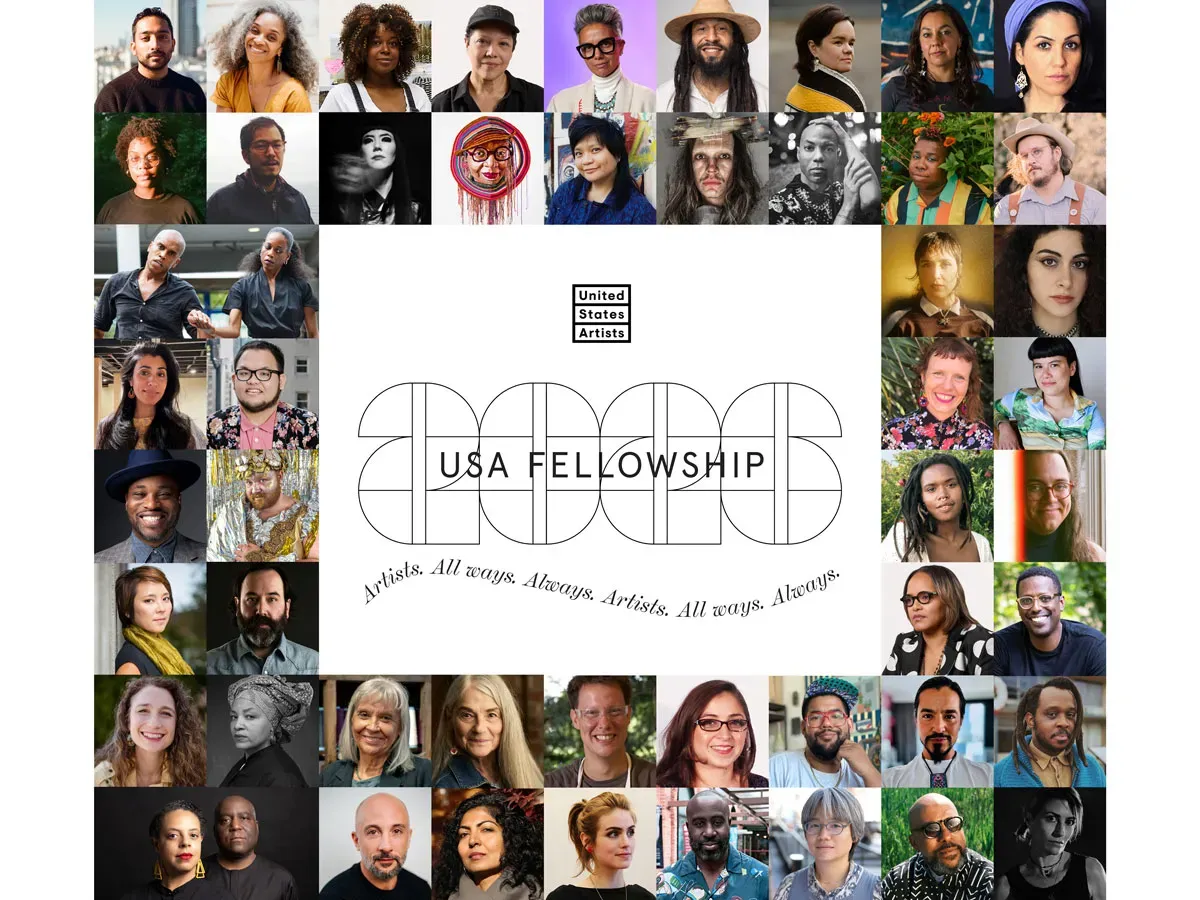
The Chicago-based nonprofit United States Artists just named its 2026 fellows—50 artists across nine disciplines, each receiving an unrestricted $50,000 grant. This year marks the organization's 20th anniversary, and the cohort reflects something increasingly rare in the American art world: direct, no-strings-attached support for people trying to make work.
The fellows span architecture and design, craft, dance, media, music, theater, traditional arts, visual art, and writing. Among them: Mendi + Keith Obadike (media), Edra Soto and Maia Chao (visual arts), and Johanna Hedva, whose essay collection How to Tell When We Will Die: On Pain, Disability, and Doom has shaped conversations around chronic illness and artistic practice.
For artists like Soto, the money isn't abstract. "As a non-commercial artist, maintaining financial stability is an ongoing challenge," she said. "Grants are not only central to my livelihood but also vital to my mental and emotional well-being." This is the gap United States Artists has been filling since 2006—a time when most support for artists came bundled with restrictions, expectations, or the exhausting work of chasing project-specific funding. The fellowship model is different: you get the money, you decide what it means for your practice.
We're a new kind of news feed.
Regular news is designed to drain you. We're a non-profit built to restore you. Every story we publish is scored for impact, progress, and hope.
Start Your News DetoxMendi + Keith Obadike framed it this way: "What is needed now is a broad effort to nurture culture and the imagination in America, and supporting artists is a vital part of that effort." That's not rhetorical. Research consistently shows that arts funding correlates with creative risk-taking, experimentation, and the kind of cultural work that doesn't fit neatly into commercial categories.
The organization also awarded its 2026 Berresford Prize—a $50,000 grant recognizing contributions to advancing artists in society—to Lori Lea Pourier (Oglala Lakota). Pourier has spent nearly three decades advocating for Native artists and artist communities, founding the First Peoples Fund and working with organizations like the First Nations Development Institute. The prize acknowledges that supporting artists isn't just about individual grants; it's about building infrastructure, institutions, and networks that sustain entire communities.
As those institutions mature, the impact compounds. Artists who received First Peoples Fund support in the early years have gone on to receive United States Artists fellowships, creating what Pourier calls "an enduring reflection of the vision and investment that began in those early years." Two decades in, United States Artists is proving that simple conviction—that artists matter to how we think and live—can become structural change.