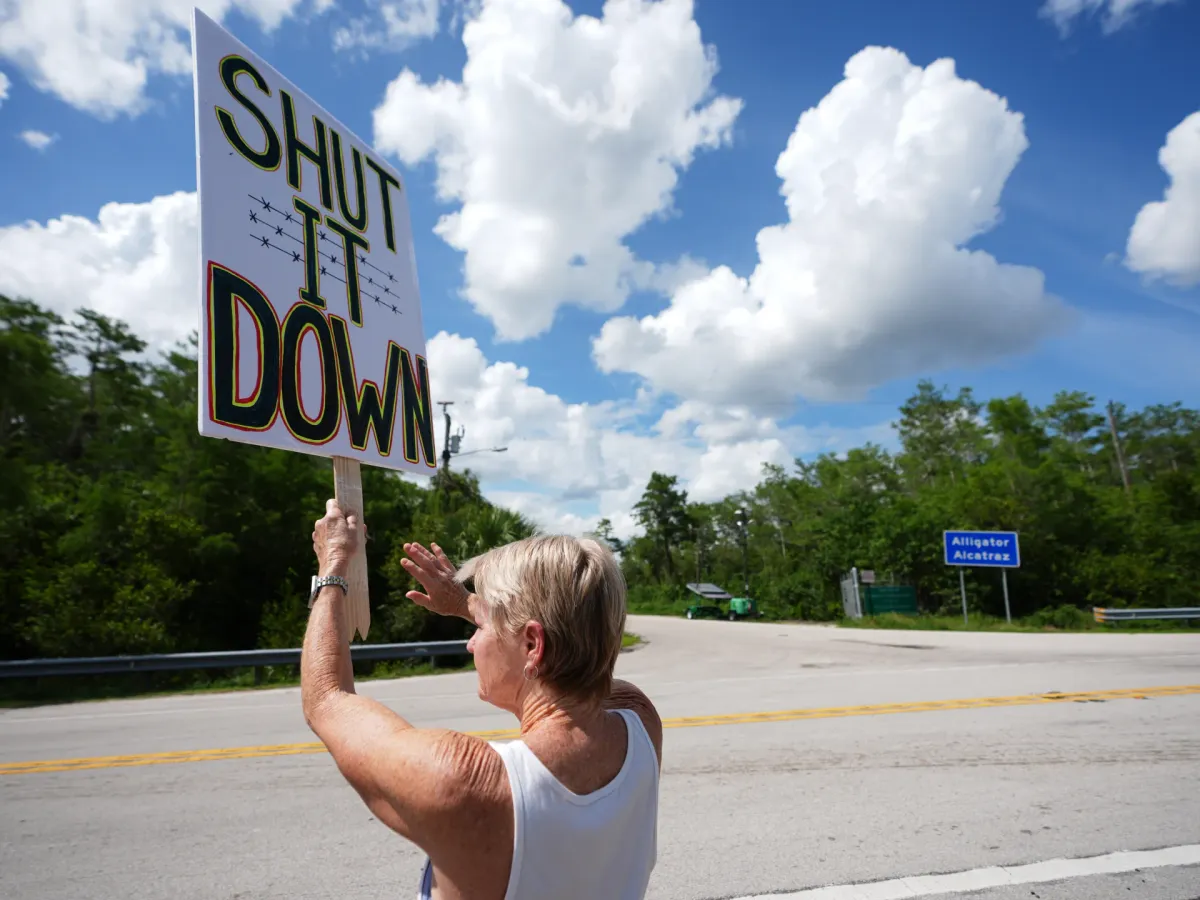
Well, it seems Florida's "Alligator Alcatraz" — a detention center that lived up to its name in more ways than one — has finally gone dark. All immigrant detainees have been transferred out, effectively closing a facility that was controversial from the moment someone whispered "swamp prison" into existence.
The Department of Homeland Security (DHS) announced the transfers this week, citing the ever-so-convenient arrival of Atlantic hurricane season. Because nothing says "safety first" like emptying a facility just as the skies get interesting.
A Short, Stormy Life
DHS spokesperson Lauren Bis confirmed the moves, though she remained tight-lipped on specifics like how many people were shuffled or where they ended up. And whether this closure is permanent? That's still a cliffhanger.
We're a new kind of news feed.
Regular news is designed to drain you. We're a non-profit built to restore you. Every story we publish is scored for impact, progress, and hope.
Start Your News DetoxWhispers about the center's demise have been circulating for months. Anonymous officials told The New York Times back in May that the isolated facility, tucked deep inside Florida’s Big Cypress Natural Preserve, was simply too expensive to operate. Who knew a prison surrounded by apex predators would be a budget strain?
"Alligator Alcatraz" first made headlines in June 2025. It was designed to be temporary, a kind of maximum-security nature preserve where the very landscape was meant to deter escapees. Florida Attorney General James Uthmeier once famously quipped, "If people get out, there’s not much waiting for them other than alligators and pythons. Nowhere to go. Nowhere to hide." Cheery stuff.
When it opened last July, with then-President Trump and Governor Ron DeSantis doing the grand tour, the facility quickly drew fire. Indigenous leaders from the Miccosukee and Seminole nations protested its construction, arguing it would desecrate their ancestral lands in the Everglades.
Human rights groups and lawyers also raised some very valid questions about whether temporary aluminum-frame structures could actually protect people from South Florida's delightful combo of intense heat, torrential rains, and, you know, hurricanes. (Which, for the record, run from June to November. Just in case you needed another reason to rethink swamp-based architecture.)
Over its brief year, the center became a magnet for lawsuits and human rights complaints. Detainees reported being denied access to lawyers, medical care, and even food that wasn't… wormy. Let that satisfying mental image sink in.
Amy Godshall, an ACLU lawyer who helped lead a lawsuit against the state and federal government, called the transfers an "important step." But she was quick to point out that it doesn't magically erase the harm already inflicted. Her urgent plea? Make the closure permanent. And promise, pinky swear, to never, ever detain people there again.
Tropical Storm Arthur, the Atlantic hurricane season's first named storm, is currently swirling in the Gulf of Mexico, heading towards Louisiana. Which, if you think about it, is a pretty dramatic exit cue for a place called Alligator Alcatraz.