
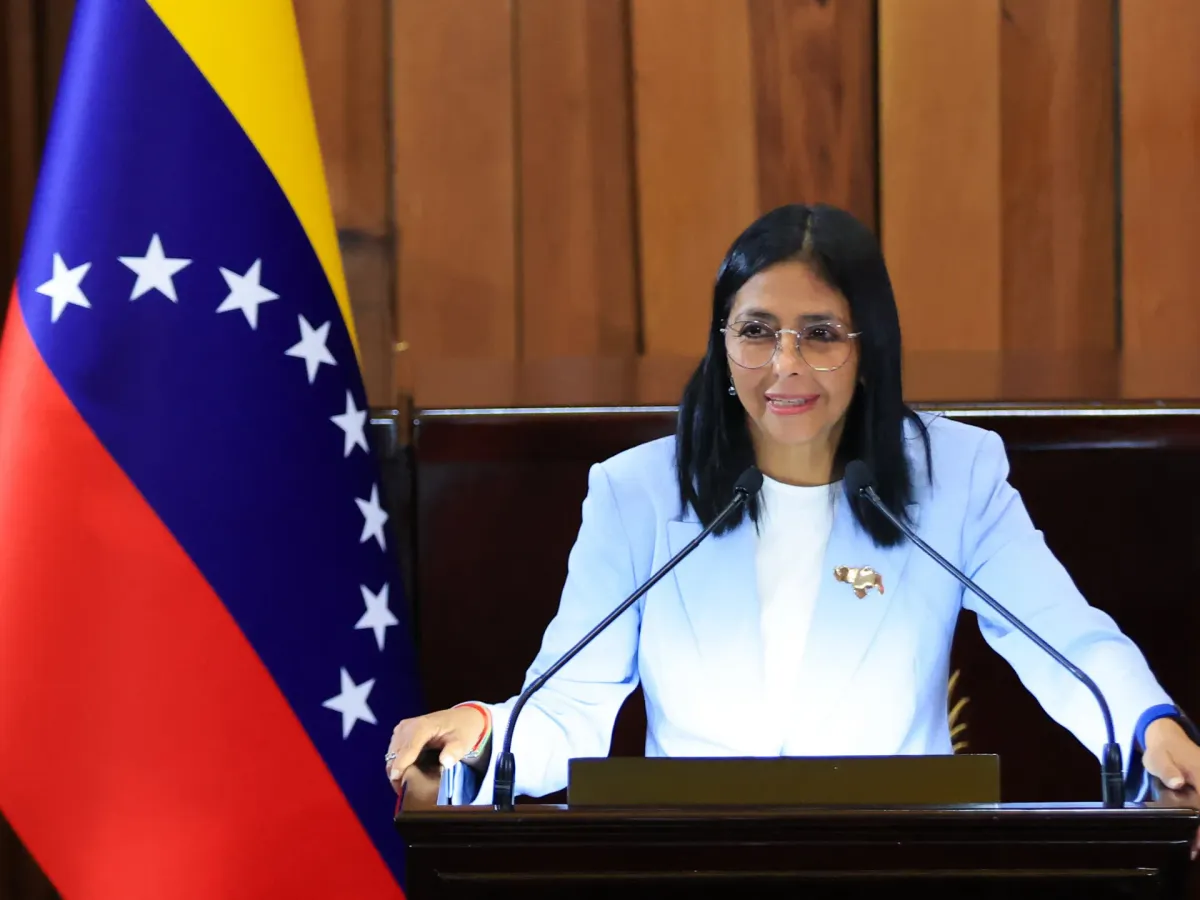
Venezuela's acting President Delcy Rodriguez announced Friday that the country will pursue a sweeping amnesty covering decades of politically motivated detention. The move could free hundreds of people currently held in prisons across the country, marking a significant shift in approach to the violence and division that has marked Venezuelan politics since 1999.
"We have decided to push ahead with a general amnesty law that covers the whole period of political violence from 1999 to the present day," Rodriguez said. She framed the amnesty as an attempt to "heal the wounds left by the political confrontation fuelled by violence and extremism" and create space for Venezuelans to rebuild shared ground.
The announcement came alongside a second major symbolic step: the shutdown of El Helicoide, a secret service prison in Caracas where torture and other documented human rights abuses have occurred. The facility will be converted into a sports, social and cultural center—a physical transformation that mirrors the stated intention to move past this chapter.
We're a new kind of news feed.
Regular news is designed to drain you. We're a non-profit built to restore you. Every story we publish is scored for impact, progress, and hope.
Start Your News DetoxThe scale of detention
According to Foro Penal, a Venezuelan prisoners' rights organization, 711 people are currently detained for political activities, with 183 having been formally sentenced. The group's president, Alfredo Romero, cautiously welcomed the amnesty announcement but emphasized a critical condition: it must apply to all political detainees "without discrimination."
The timing matters. In recent weeks, human rights worker Eduardo Torres was released after being held since May 2025. Videos of his release circulated widely, giving tangible form to what had been abstract policy discussion. Families and advocates have spent years demanding that convictions against those they consider political prisoners be dropped entirely.
Government officials claim more than 600 people have already been released, though they haven't provided clear timelines or distinguished between recent releases and prisoners freed in previous years. This opacity is precisely why Foro Penal's insistence on transparent, non-discriminatory application matters—without it, the amnesty risks becoming a partial measure dressed in the language of reconciliation.
What happens next depends on whether the amnesty law moves from announcement to implementation, and whether it reaches everyone it's intended to cover. The conversion of El Helicoide suggests at least a symbolic commitment to breaking with past practices. Whether that translates into sustained change will become clear in the weeks ahead.