More than a century after the Titanic sank, a team at the University of Rochester has cracked a problem that haunted maritime safety ever since: how to make a metal tube that stays buoyant no matter how badly it's damaged.
The answer came from nature. Diving bell spiders and fire ants have long known how to trap air underwater — they coat themselves in a water-repelling layer so fine that water simply can't penetrate it. Professor Chunlei Guo's team borrowed this trick, using a laser to etch microscopic pits across the inner surface of aluminum tubes. The result is a superhydrophobic coating so effective that water bounces off, leaving a pocket of trapped air inside. The tube stays afloat, indefinitely, even when submerged.
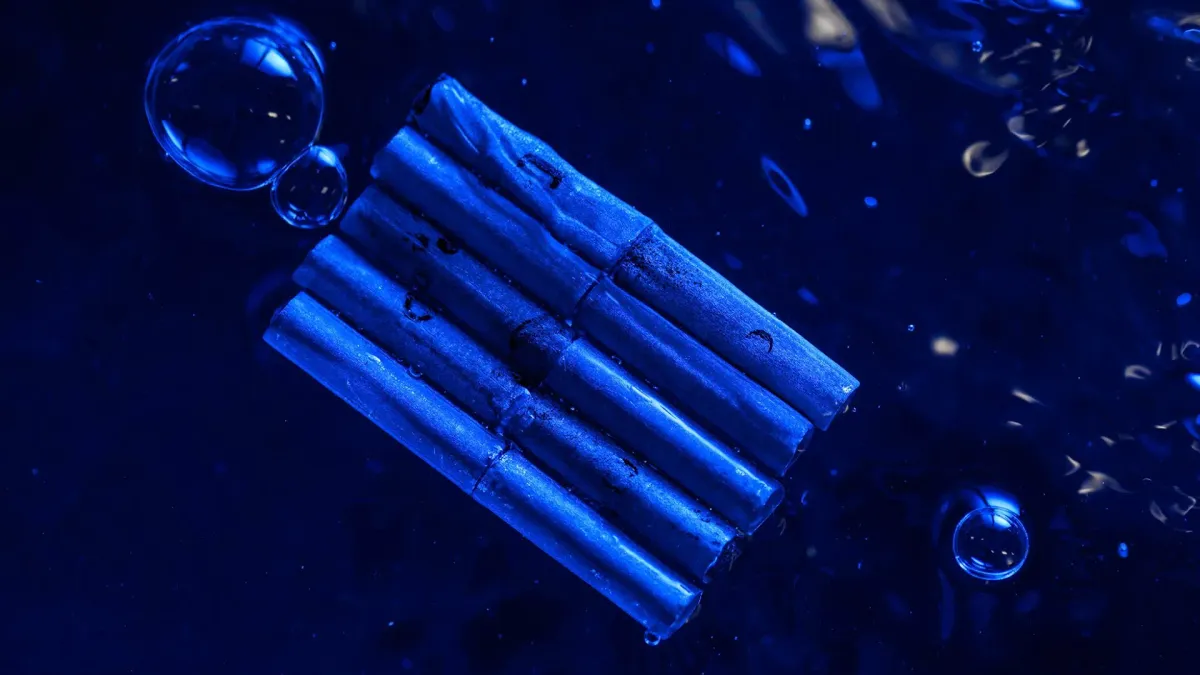
Here's the elegant part: they added a divider down the center of each tube to stabilize the air bubble. Without it, sudden pressure or turbulence could collapse the pocket. With it, the tubes held their buoyancy through weeks of testing in rough water conditions — the kind that would sink a conventional hull. Researchers even punctured the tubes with multiple holes. They still floated.
We're a new kind of news feed.
Regular news is designed to drain you. We're a non-profit built to restore you. Every story we publish is scored for impact, progress, and hope.
Start Your News DetoxFrom Lab to Ocean
The implications ripple outward quickly. Link several tubes together and you have a foundation for a ship that won't sink even if the hull is breached. Stack them and you build floating docks, ocean buoys, or platforms that can move with the waves. That last detail matters: the team also tested whether these floating structures could harvest energy from wave motion — essentially turning the ocean's movement into electricity.
It's not a revolutionary material. It's aluminum you can buy today, treated with a process that's already proven in lab conditions. The real shift is in what becomes possible when your floating platform can't fail, even under stress. Maritime safety gets a new tool. Renewable energy gets a new frontier. And a problem that killed 1,500 people in 1912 gets a little bit closer to solved.
The research was published in Advanced Functional Materials. The next phase is scaling — moving from tubes in a lab tank to structures in actual ocean conditions. That's where the real test begins.