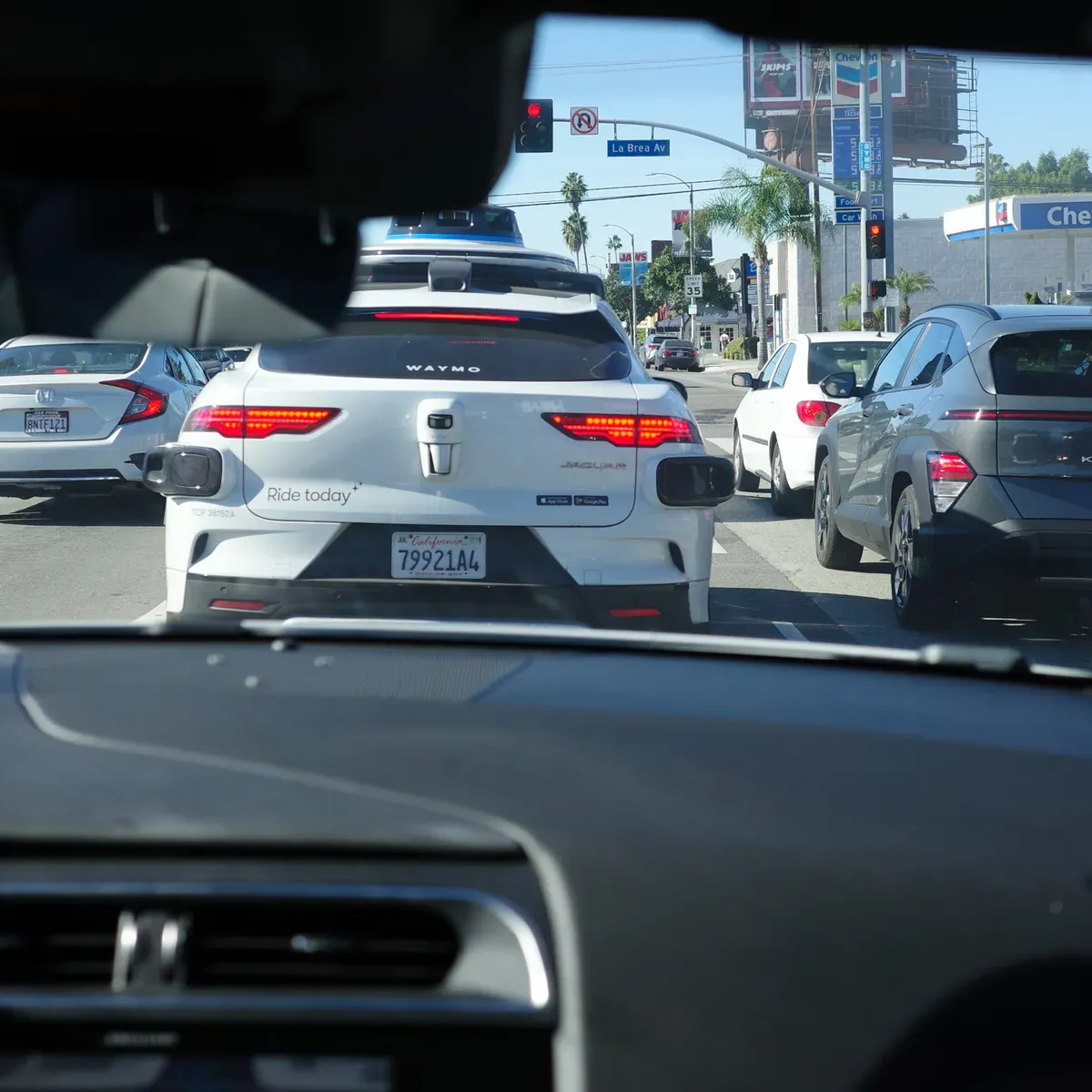
Good news for anyone who's ever grumbled about parallel parking: Waymo's self-driving cars are involved in 68% fewer crashes than their squishy, easily distracted human counterparts. Let that satisfying number sink in.
This isn't just Waymo's marketing department patting itself on the back. This comes from a new report by the Insurance Institute for Highway Safety (IIHS), which, let's be honest, usually deals in slightly less cheerful news about fender benders and crumple zones.
From 2021 to 2024, Waymo vehicles (the ones without a human safety driver, because apparently that's where we are now) logged 1.28 reportable crashes for every million miles across four cities. Human drivers? A whopping 4.06 crashes per million miles in the same areas. Which, if you think about it, is both impressive and slightly terrifying for the rest of us.
We're a new kind of news feed.
Regular news is designed to drain you. We're a non-profit built to restore you. Every story we publish is scored for impact, progress, and hope.
Start Your News DetoxLess Bumping, More Cruising
The IIHS study drilled down into the specifics. Waymo robotaxis were 91% less likely to rear-end another vehicle. And, perhaps even more impressively, they were 40% less likely to be rear-ended themselves. Turns out robots are pretty good at anticipating sudden stops, or at least not being the cause of them. The report's takeaway? Waymo's safety is actually improving as the tech gets smarter, at least in the areas it's already navigating.
Now, before you hand over your keys entirely, it's worth noting that Waymo hasn't been entirely without incident. There have been a few viral moments: driving into flooded streets, casually blowing past stopped school buses, and, yes, blocking emergency vehicles. Because even the smartest AI still has its moments.
But here's the kicker: these isolated incidents, as frustrating as they are, tend to overshadow the bigger picture. Jonathan Adkins, CEO of the Governors Highway Safety Association (GHSA), points out that we expect self-driving cars to be absolutely perfect. Meanwhile, human drivers are out there causing over 36,000 deaths a year. He suggests we should be aiming for progress, not perfection, much like how we judged seat belts and airbags back in the day.
This IIHS report comes with a few caveats, naturally. These findings might not apply to brand-new territories Waymo is exploring, or to other robotaxi companies that aren't quite so forthcoming with their mileage data. Because apparently, sharing is caring, especially when it comes to road safety. But for now, it seems your next ride might just be a little bit safer without you behind the wheel.