
In forests and wetlands across the planet this week, something quieter than headlines happened: animals got second chances, and in a few cases, they took them.
In Borneo, three orangutans walked back into the wild. Badul had spent years in human care but completed eight years of forest school—learning to climb, forage, navigate. Korwas came from the illegal wildlife trade. Asoka arrived as a tiny infant and spent a decade rebuilding what captivity had cost him. Now all three are in Bukit Baka Bukit Raya national park, moving through the canopy as their ancestors did. It's not a reversal of the broader crisis—orangutan habitat is still vanishing—but it's proof that rehabilitation works when given time and patience.

In New Zealand, the world's heaviest parrots—kākāpō—started breeding for the first time in four years. The trigger was simple: native rimu trees produced a bumper crop of berries. Conservationists are hoping for a record number of chicks from the critically endangered population. This is what recovery looks like at the edge: one good food year can mean the difference between stagnation and growth.
We're a new kind of news feed.
Regular news is designed to drain you. We're a non-profit built to restore you. Every story we publish is scored for impact, progress, and hope.
Start Your News Detox
On the Knepp estate in West Sussex, a rewilding experiment that began two decades ago has produced numbers that make the case for itself: bird populations have increased tenfold. A beaver now moves through restored wetlands. The estate stopped farming conventionally and let nature rebuild. It's a visible proof point that land can recover when given the chance.
But the week also carried loss. A heatwave across southeast Australia killed thousands of flying foxes—the largest mass mortality event since the 2019-20 bushfires. In Africa, elephant populations face a split crisis: northern regions losing their last animals to poachers, southern regions struggling with overpopulation. Environmental authorities in Colombia did manage to release 47 animals rescued from trafficking—turtles, alligators, boas—back to the wild. It's rescue work, not prevention.
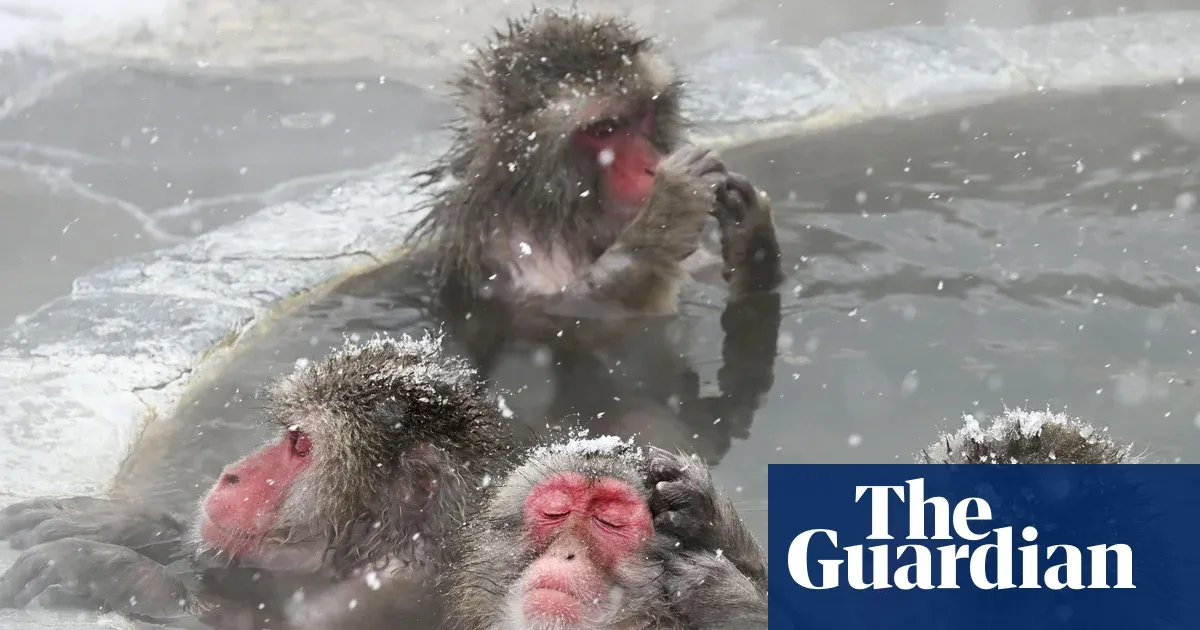
The week's smaller moments—a little owl perfectly camouflaged in Turkish rocks, great blue herons building nests in Florida, Japanese macaques soaking in hot springs while snow falls around them—remind us that wildlife persists in the spaces we allow it. A capybara yawns in a Rio lagoon. Kingfishers hunt along the Kentish coast. Deer move through German snow. These aren't victories, but they're presence. They're the baseline we're trying to hold.
The pattern across these stories is consistent: rehabilitation works, rewilding works, breeding programs work. They all require resources, patience, and political will. They all take longer than the crises that created them. But they show that decline isn't destiny—that ecosystems and species can recover when humans step in with intention rather than just extraction.