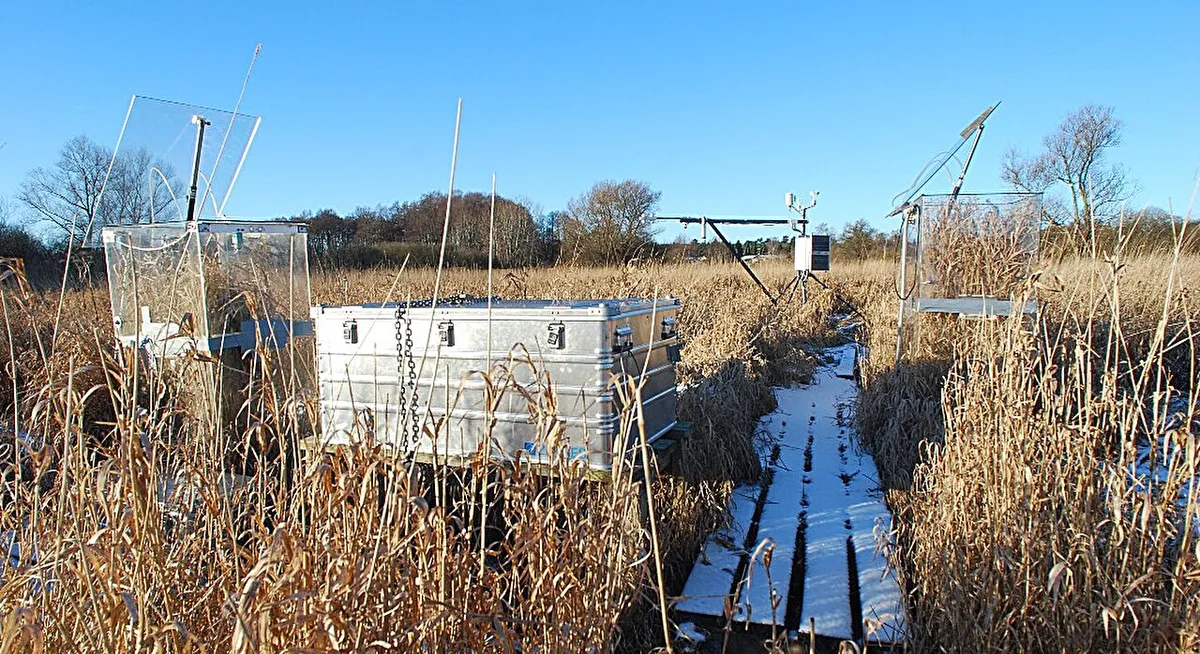
A 16-year study from the University of Copenhagen just upended how we think about wetland management. Completely flooding these ecosystems to fight climate change might actually be counterproductive. The real win comes from keeping water levels just below the soil surface — a finding that changes the game for how we restore and manage these crucial landscapes.
Here's why it matters: when wetlands flood completely, the soil becomes oxygen-starved. That sounds minor until you understand what happens next. Methane — a greenhouse gas roughly 28 times more potent than CO2 over a century — bubbles up from decomposing organic matter in the soil. But there's a molecular escape route. Certain microorganisms in the upper soil layers can actually convert that methane into CO2, which is significantly less harmful. The catch: they need oxygen to do it.
Professor Bo Elberling's team studied Maglemosen, a typical Danish wetland, measuring emissions over 16 years. Their data pointed to a sweet spot: keeping water about 10 centimeters below ground level. At that depth, the upper soil gets enough oxygen for the microbial conversion to happen, while the lower layers still produce the methane. It's a balance that minimizes the climate impact of the whole system.
We're a new kind of news feed.
Regular news is designed to drain you. We're a non-profit built to restore you. Every story we publish is scored for impact, progress, and hope.
Start Your News DetoxThe challenge isn't the science — it's the engineering. Maintaining a stable water level below ground requires constant monitoring and careful water management. You need to both drain excess water and supply it during dry periods. The Netherlands has already cracked this problem, using green energy-powered pumps to maintain precise water tables across their landscape. Their experience shows it's entirely doable, even at scale.
There are other variables in play too. Different plants affect the equation. Canary grass, for instance, can transport oxygen and methane through its roots, changing the emission profile. Fluctuating water levels — the kind that happen without active management — can trigger spikes in nitrous oxide, another potent greenhouse gas. Stability matters as much as the level itself.
The researchers are clear that the ideal water level will vary from wetland to wetland depending on soil type, vegetation, and local conditions. But the principle holds: a stable water level kept slightly below ground will almost always deliver greater climate benefits than full flooding.
This shifts the conversation away from a one-size-fits-all approach toward precision management. It means the wetlands we're restoring — and there are thousands of restoration projects underway globally — could be managed for maximum climate impact with the right infrastructure and monitoring.