Folklore helps uncover untold facets of Indigenous stories overlooked for generations. Documenting these stories reveals important cultural details.
Documenting Tharu Folklore
Growing up, I listened to my grandmother's stories by the fire during winter. She shared tales of spirits, animals, and plants important in Tharu culture. She also sang folk songs and explained their meanings.
I didn't think to write these stories down until after she passed away. Now, I wish I had those words of wisdom. Luckily, I joined Amrit Sufi and Subhasish Panigrahi, who document oral cultures in India. They inspired me to document my own culture.
We're a new kind of news feed.
Regular news is designed to drain you. We're a non-profit built to restore you. Every story we publish is scored for impact, progress, and hope.
Start Your News DetoxDocumenting Indigenous folklore takes a lot of time. You need to spend time with communities so they feel comfortable sharing their stories, songs, and experiences.
While documenting Tharu oral culture in eastern Nepal, I found many interesting facts. These facts could reveal new parts of Indigenous stories with more research.
Morangsair: A Song of Seasonal Migration
I recorded a folk song called "Morangsair" or "Morangesari." It is still sung in the eastern part of Nepal's southern plains. This song tells about young men who used to migrate seasonally from Saptari District to Morang District. Morang was more fertile and offered work for men seeking extra money.
Sunsari District was part of Morang District before 1962. It was named after the Sursair River, now called "Sunsari River." Today, people must cross the Koshi River and Sunsari River to get to Sunsari from Saptari. This journey was much harder before bridges were built.
The folk song is a young woman's plea to her husband not to go to Morang. She describes the dense forest, hot climate, and the Sursair River he would cross. However, the song does not mention the Koshi River, which is Nepal's largest river and lies before the Sunsari River on the way to Morang.

Further research showed that the Koshi River used to flow many kilometers east of its current path. In India, the river has shifted almost 100 kilometers west. The Ganges River is called "Sursuri" or "Sursari" in the Guru Granth Sahib, a sacred Hindu scripture. Both the Sursair and Koshi Rivers eventually flow into the Ganges.
Biyahi: A River Named After a Married Woman
Talking with Mahabir Chaudhary, a Tharu elder in Nepal’s Saptari District, I learned something interesting. A river and its tributary are named after Tharu words for a married woman.
Nepali-speaking administrators renamed the river "Behai." But Tharu elders say its original name is "Biyahi," which means "first wife" in the Kochila Tharu language. A tributary called "Samdahi" feeds into it. "Samdahi" means "second wife" in Eastern Tharu. After they join, the Samdahi and Biyahi Rivers continue as the Biyahi River.
Sabudana ke gachhi: The Tattoo Story of Sago Pearls
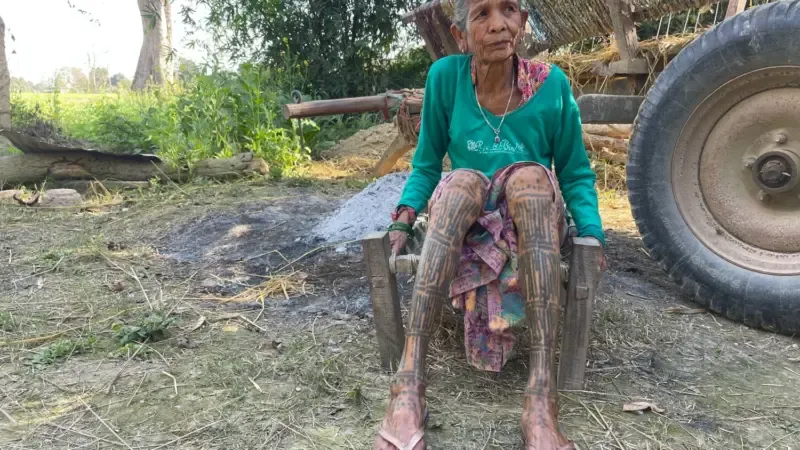
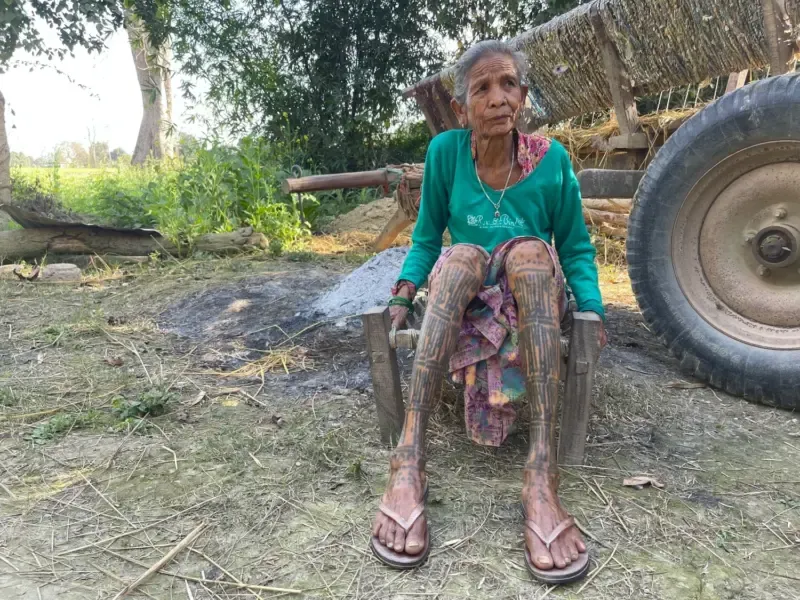
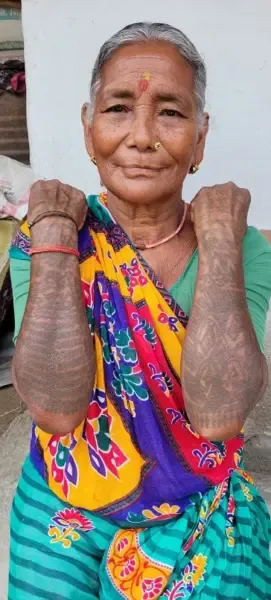
Today, sago, or sabudana, found in markets is mostly made from cassava root starch. However, sago pearls were traditionally also made from the pith of sago palms. I learned about this process while interviewing elderly Eastern Tharu-speaking women. One woman showed a tattoo that looked like a palm tree. She said it was sabudana ke gachhi. "Gachhi" is a Tharu word for a tree. She also explained that sabudana used to be made from a palm tree.
I researched further and found that in the past, people would cut down palm trees. They would scrape the starchy core from the trunk and process it into sago pearls. This tradition still exists in some Southeast Asian countries.
I have heard many more stories while documenting Tharu oral culture that need to be shared widely. I still long to remember the stories my grandmother told me by the fireside on cold winter days.