
Ever had that gut-wrenching moment where you realize you’ve totally messed up with your kid? And then, instead of just saying “Sorry,” you launch into a full-blown defense about how they were difficult, or you were stressed, or, let’s be honest, they just needed to learn a lesson? Yeah, about that… it turns out those justifications might be doing more harm than good.
Psychologist Jean-Michel Robichaud, from the Université de Moncton, has been digging into how parents handle those moments of hurt. He and Karina Schumann, a psychologist from the University of Pittsburgh, teamed up to figure out what really makes an apology land, especially when it’s parent-to-teen. And spoiler alert: it’s not about saving face.

The Awkward Art of Admitting You Messed Up
Why is it so hard to just say “My bad”? Schumann points to a few classic human hang-ups:
We're a new kind of news feed.
Regular news is designed to drain you. We're a non-profit built to restore you. Every story we publish is scored for impact, progress, and hope.
Start Your News Detox- The Ego Shield: Admitting you’re wrong feels…icky. It pokes at our self-image as the all-knowing, always-right grown-up. So we make excuses, even if they’re just brewing in our heads.
- The Blame Game: Most conflicts are a two-way street, right? So we worry that apologizing first means we’re taking 100% of the blame, even if we only contributed 40%. (Or 20%. Or, fine, 80%.)
- Empathy Bypass: Sometimes, we just can’t quite grasp how much our actions stung the other person. Studies show that the more empathetic you are, the better your apologies get. Who knew?
- The Forgiveness Doubt: What if they don't accept it? What if it changes nothing? The fear of rejection can keep us silent.
Interestingly, Schumann also found that people who are more self-compassionate (read: not constantly beating themselves up) are actually more likely to apologize. Less shame, more “oops, let me fix that.”
The “Psychological Vitamin” Apology
Robichaud calls proper apologies “psychological vitamins” for families. Because apparently, admitting mistakes isn't just about clearing the air; it's a golden opportunity to teach your kids about values and actually strengthen your bond. But there's a catch: the words you choose matter. A lot.
They identified two types of apologies:
- Victim-Centered: These are the gold standard. They focus entirely on the teen’s feelings: “I’m sorry,” “What I did was unfair,” “I hurt you.” They might even express hope for forgiveness, without demanding it.
- Defensive: These are the ones that sneak in justifications: “I did it for your own good,” “It was just a joke,” or, the classic, “You made me do it.” They minimize, they blame, they miss the point entirely.
Their research showed a clear winner: victim-centered apologies lead to teens who are more likely to forgive freely, have higher well-being, and are even more likely to be kind and helpful themselves. Plus, they’re more likely to share their own screw-ups with you and less likely to lie. Let that satisfying number sink in.
Robichaud is pretty blunt: “If you want to apologize, don’t defend yourself at the same time. That’s the equivalent of having done nothing.” Defensive language actually increases lying and reduces forgiveness. Because when you try to explain away the hurt, your kid just hears that their feelings aren't valid.
The Authority Myth
Now, some parents worry that apologizing to their kids makes them look weak, or undermines their authority. Robichaud and Schumann specifically tested this fear. And guess what? There was no significant effect on parental authority. Zero.
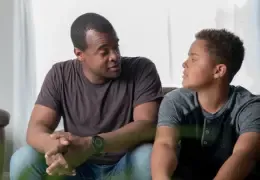
Robichaud explains it simply: apologizing taps into trust, love, and connection, not hierarchy or respect. It’s about repairing a broken bond, not dismantling the chain of command. Every parent messes up, he says. You can’t always control making the mistake, but you can control how you respond. And that response, it turns out, can make all the difference.