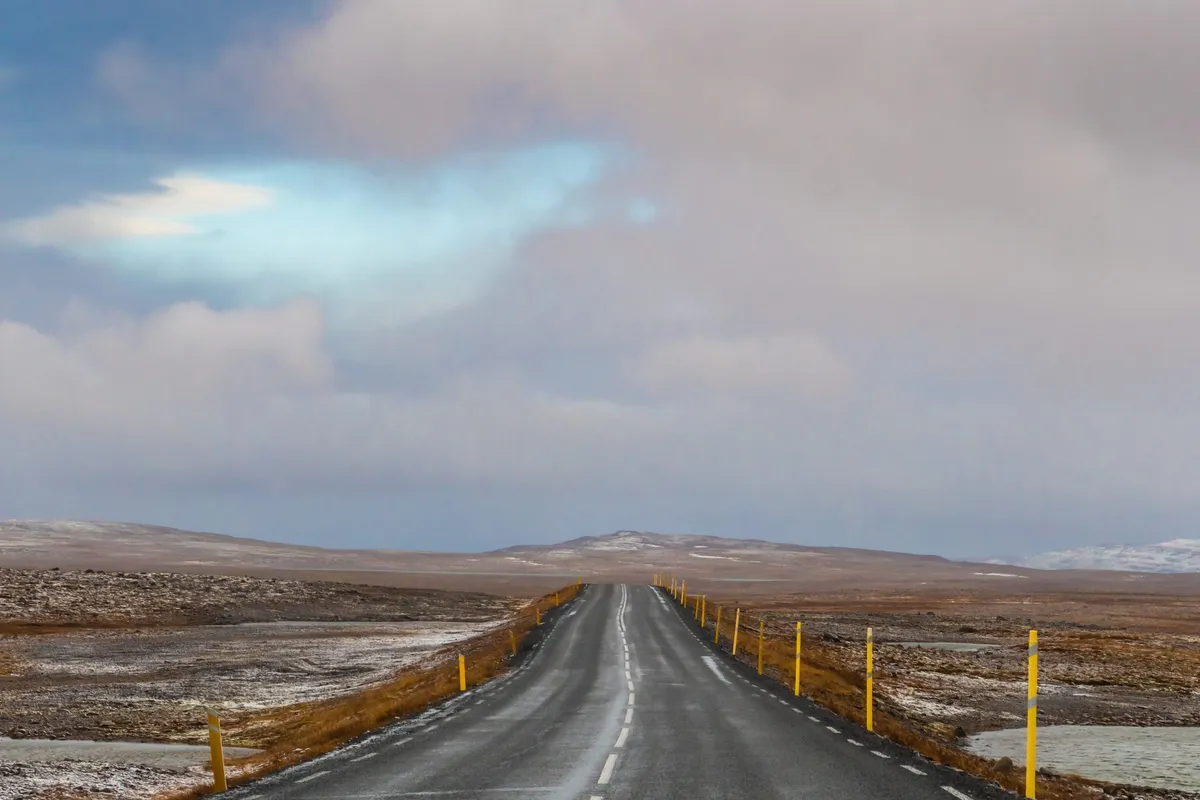
Black ice doesn't announce itself. Unlike snow or slush, this nearly invisible layer of frozen moisture can send your tires into a spin before you even know what hit you—and that's exactly what makes it dangerous.
"It can be present when there is no precipitation, so it can sneak up on you," explains Michael Muccilli, a meteorologist with the National Weather Service. The name itself is misleading. Black ice isn't actually black. It gets its name from how it blends seamlessly with dark asphalt, becoming practically invisible to the eye, especially at night.
How Black Ice Forms
The mechanics are simple: a thin layer of moisture freezes into a smooth, clear sheet with none of the air bubbles that usually make ice look cloudy or white. This happens most commonly during freeze-thaw cycles, when temperatures hover around freezing. During the day, rain or melting snow wets the pavement. Then at night, as temperatures dip below freezing, that moisture hardens into an icy surface.
We're a new kind of news feed.
Regular news is designed to drain you. We're a non-profit built to restore you. Every story we publish is scored for impact, progress, and hope.
Start Your News Detox"You need some kind of liquid—rain, snowmelt, or even fog—for black ice to form," Muccilli says.
Here's the catch: your car's thermometer might read 34°F and still be fooled. If the road surface itself is colder than the air temperature, ice can form anyway. This is especially true early in the morning or late at night, when pavement hasn't had a chance to warm up. So if you're heading out during those hours and the roads look "just wet," assume black ice could be hiding in the mix.
Climate change adds another layer of complexity. In colder regions, warmer average temperatures could actually increase freeze-thaw cycles, creating more black ice conditions. In warmer zones, however, black ice could become less frequent as temperatures stay further above freezing.
Where It Hides
Black ice can form anywhere temperatures drop, but certain spots are more vulnerable. Bridges and overpasses cool down faster than ground-level roads since they're exposed to air on all sides. Shaded roads and underpasses stay icy longer without sunlight to warm the pavement. Low-lying areas and dips in the road collect moisture, making ice formation easier. Even exhaust fumes from idling cars can freeze on cold pavement at intersections, contributing to the hazard.
And it's not just a driver's problem. Black ice causes plenty of pedestrian slips and falls each winter on driveways, sidewalks, and porches.
What to Do If You Hit It
The difficult truth: you might not spot black ice before you're already on it. Your best defense is to assume it might be out there anytime temperatures are near freezing and the roads are damp. A few subtle clues can help—a patch of pavement that looks shinier than the rest, or one that reflects light differently at night—but these are easy to miss.
If you feel your vehicle start to slide, resist the urge to panic. "Do not slam on the brakes or jerk the steering wheel, as this will cause you to lose control completely," says Ernesto Urbaez, a pavement engineering expert at the Virginia Tech Transportation Institute.
Instead: keep the wheel straight, take your foot off the gas, and let the car slow down naturally. If you need to brake and your car has ABS (anti-lock brakes), apply firm, steady pressure. Without ABS, gently pump the brakes while staying calm and focused.
"Black ice usually appears in small patches," Urbaez adds. "So if you stay composed and keep your wheels straight, you will likely regain control within a few seconds."
Black ice doesn't make much of a scene. It doesn't crunch like snow or slosh like slush. But understanding where and how it forms—and knowing what to do if you hit a patch—keeps you better prepared for the roads ahead.