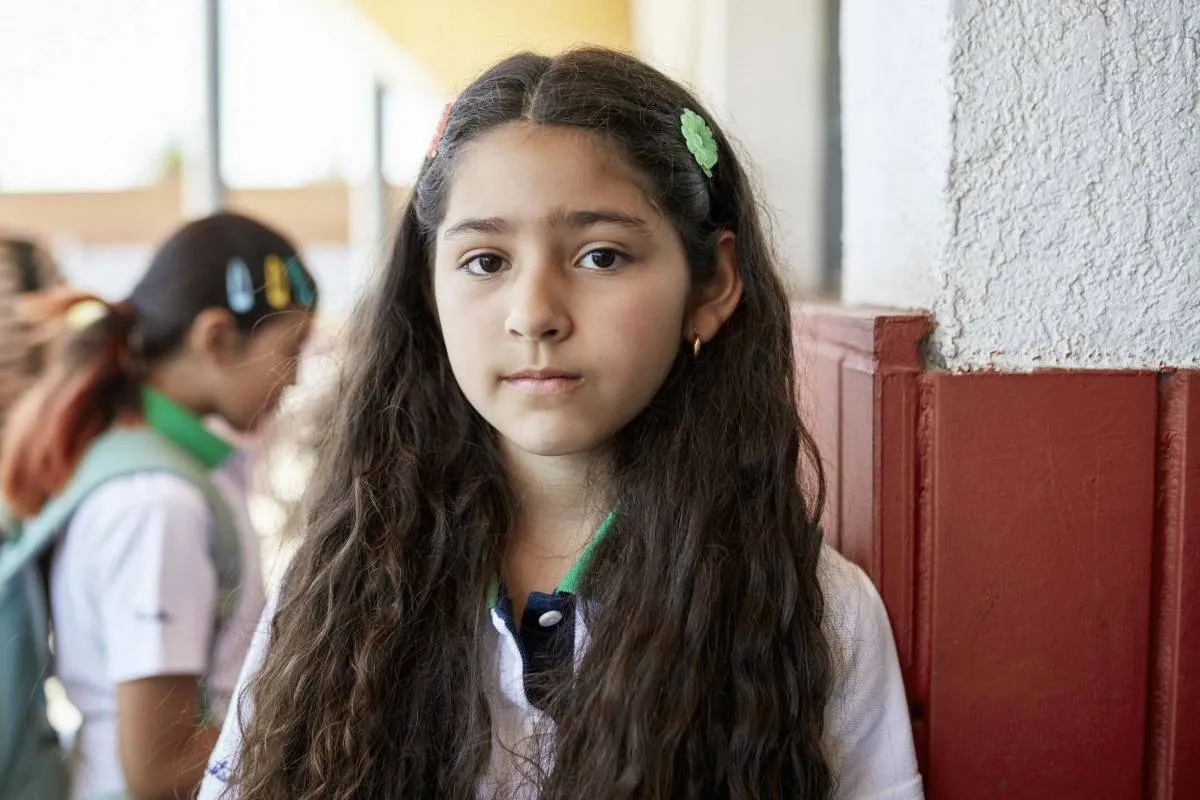
From the doorway of a classroom, silence looks the same. Two small figures, voices gone, shoulders curved inward—it's easy to assume you understand what you're seeing. But two girls taught me that identical-looking quiet can be protecting opposite truths.
When silence means safety
The first girl arrived in early winter, small for her age, moving through the room like she'd practiced taking up less space. At home she switched between two languages the way other children switch between toys. At school, all that language vanished.
She didn't ask for the bathroom; she held it until she cried. When an adult asked a direct question—"Do you want water?"—visible tension crossed her face, something like a wince swallowed before anyone could name it. People slowed their speech for her, repeated everything twice, thinking they were helping. But all that effort made her shrink further. She understood everything. The silence wasn't about vocabulary. It was about finding a place where she could exist without feeling examined.
We're a new kind of news feed.
Regular news is designed to drain you. We're a non-profit built to restore you. Every story we publish is scored for impact, progress, and hope.
Start Your News DetoxFor many bilingual children, silence is not a lack of language—it's a nervous system choosing observation over expression until trust takes root.
For a long time, she didn't look at me at all. Then one morning during quiet work time, she lifted her eyes just enough to meet mine. It lasted no longer than a breath. I smiled—not the bright smile we use to encourage children, but a slow one, light enough to carry no request inside it. I went back to what I was doing. That was our first conversation.
In the days that followed, those glances returned, small and quick, like tiny tests. So I stopped asking questions with answers I already knew. Instead, I narrated what was in front of us: "You're stacking the blue block on top. You're watching how it wobbles. You're sitting beside me." She wasn't being asked to perform language, only to be seen. I accepted a nod, a point, a hand on the table as an answer.
Weeks later, she whispered a word. I almost missed it. Then another, a few days later, always alone, always with a pause first—as if she were looking for permission in my face. Her voice returned in pieces, like something fragile she was learning to hold again. She never became loud. But she no longer cried when she needed help. She started smiling without checking who might be watching. The classroom had stopped being a place she survived, and had become a place she could enter fully, one small moment at a time.
A few months later, something shifted. The girl who once entered the room like she hoped no one would notice now lifted her hand during circle time, not to answer, but to straighten the picture book we were reading. It was small, almost invisible if you weren't watching—but it was her way of stepping forward.
When silence hides a longing
Some years later, another quiet girl walked into my classroom. She was silent too, but not in the way that hides from attention. She played alone as if the world in her hands was safer than the world around her—rocking gently from side to side, turning objects over as if she were trying to understand their language. She watched the other children's games with an expression that was part curiosity, part distance.
Everyone assumed she didn't speak English. So one day, I asked a classmate to talk to her in her home language. She answered immediately, clear and calm. Language wasn't the barrier.
For weeks, she stayed on her island, surrounded by the noise of her peers but untouched by it. And then one afternoon she crossed the room with sudden purpose, clutching a small plastic figure so tightly her knuckles were pale.
"I want to play," she said.
"You are playing," I told her gently, glancing at the toy in her hand.
She shook her head. Her eyes filled.
"No. I want to play…with those girls. I don't know how."
The tears came fast, as if she had been holding them for days. She pressed her face into my chest and sobbed in a way that startled everyone in the room, because until that moment she had seemed so self-contained. It wasn't fear. It was longing—the kind that hurts when you finally name it.
She didn't need more time alone. She needed a bridge.
So we built one. I gathered the girls she had been watching and told them something simple: "She wants to play with you. She's still learning how to start. You can help." And they did what children do when you give them a way to be kind. They shifted their chairs to make room. They offered a marker. They saved her a turn. Little gestures, but huge in the language of belonging.
She never became the loudest voice in the circle. But she stopped living outside the group. She found a doorway into other children's worlds—and learned that someone would walk through it with her if she asked.
The difference silence makes
What struck me later was how similar they looked from the doorway: two quiet children, both holding their voices close. Yet one was using silence like a shelter, a way to stay safe until the room earned her trust. The other could already see the world she wanted to join, but needed someone to show her how to step into it. Their silence was the same shape on the outside, but it was protecting opposite needs. Responding to them the same way would have meant missing both of their truths.
When a child's voice disappears at school, the instinct is to look for what's missing. But the real question is what the silence is doing for them—what it's protecting. Is it helping them stay afloat in a place that still feels new, or hiding a wish they can't reach alone? That small shift keeps the focus on meaning, not performance, and it reminds us that silence can be a strategy, not a deficit.
I still think of those two girls when I see a quiet child. Sometimes the smallest sound a child makes is the breath before a whisper, the moment they meet your eyes to see if you'll meet them back. And sometimes the bravest sentence in the room is not a story told to everyone, but a quiet "I want to play," even when the child doesn't yet know how.