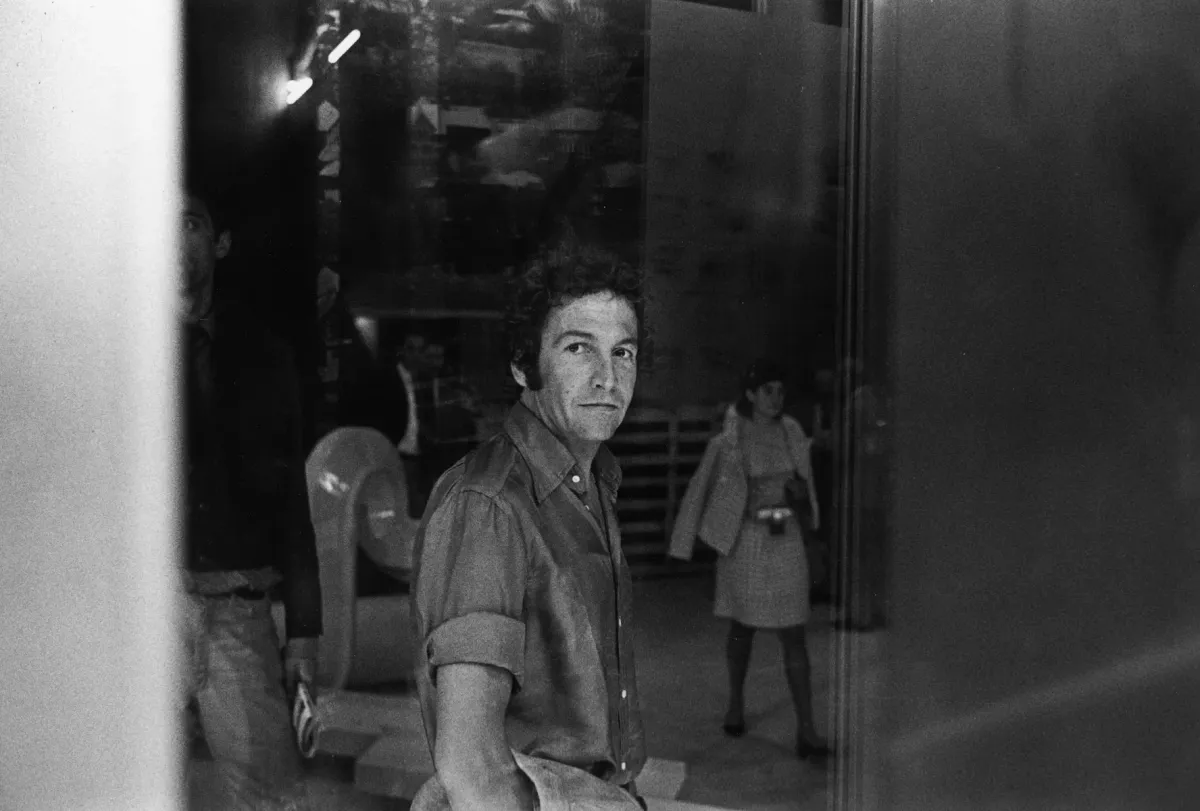
Imagine strolling through lower Manhattan, where one person sees a discarded tire and another sees... art. That, in a nutshell, was Robert Rauschenberg, the legendary artist who decided the world needed a serious shake-up, one found object at a time.
Born in 1925, Rauschenberg spent his life creating roughly 10,000 pieces, each one a polite (or not-so-polite) nudge to what art could be. He was the ultimate collaborator, constantly pulling in other artists, because apparently, making history is more fun with friends.
The Man Who Invented "Combines"
Rauschenberg's biggest splash came in the mid-1950s with his "combines." Picture this: he'd scour the gritty streets of New York, snatching up everything from old bedsheets to stuffed goats (yes, really), then slap them onto a canvas alongside paint. Suddenly, what was destined for a landfill was hanging in a gallery. It was a brilliant, slightly chaotic middle finger to convention.
We're a new kind of news feed.
Regular news is designed to drain you. We're a non-profit built to restore you. Every story we publish is scored for impact, progress, and hope.
Start Your News DetoxBut a guy who puts a tire in a painting isn't going to stop there. Rauschenberg dove headfirst into photography, performance art, dance, and printmaking. He even tried to blend art with the cutting edge technology of his era, because why not make things even more interesting?
His work was a direct challenge to the Abstract Expressionism that dominated post-WWII art. While he appreciated a good brushstroke, Rauschenberg moved away from the intense, personal angst of that movement. Instead, he found profound meaning in the mundane, celebrating everyday objects with a wink and a nod. He was heavily inspired by Marcel Duchamp's "Readymades" — basically, ordinary objects elevated to art by an artist's declaration. Rauschenberg, alongside his partner Jasper Johns, essentially resurrected Duchamp's playfully ironic spirit for a whole new generation.
Dubbed Neo-Dadaists during the Cold War, Rauschenberg and Johns captured the era's mood perfectly. Unlike the original Dadaists, who reacted to the chaos of WWI, these guys reflected a distinctly American blend of freedom and individual power. Rauschenberg, especially, seemed to bottle that defiant, can-do spirit.
Today, we're celebrating "Rauschenberg 100," marking a century since his birth. It's a testament to an artist who saw the world not as it was, but as an endless canvas for the unexpected.