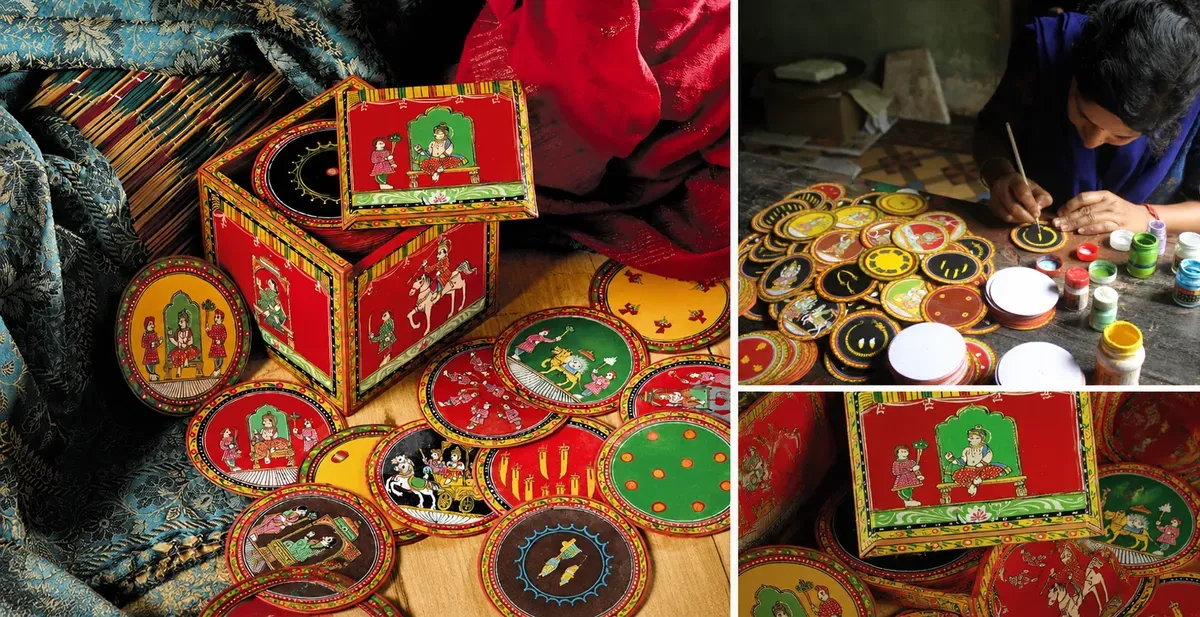
Long before anyone was frantically collecting holographic Charizards, India had its own highly coveted, hand-painted cards. They were called Ganjifa, and for centuries, these circular works of art graced the hands of Mughal emperors and princely courts. Then, like many good things, they started to fade.
But not on one royal family's watch. In a move that proves not all heroes wear capes (some wear crowns), a family in Maharashtra refused to let India's 400-year-old card art disappear.
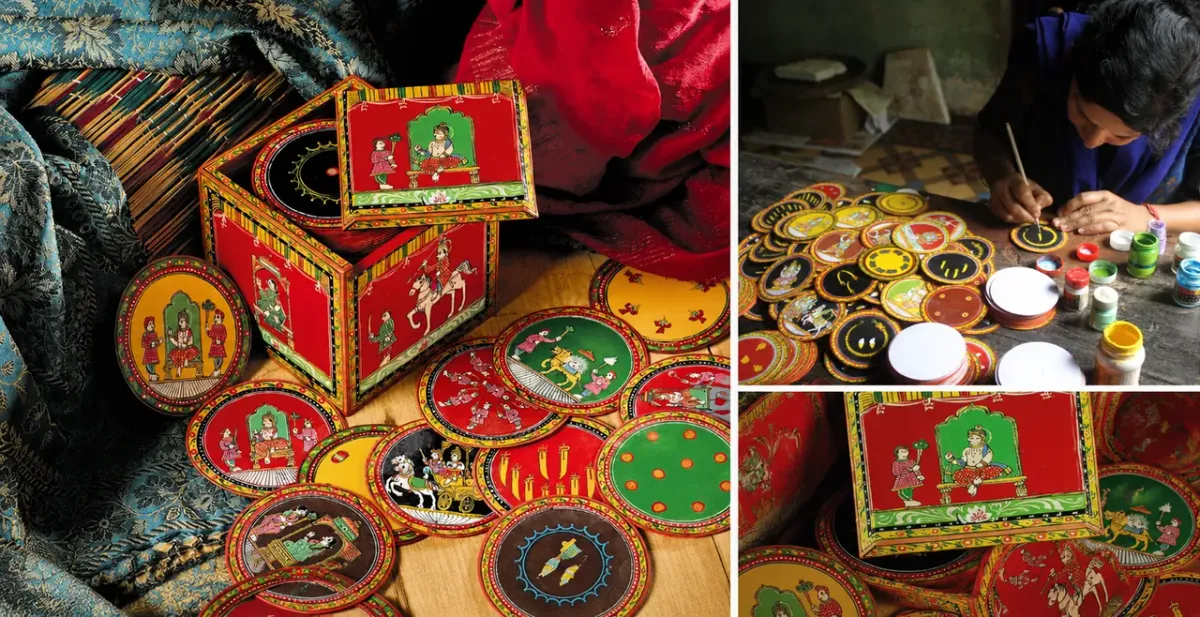
The Original Royal Flush
The game's name, Ganjifa, comes from the Persian word for "treasure"—a fitting title for cards that were often crafted from ivory, tortoiseshell, and sandalwood, then adorned with silver, gold, and precious stones. When Ganjifa arrived in India in the 16th century, emperors like Akbar made it their royal pastime, even designing elaborate 96-card decks that mirrored his own government structure. Because why just play a game when you can also make a subtle political statement?
We're a new kind of news feed.
Regular news is designed to drain you. We're a non-profit built to restore you. Every story we publish is scored for impact, progress, and hope.
Start Your News DetoxUnlike today's boring rectangles, Ganjifa cards were round, each a tiny canvas depicting mythological tales, court life, or the ten avatars of Lord Vishnu. As the game spread, different regions developed their own distinct styles. Think of it as regional accents for art.
But then came the 20th century and, with it, the mass-produced, rectangular playing cards. Ganjifa workshops shuttered. Artisans moved on. By the time India gained independence, the art form was on life support, clinging to existence in just one town: Sawantwadi.
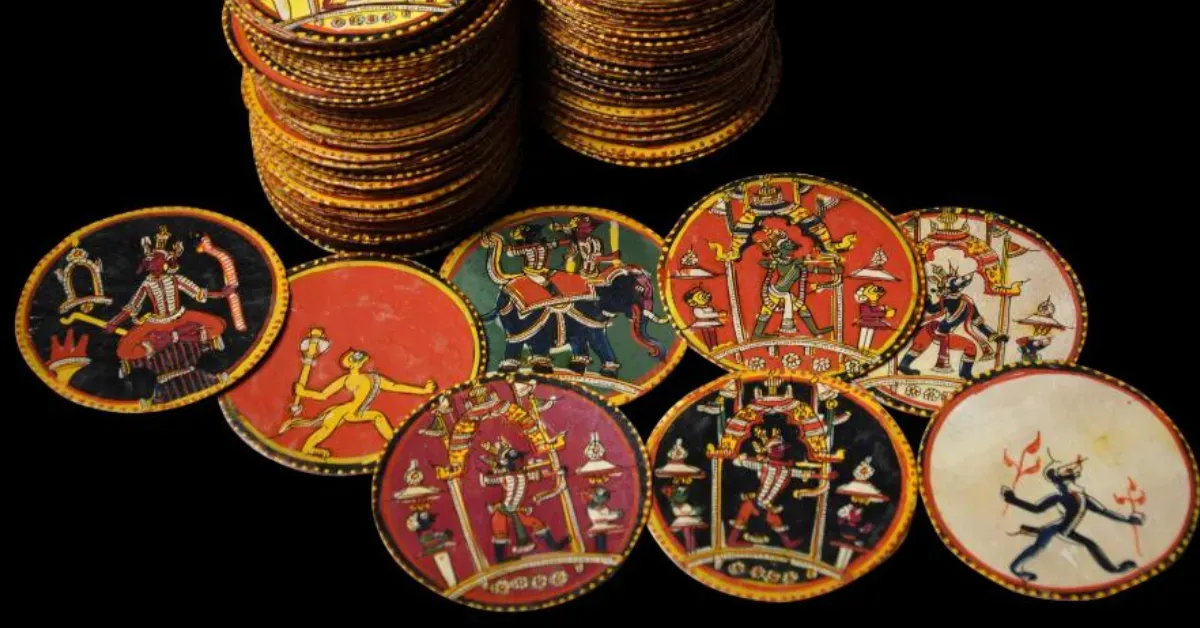
A Palace Intervention
The Sawant Bhonsle royal family of Sawantwadi watched Ganjifa vanish, even from their own backyard. So, in a move that would make any preservationist swoon, Lt Col Raja Bahadur Shivaram Sawant Bhonsle and his wife, Rani Satvashiladevi, decided to save it themselves.
They apprenticed with an 80-year-old master artisan, Pundalik Chitari, and in 1971, founded Sawantwadi Lacquerwares. Suddenly, the palace's main hall became a working studio, where about 20 artisans, mostly women, meticulously painted, lacquered, and brought the cards back to life. A single set takes over a month to complete. Patience, it seems, is a royal virtue.
Fast forward to 2019, when Yuvrani Shraddha Lakham Sawant Bhonsle married into the family. She took Ganjifa's revival into the 21st century, bringing the craft online and partnering with major initiatives, introducing it to an entirely new generation who probably thought cards only came in Bicycle decks.
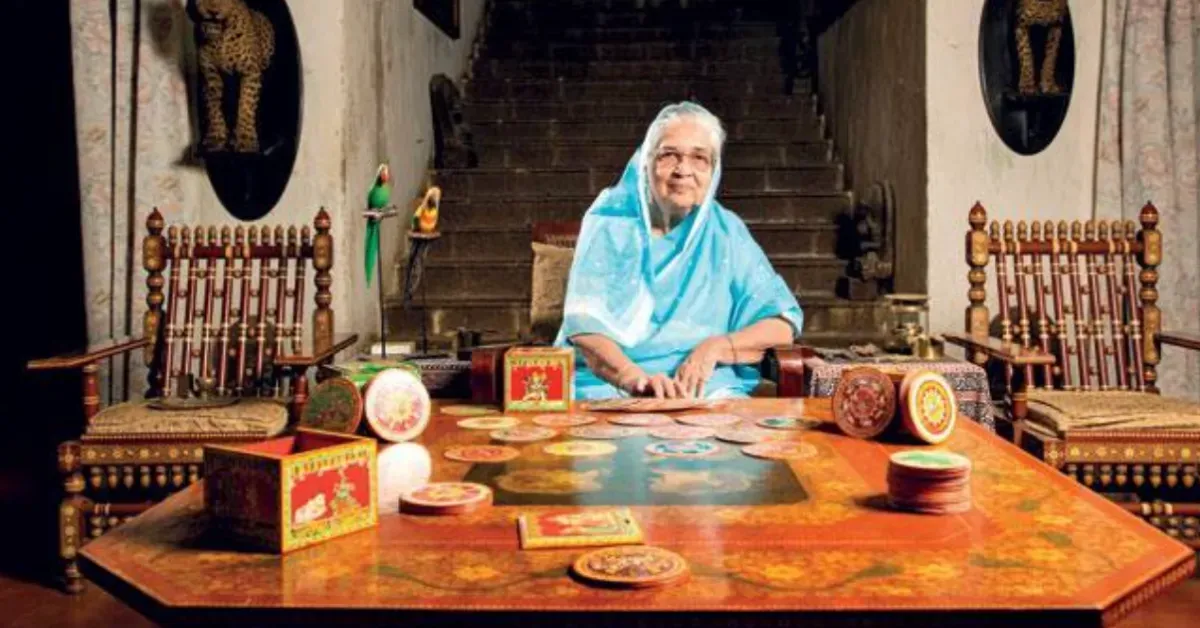
With her husband, Yuvraj Lakham Sawant Bhonsle, she even transformed part of Sawantwadi Palace into a Ganjifa-themed boutique hotel. Doorknobs, mirrors, furniture – all hand-painted. Suites are named after avatars of Vishnu, not arbitrary numbers. Because apparently, staying in a hotel room named "Matsya" is far more majestic than "Room 302."
The family didn't stop there. In 2023, they applied for a Geographical Indication (GI) tag, a legal protection that proves Sawantwadi's Ganjifa was unique. It took a year and a half, but in January 2024, the tag was granted—the first for this craft in India. It's like getting a patent on your unique brand of awesome.
From Royal Hands to Postcards
Then came 2025, and with it, something truly unexpected: India Post launched the country's first-ever circular postcards, designed in collaboration with Sawantwadi's artisans and featuring Ganjifa motifs. A craft once exclusive to kings can now travel through the mail, carried by ordinary citizens. Which, if you think about it, is a pretty sweet full circle.
Modern adaptations, like using durable poster colors, ensure these cards can withstand travel without losing their charm. But the core—the hand-painting, the storytelling, the lacquering—remains unchanged. It’s a testament to the idea that heritage doesn't just survive; it thrives when someone deliberately chooses to protect it, one beautifully painted card at a time.