Caty Hollis, a palliative care nurse, learned the most profound lessons about end-of-life care not in a classroom, but in her own living room. Specifically, her father's living room. Two decades ago, after battling colon cancer, her dad decided to spend his final days at home in London.
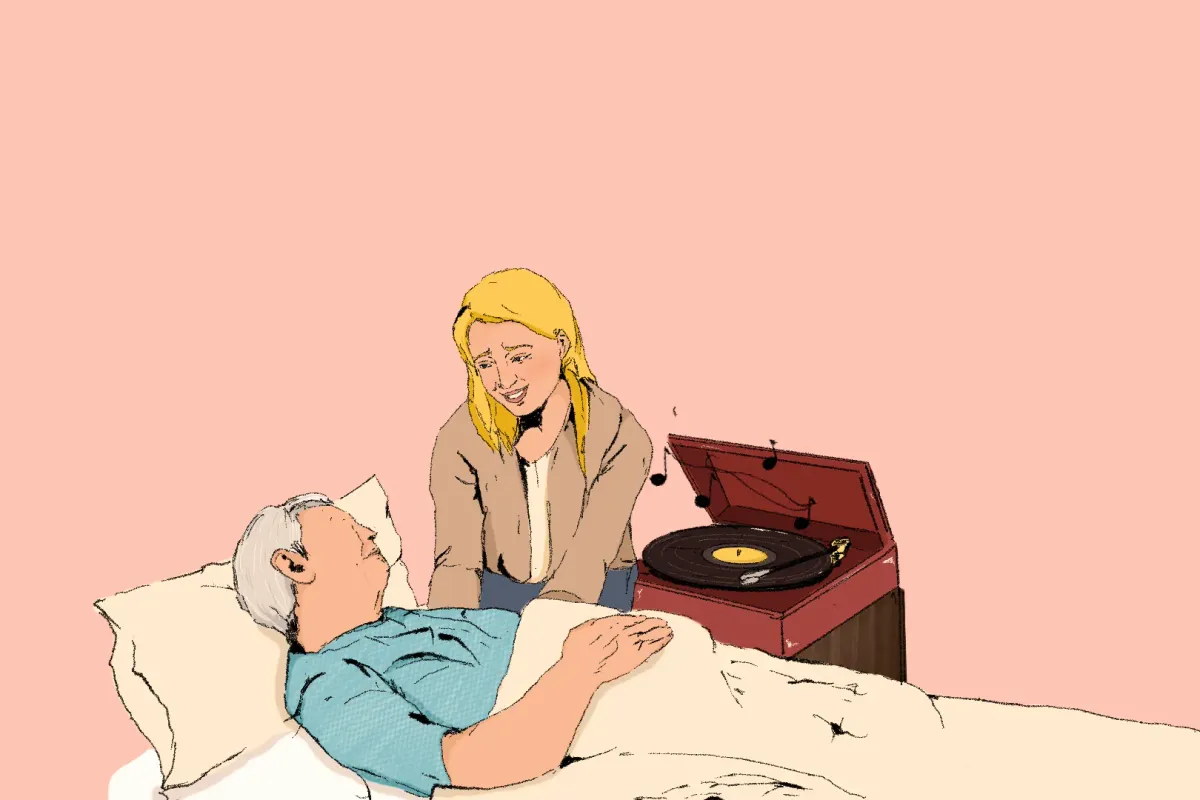
Her father, a former police detective, was surrounded by family. He expressed the kind of regrets many of us might whisper at the end: wishing he'd been more present, less consumed by work. Then, a week before he died, the family made it official: he was staying home. The room filled with his favorite music, from Frank Sinatra to Electric Light Orchestra, because apparently, that's where we are now.
Hollis had endured several miscarriages, a struggle that weighed heavily on her father. In a moment that brought him immense peace, he told her he was dying so she could have her baby. He called it "a circle of life." Just let that sink in for a moment.
We're a new kind of news feed.
Regular news is designed to drain you. We're a non-profit built to restore you. Every story we publish is scored for impact, progress, and hope.
Start Your News DetoxWhile her sisters' growing families were a painful reminder of her own fertility struggles, Hollis found comfort in their presence. "On the morning before he died, when he was peacefully settled but unable to communicate any longer, we spent time together discussing my sister’s baby and laughing loudly at some possible outlandish names," Hollis recalled. "We all felt certain that Dad was able to hear us and enjoy the sound of laughter." When he finally passed, James Taylor's "You've Got a Friend" played, a song now etched deep in Hollis's memory.
The Unexpected Comfort of Home
Watching her father die at home was a stark contrast to the sterile hospital deaths Hollis had witnessed. Away from the machines and beeping monitors, his final hours were, well, natural. The focus shifted from prolonging life to ensuring his final moments were peaceful. This experience fundamentally reshaped her understanding of care.
In 2003, Hollis joined Marie Curie, a UK charity specializing in hospice care. This approach prioritizes comfort, quality of life, and emotional well-being over aggressive treatment. As Hollis puts it, "They’ve already got their diagnosis. They know that their life is limited, but the important things are that they can have the right surroundings and people."
Music, she notes, is a powerful tool. It "can take you places that you’re not physically at… to a different place and hopefully happier times." While nurses in hospitals can certainly play a tune, Hollis believes the deepest comfort comes from family. When old disagreements are set aside, conversations flow freely, and decisions are shared, families can find a collective peace. It doesn't erase all the pain, but it can certainly lighten the load of guilt or misunderstanding during grief.
Of course, not every situation is a Hallmark movie. Hollis acknowledges the profound difficulty with young patients or those in severe pain, who "just not ready to die, and they fight it with everything they’ve got." This can heighten distress for everyone involved. But for most, a sense of calm eventually settles in.
She remembers a patient whose estranged daughter showed up, creating immediate tension. With a little guidance from the hospice staff, the daughters found a way to understand each other, allowing their mother to die peacefully. Hospice, it turns out, can be a place for laughter, too. "There’s a lot of reminiscing... you can still have a lot of ... joy, of memories, and it can be a time of real togetherness," Hollis says.
Even in the final 24 to 48 hours, when patients are often unresponsive, nurses encourage loved ones to keep talking. Hearing, after all, is believed to be the last sense to fade.
The Ultimate Takeaway
Hollis's work has instilled in her a profound appreciation for living in the present. "I’m very much for travelling and living in the moment… as much as I love my job, I get my holidays in, and I get to see my kids…" she shares. She hopes her patients' families realize that life's petty arguments and standoffs can (and often do) fade at the bedside. Reconciliation, she believes, is the truest comfort, paving the way for a peaceful death and helping those left behind live without regret.
And her father's wish? It came true. "When I became pregnant again," Hollis recounts, "my baby was due exactly a year to the day after my dad’s death. She turns 25 this summer." A circle, indeed.